
Interior Minister Urges Local Authorities to Complete Census of Permanent Housing Residents
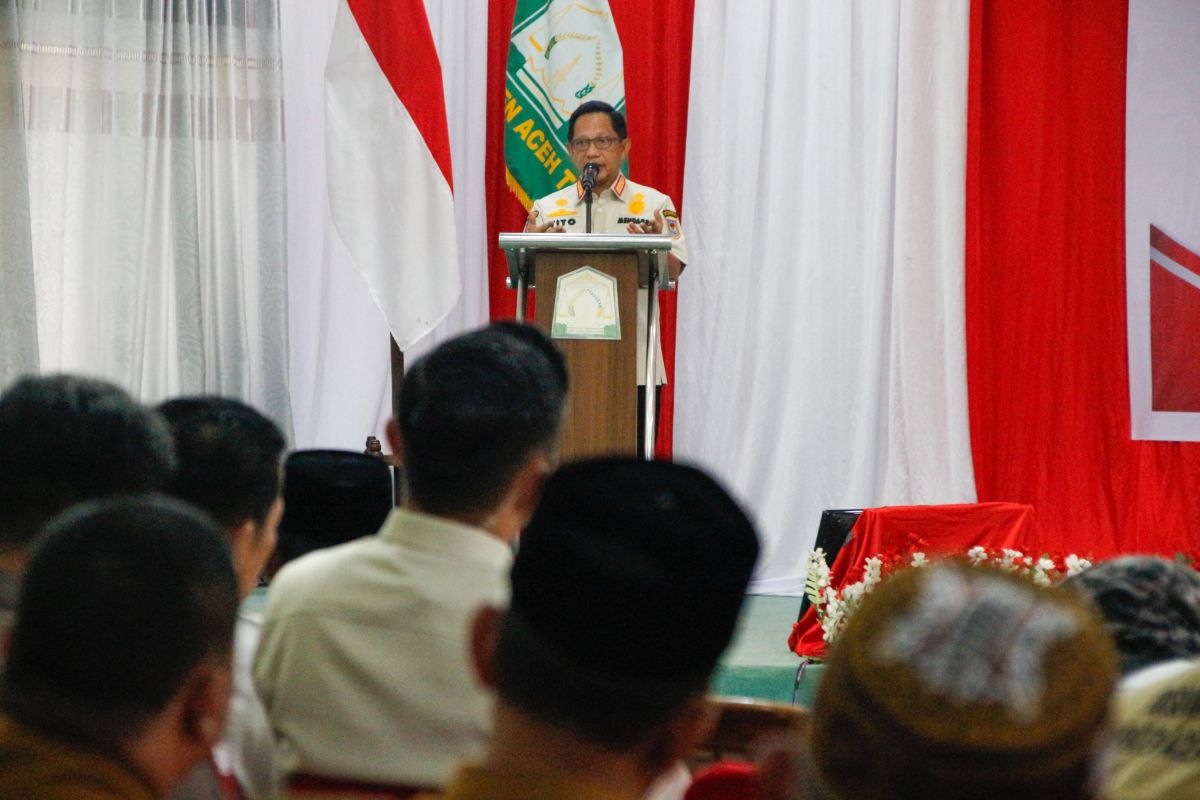
Jakarta — Interior Minister Tito Karnavian, also chair of the Acceleration Task Force for Post-Disaster Rehabilitation and Reconstruction (PRR), has called on regional governments to accelerate data collection of residents who will occupy permanent housing (huntap) for disaster victims.
“All regional leaders say the same thing — they want permanent housing built quickly. But the data must be clear first,” Tito said in a statement issued in Jakarta on Tuesday.
Tito made this statement whilst attending the distribution of social assistance to disaster-affected communities in Idi Rayeuk, East Aceh District, Aceh.
Tito said that accelerating the data collection process is important so the central government can promptly begin constructing permanent homes for affected residents.
According to him, regional leaders need to establish special teams or task forces to collect information about residents’ preferences — whether they choose in-situ or community housing schemes for permanent housing development.
He explained that in-situ schemes mean houses are reconstructed at the location or on land owned by the residents themselves. Under this scheme, residents can choose to have their homes built by the government or build them independently with funding assistance of approximately 60 million rupiah.
“We ask residents: do you want to live in-situ with the house built by BNPB [the national disaster management agency], or do you want to build it yourself with 60 million rupiah in assistance? But the land must be your own property,” he said.
Meanwhile, the community housing scheme means residents will be relocated to a new residential complex built together in one area prepared by the government.
For this scheme, regional authorities are asked to prepare land that can be used as a development site, whether from government-owned land, central government land, state-owned enterprises, or through fair-priced purchases of privately owned land.
“If there is no government land available, land can also be purchased from residents at a fair price,” he said.
Tito emphasised that residents’ preferences must be clearly documented through forms and accompanied by declarations so the central government can determine the permanent housing development pattern.
“The faster we collect data on who wants in-situ and who chooses the complex scheme, the easier it is for us to coordinate the permanent housing development,” he said.
He also reminded regional authorities to actively conduct field data collection and not simply wait for assistance from the central government.
“If there is no data, what is to be built? Communities are already complaining demanding housing be built but the regional government is not taking action,” the Interior Minister said.
According to Tito, permanent housing development is a critical step in restoring people’s lives after disasters, following the temporary placement of evacuees in temporary shelters or the provision of housing rental assistance.