
Interior Minister Stresses Local Government Role in Protecting Children from Harmful Electronic Systems
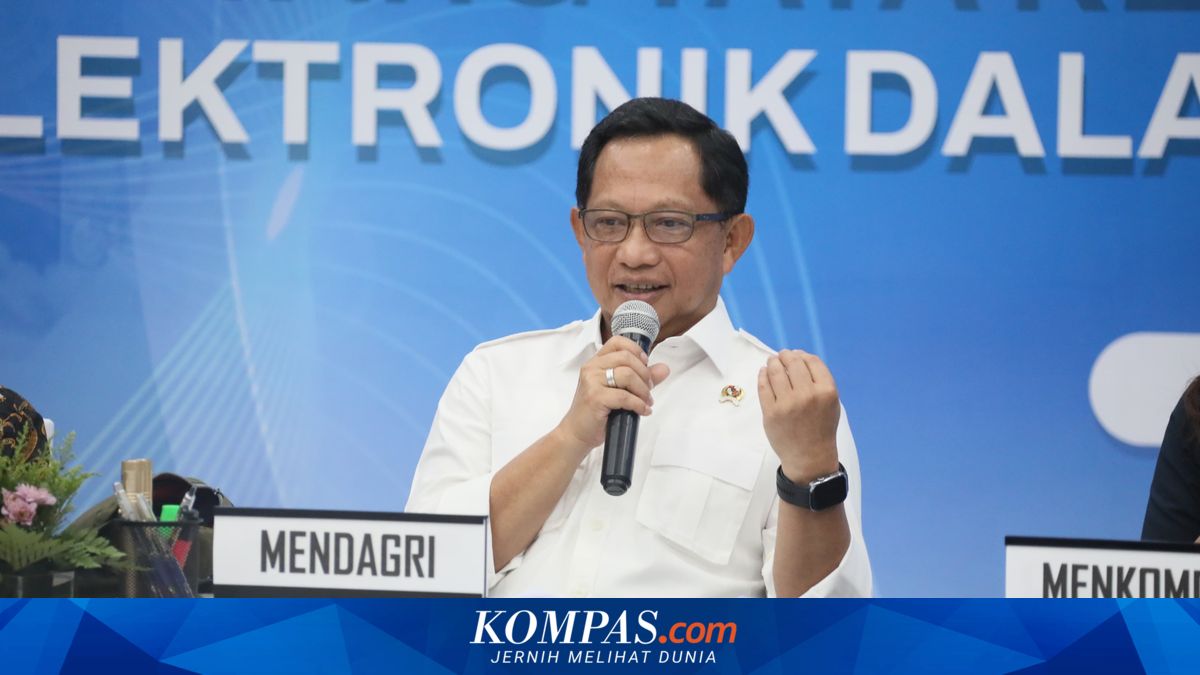
Interior Minister Muhammad Tito Karnavian has stressed that local governments must be involved in efforts to protect children from the negative impacts of electronic systems, particularly social media.
The Ministry of Interior (Kemendagri) will oversee local government contributions to these protection efforts.
Tito made these remarks to journalists following a Coordination Meeting on the Implementation of Government Regulation Number 17 of 2025 concerning the Management of Electronic Systems in Child Protection (PP Tunas) at the Ministry of Communications and Digital Technology (Komdigi) office in Jakarta on Wednesday, 11 March 2026.
He assessed that implementing this policy requires considerable effort from multiple parties, given that Indonesia is one of the world’s countries with the largest population and internet user base.
“For this reason, the involvement of local governments is a necessity,” Tito explained.
The regulation encompasses regional medium-term development plans (RPJMD), regional strategic plans (Renstra), regional government work plans (RKPD), and budgeting within regional budgets (APBD).
“We will oversee regions through the Development Planning Consultation (Musrenbang). There is the Directorate General for Regional Development (Ditjen Bina Bangda), and when entering the APBD process, it will be overseen by the Directorate General for Regional Finance (Keuda),” Tito stated.
Furthermore, Kemendagri plans to issue a circular letter (SE) to local governments as guidance for implementing this policy.
Tito emphasised that regions can adapt their implementation according to their respective characteristics and local wisdom, including by issuing regional regulations and head of region regulations relating to the programme.
Additionally, Kemendagri will also encourage capacity-building for regional apparatus to understand the issue of child protection in digital spaces. This effort is conducted through cooperation with various parties, including relevant technical ministries.
“While we conduct socialisation with the community in various ways according to each region’s local wisdom,” Tito said.
Furthermore, Kemendagri will also conduct monitoring and evaluation of programme implementation in regions. Local governments demonstrating good performance will receive recognition, including the possibility of incentive funding.
He also proposed the development of an index measuring the level of regional attention to protecting children from the negative impacts of electronic systems.
The forum was also attended by Minister of Communications and Digital Technology Meutya Viada Hafid, Minister of Primary and Secondary Education Abdul Mu’ti, Minister of Women Empowerment and Child Protection Arifatul Choiri Fauzi, Minister of Religion Nasaruddin Umar, Minister of Population and Family Development/Head of the National Population and Family Planning Board Wihaji, and Cabinet Secretary Teddy Indra Wijaya.