
Interior Minister Pushes Innovation in Regional Tax Payment Systems to Support Fiscal Independence
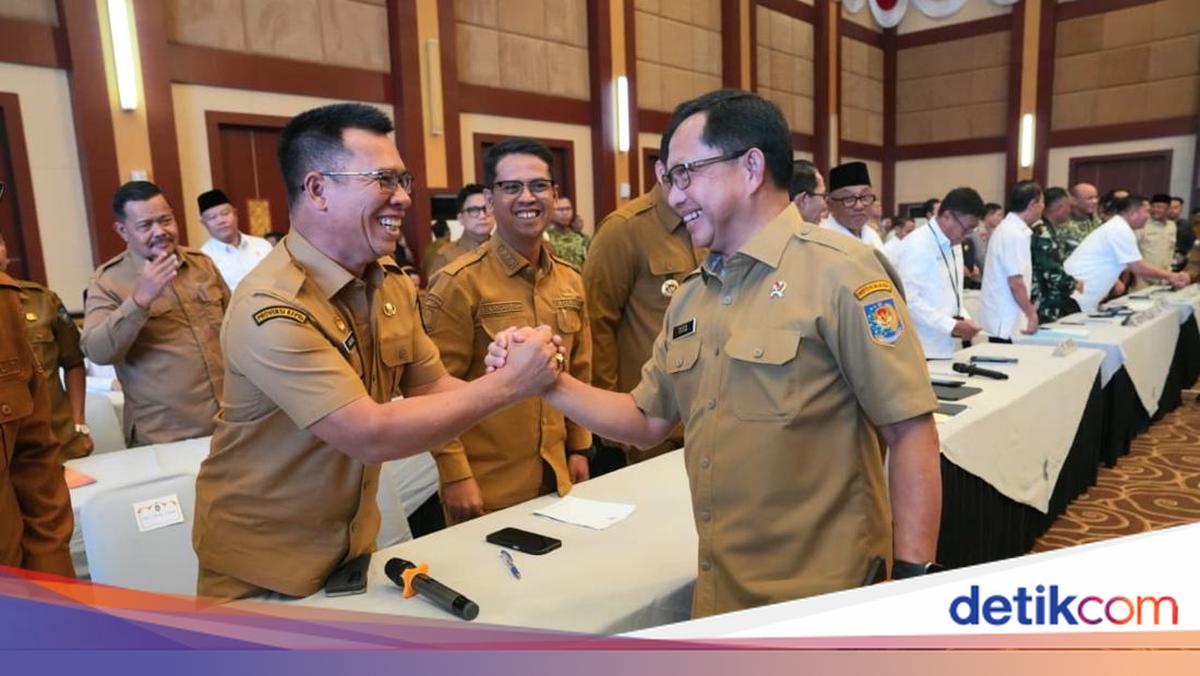
Interior Minister (Mendagri) Muhammad Tito Karnavian is promoting the digitalisation of regional tax payment systems to strengthen Local Own-Source Revenue (Pendapatan Asli Daerah, PAD) and achieve fiscal self-sufficiency for local governments. The proposed payment system will be fully integrated online and modelled on Bank Indonesia’s QRIS (Quick Response Code Indonesian Standard) platform.
“At the national level, I have already discussed this with the Governor of Bank Indonesia. He is developing a system similar to QRIS, but entirely online. This way, it can be connected to all local governments, so funds go directly into the Regional Revenue Office (Dispenda),” Tito stated in a written statement on Monday, 9 March 2026.
He made these remarks during the closing ceremony of the Riau Islands (Kepri) Ramadan Fair 2026 held at the courtyard of the Dekranasda Building in Tanjungpinang, Riau Islands, on Sunday, 8 March 2026.
In his push to increase PAD, Tito emphasised that the government will not impose new tax burdens on citizens. He noted that consumers already pay taxes with every transaction at hotels, restaurants, and cafés. However, these taxes are initially collected by business owners in their capacity as tax collectors.
“The question is: are these funds submitted to the Regional Revenue Office in the same amount as collected?” he asked.
Through an integrated digital payment system, Tito hopes that consumer tax payments will go directly into local government accounts without first being collected by business owners. He is confident that this innovation will not only prevent budget leakage but also significantly increase PAD.
Tito cited the example of Badung Regency in Bali, which has achieved fiscal independence through PAD derived from the hospitality and tourism sector, including hotels and restaurants. This financial stability has made Badung Regency less vulnerable even when the central government reduces its transfer payments to regions (Dana Transfer ke Daerah, TKD).
On this occasion, Tito identified similar potential in Riau Islands Province, particularly in Batam, Tanjungpinang, Bintan, and Karimun. These areas are noted for having a robust hospitality industry and potential to become premier national MICE (Meeting, Incentive, Conference, and Exhibition) destinations, alongside Jakarta, Bali, Yogyakarta, and Surabaya.
“If we can create such a system (digitalised tax payment), whether at the national level or through local initiative, either way is fine. The key point is preventing leakage, strengthening PAD, so that regions can achieve fiscal independence,” Tito concluded.
The event was attended by the Head of the Central Statistics Agency (Badan Pusat Statistik, BPS) Amalia Adininggar Widyasanti and the heads of BPS offices across Sumatra, Riau Islands Governor Ansar Ahmad and the Chair of the Provincial TP PKK, the Head of Bank Indonesia’s Representative Office in Riau Islands Province, and the Head of the Financial Services Authority (OJK) in Riau Islands Province, as well as members of the Regional Leadership Coordination Forum (Forum Koordinasi Pimpinan Daerah, Forkopimda) for Riau Islands Province and other relevant stakeholders.