
Interfaith Dialogue as a Space for National Interaction
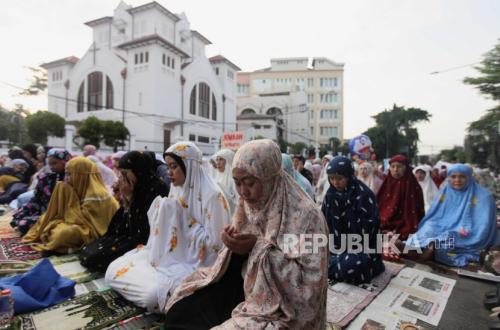
In the midst of global dynamics fraught with identity differences, interfaith dialogue emerges not merely as a forum for discussion, but as a space for social interaction that preserves harmony in national life. This idea surfaced in an interfaith dialogue forum that emphasised the importance of creating spaces for encounter, mutual understanding, and strengthening human brotherhood.
Indonesia, from its inception, has possessed a strong foundation in managing diversity. The values of Pancasila remind us that although society comes from different religions, cultures, and backgrounds, all citizens share one home: Indonesia. The principle of Bhinneka Tunggal Ika asserts that differences are not a reason for division, but rather a bridge connecting fellow citizens.
Interfaith dialogue is viewed as a strategic means to strengthen social cohesion. When people get to know each other, prejudices can be eroded and replaced with mutual trust. This aligns with the message of the Al-Qur’an in Surah Al-Hujurat verse 13, which states that humans were created into nations and tribes so that they may know one another, not to negate each other.
Similar values are reflected in Christian teachings that emphasise the importance of loving one’s fellow human beings as oneself. This universal message shows that every religion carries the same mission of humanity: bringing peace and goodness to all humankind.
The great Islamic thinker, Imam Al-Ghazali, affirmed that the essence of religion is not victory in debate, but the purification of the heart and the creation of noble morals in human life. In his view, conflicts often arise not solely from differences in belief, but from diseases of the heart such as arrogance, fanaticism, and the desire to feel the most correct.
According to Imam Al-Ghazali, true dialogue must begin with tazkiyatun nafs (purification of the soul). One cannot understand others before being able to control the ego and opening space for empathy. Therefore, encounters between religions or groups are not merely exchanges of arguments, but a process of mutual knowing (ta‘aruf) grounded in spiritual honesty and etiquette.
In his works, particularly Ihya’ Ulumuddin, Al-Ghazali emphasised that knowledge without morals only breeds contention, whereas knowledge accompanied by wisdom will bring peace. Dialogue grounded in wisdom turns differences into a means of expanding understanding, not a reason for enmity.
In the modern era rife with identity polarisation, Al-Ghazali’s thought remains relevant: social peace does not begin from uniformity of views, but from spiritual awareness that every human is a creation of Allah that must be respected. When dialogue is conducted with the intention of seeking truth and common benefit, differences become a mercy, not conflict.
This idea also aligns with the thought of Nurrohim, Chairman General of Kaum Marjinal and Founder of Sekolah Master Indonesia, who sees interfaith dialogue as a path to social empowerment. For Nurrohim, diversity is not merely a social reality, but a great potential for building human solidarity through education. He believes that spaces for dialogue must start from inclusive education access—providing equal opportunities to children from various religious, economic, and cultural backgrounds to grow together in a spirit of mutual respect.
Through the humanity-based educational approach he has built, Sekolah Master serves as a real example of how tolerance is not only taught in theory, but practised in daily life. Children learn to live side by side, share experiences, and understand that religious identity does not hinder helping and cooperating with one another.
According to Nurrohim, true interfaith dialogue does not begin from grand podiums, but from social empathy: helping the weak, defending the marginalised, and bringing justice to all. When society is brought together in humanitarian work, prejudices slowly collapse and are replaced by true brotherhood.
Therefore, interfaith dialogue must not stop at ceremonies or formal meetings alone. It must develop into a living social movement in the midst of society: in educational spaces, youth communities, places of worship, and even public policy. Sincere dialogue opens the heart, strengthens empathy, and fosters awareness that humanity is always greater than differences.
Ultimately, interfaith dialogue is an investment in civilisation. When society can speak from heart to heart, the nation not only maintains tolerance, but also builds a peaceful, just, and dignified future for all citizens. Through the example of educational and humanitarian figures like Nurrohim, interfaith dialogue finds its most tangible form: not merely discourse, but a practice of living together in the spirit of mercy for all the worlds.