
Inter-Agency Volunteers Accelerate Sumatra's Recovery
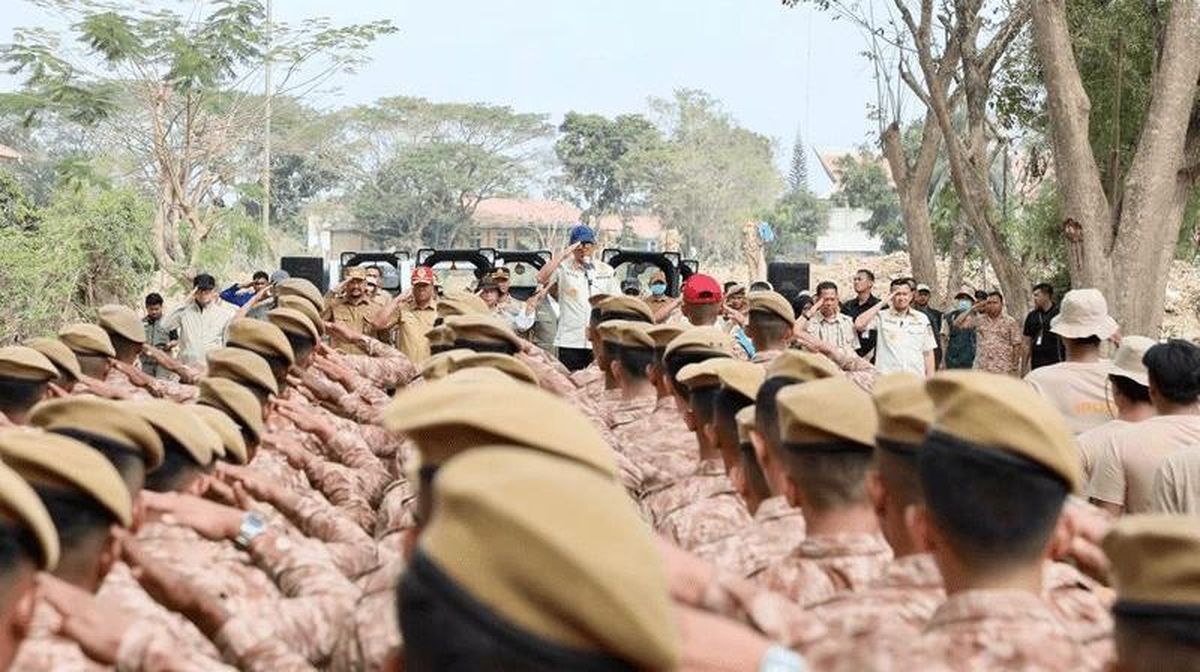
Tens of thousands of personnel from various ministries and agencies, TNI-Polri apparatus, local governments, and non-governmental humanitarian volunteers continue to work together to accelerate post-disaster recovery in Aceh, North Sumatra, and West Sumatra. This cross-sector collaboration ensures that rehabilitation and reconstruction processes proceed in an integrated manner while reflecting the strong national spirit of mutual cooperation. Since the initial response phase, the government has undertaken a massive national mobilisation to reach affected areas quickly and evenly. Head of the Post-Disaster Recovery Task Force for Sumatra, Muhammad Tito Karnavian, emphasised that the involvement of various elements is a key factor in accelerating the recovery process on the ground. “The mobilisation carried out by the government from the start was a national mobilisation led directly by the President. The total at that time reached around 92,000 personnel from all ministries and agencies, not including non-governmental volunteers,” Tito said in Jakarta on Wednesday (25/3). Entering the rehabilitation phase, the number of personnel has been adjusted according to field needs, which are increasingly under control. Based on data from the Task Force as of 31 March 2026, 23,618 personnel from across ministries, agencies, and civil service academies are still on duty to support the acceleration of recovery in the three affected provinces. This inter-agency synergy is evident in the construction of temporary housing (huntara) for affected communities. This programme is one of the priorities to accelerate the relocation of survivors from emergency tents to more decent and safe housing. In addition to being handled by the government through BNPB, the Ministry of Public Works, and support from TNI-Polri, the construction also involves various community organisations and philanthropic institutions such as Dompet Dhuafa, Rumah Zakat, and other humanitarian foundations. As of 31 March 2026, progress on huntara construction has reached around 84 per cent, with 16,360 units completed in the three affected provinces. This achievement accelerates the relocation of survivors from tents to more decent housing. This joint effort also drives the acceleration of infrastructure recovery. Access to national roads and national bridges is now fully functional, ensuring that logistics distribution is no longer hindered. Meanwhile, emergency bridges built by TNI, Polri, and technical ministries serve as vital connections for previously isolated areas. On the other hand, mud cleanup, which is the main challenge in affected areas, shows significant progress. Of the hundreds of impacted points, most have been successfully cleaned, supporting the acceleration of community activities. The Ministry of Home Affairs has also deployed Praja from the Institute of Domestic Government Administration (IPDN) in three waves to assist with mud cleanup. Recovery of basic services is also progressing quickly. Electricity has been restored in nearly all areas, communication networks are back online, and health facilities such as hospitals and community health centres have resumed serving the public. These achievements directly impact the reduction in the number of refugees. From an initial condition of more than 2.1 million people in December 2025, now only 36 households remain in tents and are being handled gradually. The Task Force ensures that the spirit of mutual cooperation will be maintained until the entire rehabilitation and reconstruction process is complete, including the stage of building permanent housing and environmental normalisation, which is still ongoing.