
Intelligence, Iran, and the increasingly fragile Middle East
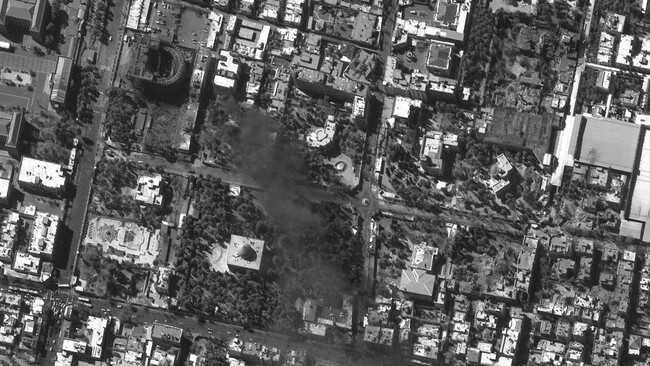
Khamenei’s death is not merely a symbolic event but one of the most significant inflection points in the current Middle East crisis. Read through an intelligence lens, the killing of Iran’s Supreme Leader indicates that the core of the Islamic Republic’s power can be breached, mapped, and struck with precision by Israel and its allies. The death of Khamenei in this US-Israeli strike would force Iran to rapidly implement a temporary leadership transition mechanism.
In modern operations, such success does not arise solely from military superiority. A precise strike on a strategically valued target almost always follows lengthy intelligence work, such as target mapping, reading elite movement patterns, observing vulnerabilities in security systems, and synchronising field information with assault capabilities.
Therefore, Khamenei’s death can be read as an indicator that opponents achieved something far deeper than a mere air strike: penetration of the heart of Iran’s decision-making. The fact that subsequent attacks also hit strategic facilities such as access to the Natanz nuclear site reinforces the impression that the operation relied on selecting highly strategic targets.
The success of this joint operation unfortunately creates a paradox. Intelligence success and military action at the target level do not automatically produce political stability. Quite the opposite: eliminating such a central figure as Khamenei creates a dangerously hollow authority.
In Iran’s system, the Supreme Leader is not only a symbolic head but an ideological fulcrum, an architect of security policy, and a source of legitimacy for the regime’s internal balance. When this figure is lost to external attack, what emerges is not certainty, but a succession crisis. This event demonstrates that losing Khamenei could reshape Iran’s political order and trigger high-risk succession struggles.
By contrast, Israel and its operational allies’ success opens a new phase of instability. Iran is indeed moving quickly to form a temporary leadership council, but such emergency transitions do not automatically remove the potential for intra-faction friction. An elite contesting legitimacy often feels compelled to demonstrate resolve through aggressive external steps — using an internal crisis to fuel escalation outward.
The impact has already spread far beyond Iran and Israel. The energy sector, shipping, tourism, and regional security have all been jolted. Oil prices are depressed, supplies from a region that accounts for nearly a third of global production are disrupted, and the risk in the Strait of Hormuz — the route for more than 20% of the world’s oil shipments — has risen sharply.
At this point, Khamenei’s death can no longer be read as a mere tactical success. It has become a trigger for broader geostrategic change. For years, the Supreme Leader has been the ideological anchor of Iran’s confrontation with the United States, Israel, and the regional order led by pro-Western states. His sudden loss forces regional actors to reassess their political calculations.
Gulf states must consider the risk of spillover conflict. Asia’s energy importers must seek alternative supply scenarios. Even major powers such as Russia and China now face an increasingly unpredictable region.
From an intelligence perspective, there are important lessons to note. A successful operation to kill a high-value target can be considered a major victory, particularly because it damages an opponent’s deterrence and demonstrates that no power centre is entirely safe.
But such a victory carries significant strategic costs. When the enemy’s power centre is destabilised, the typical response is not capitulation but fragmentation, radicalisation, and the expansion of conflict via asymmetric channels.
Therefore the relevant question is no longer whether the operation was successful. The question is: who actually holds the reins over the consequences? The succession crisis in Tehran, the pressure on global energy supplies, and the widening risks of regional conflict are variables beyond the reach of the party launching the strike.
In this sense, intelligence wins can become the precursor to far greater uncertainty — not only for the region but for the global order that has long depended on the Middle East’s fragile stability.