
Integrated Early Warning System to Enhance Train Safety
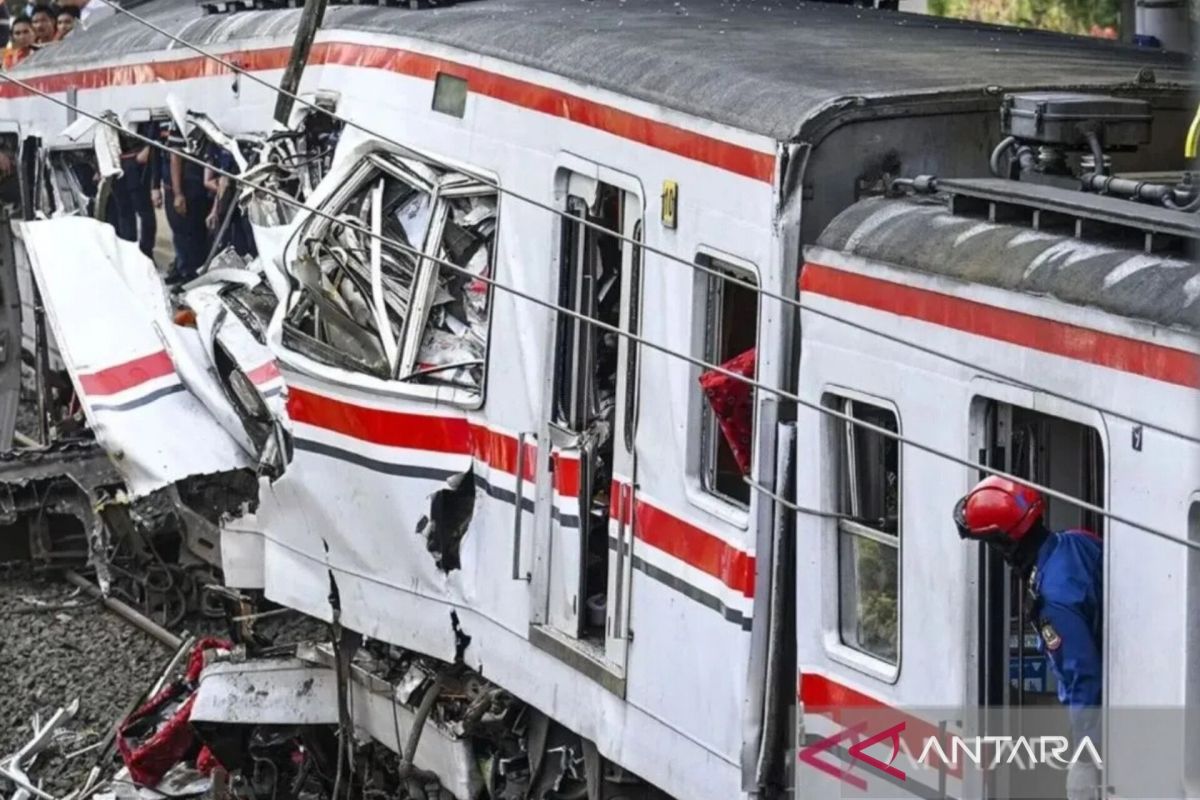
Far more important is how the country begins to build a transportation system capable of anticipating dangers before it’s too late. Jakarta (ANTARA) - The accident between the Argo Bromo Anggrek train and the Commuter Line KRL in East Bekasi some time ago serves as a stark reminder that railway safety can no longer rely solely on conventional systems and manual responses on the ground. The chain of events, starting from disruptions at a level crossing and culminating in a train collision, demonstrates how quickly emergency situations can escalate into tragedy when risk information is not conveyed in real time to the entire train journey system. Therefore, amid increasingly dense train traffic and rising public mobility, the need for an integrated early warning system becomes ever more pressing so that potential hazards can be detected earlier and responded to within seconds before they turn into major accidents. For a long time, many people have viewed train accidents as sudden events caused by human negligence or momentary technical glitches. However, in many cases, accidents are often preceded by a series of risk signals that could actually be recognised earlier if the safety detection and communication systems worked faster. When a train approaches a vulnerable point, when a vehicle breaks down on the tracks, when there is a disruption on the station platform, or when there is an unusual train stop in a track section, time becomes a highly determining factor. A difference of just a few seconds can affect braking decisions, speed reduction, and passenger rescue. Therefore, the idea of an Integrated Early Warning System or integrated emergency early warning system must be discussed more seriously without delay. Such a system essentially seeks to transform the safety approach from one that was previously reactive to preventive. This means that the focus is no longer solely on handling after an incident occurs, but on how risks can be identified earlier so that the chance of accidents can be minimised as much as possible. Several parties have put forward proposals and recommendations to strengthen guarantees for train journey safety. One of them is the Central Board of the Institut Teknologi Sepuluh Nopember Alumni Association (PP IKA ITS), which has submitted recommendations to the Ministry of Transportation and PT Kereta Api Indonesia regarding efforts to position communication technology and telemetry as an important part of train journey safety. The proposed system adopts the Andon philosophy, a concept well-known in the modern industrial world as a mechanism for quickly signalling operational disruptions. In the railway context, this approach is translated into a warning system that can be sent directly to the driver’s cabin through cabin signalling when a train approaches a dangerous location. This approach is important because in modern transportation systems, the speed of information is often as crucial as the quality of physical infrastructure. Good tracks, reliable locomotives, and modern signalling still require a communication system capable of bridging emergency conditions in real time. When warnings can be received directly by the driver before entering a risky area, the room for decision-making becomes greater. In emergency situations, even the smallest additional reaction time has tremendous safety value. An integrated early warning directly to the driver’s cabin will provide additional reaction time in emergency conditions, thereby reducing the potential for accidents. This illustrates the core essence of system development, which is not merely technological modernisation, but human salvation. In public transportation systems, safety must indeed be the highest priority because it concerns public trust in that mode of transport itself. Another aspect worth considering is how the proposal not only talks about devices on the train but also about integration between systems. Secretary General of PP IKA ITS, Herman Prasetyo, stated that this system is designed to connect with the Train Journey Regulator at the nearest station as well as the obstacle detection system at level crossings. Such an integrated approach shows that modern safety cannot operate partially. All elements must be interconnected in an information ecosystem capable of moving quickly and accurately. In Indonesia, the challenge of safety at level crossings remains a major task. Many crossings directly intersect with highways, densely populated areas, or heavy vehicle routes. Not a few accidents occur due to stalled vehicles or road users who force their way through when a train is approaching. In such conditions, an automatic warning system that directly signals the driver has the potential to become a very important additional layer of protection. Furthermore, the idea of an early warning system actually reflects a change in perspective on national transportation development. For years, measures of railway progress have often been seen in terms of building new lines, increasing train speeds, or modernising stations. All of that is indeed important, but safety technology development must not be left behind. Because the faster and denser the train traffic, the higher the need for more advanced risk mitigation systems. In the global context, many advanced countries are beginning to develop safety systems based on digital communication and automatic sensors to strengthen train journey oversight. Technologies like this enable disruption detection to occur faster than relying on manual reports. Indonesia actually has great potential to move in that direction, especially since