
Institut Leimena: Pancasila Affirms Universal Values as Foundation of the Nation
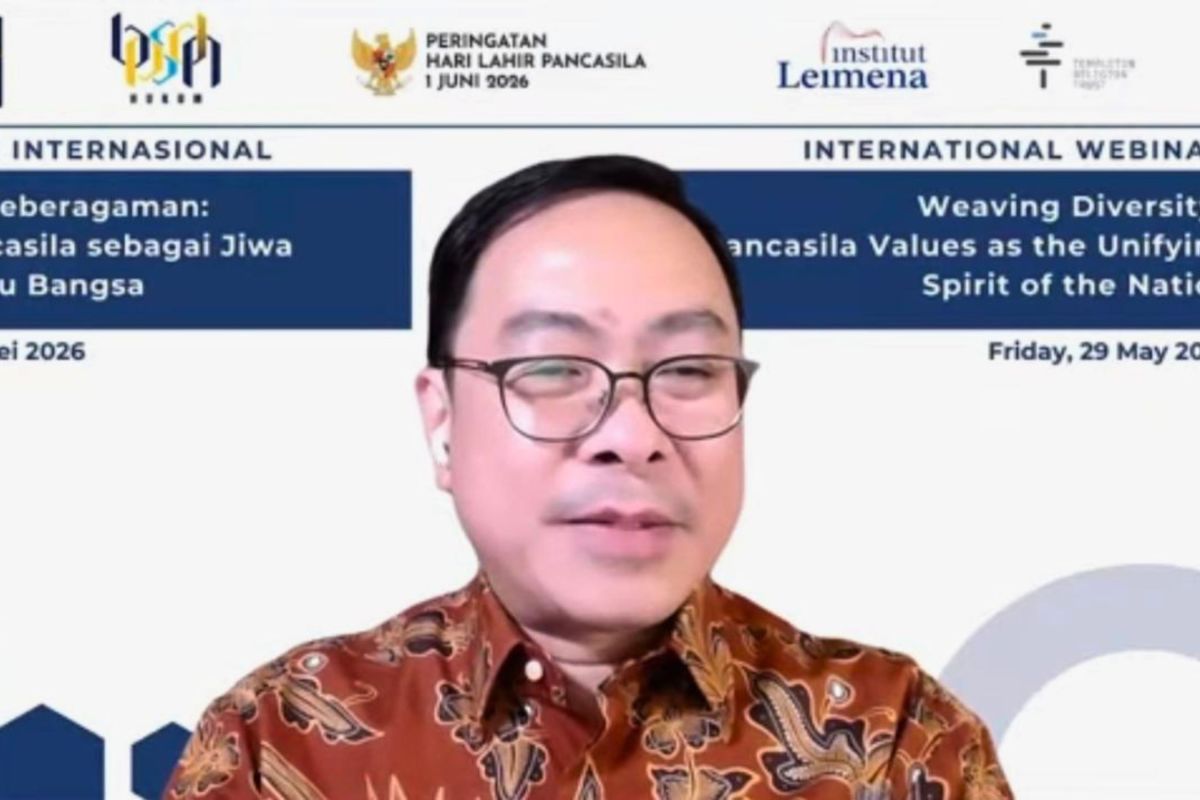
Jakarta (ANTARA) – Institut Leimena stated that Pancasila affirms universal values as the foundation of the Indonesian nation, which are also relevant globally. ‘With the global rise of xenophobia, Pancasila, rooted in respect for human dignity and the spirit of mutual cooperation, is increasingly vital to be consistently and practically realised in community, national, and state life,’ said Executive Director of Institut Leimena Matius Ho in a statement on Saturday. The statement was made by Matius during the International Webinar Series on Intercultural Religious Literacy on Friday evening (29 May). He said social cohesion has become a key topic in international forums as global xenophobic sentiments – fear or hatred towards those perceived as different – rise. Matius noted that Pancasila is enshrined in the final paragraph of the 1945 Constitution’s preamble, which begins by affirming universal values such as independence, humanity, and justice. He further explained that Indonesia’s first President Soekarno, in his 1 June 1945 speech on the birth of Pancasila, stated that if Pancasila were condensed into one principle, it would be the Indonesian word ‘gotong royong’ (mutual cooperation). Soekarno declared, ‘The Indonesia we build must be a nation of mutual cooperation!’ Therefore, he welcomed the collaboration with the Ministry of Law’s Human Resource Development Agency (BPSDM) starting in early 2025, as the Intercultural Religious Literacy (LKLB) approach aligns with and can strengthen the socio-cultural competencies of civil servants (ASN) as national unifiers. Matius stated the LKLB programme, which began as training for school and madrasah teachers in 2021, has expanded and trained over 11,000 educators, including civil servants. ‘We hope this collaboration will further develop for the benefit of all society, the nation, and the state,’ he said. Meanwhile, Amin Abdullah, a member of the Pancasila Ideology Development Agency (BPIP) Advisory Board and Senior Fellow at Institut Leimena, said Pancasila emphasises understanding ‘Belief in the One and Only God’ as ‘Culturally-Informed Divinity’. Meaning, he explained, practising religion with civility, without religious egoism, respecting other faiths, and upholding noble character. ‘The concept of Culturally-Informed Divinity aligns with LKLB’s three competencies: personal (understanding one’s own religion), comparative (knowing other religions), and collaborative (working together despite differences),’ said Amin. Inspiration Vice President of the G20 Interfaith Forum Katherine Marshall said in a polycrisis situation, diversity inevitably leads to conflict and division. However, she noted Indonesia’s G20 leadership has demonstrated that Pancasila ideology, long-standing, can be lived as daily reality. She added that Indonesia, with the LKLB programme, also offers inspiration on the competencies needed to live in a diverse society. Director of the International Centre for Law and Religion Studies at Brigham Young University’s Law School in the United States, Brett Scharffs, elaborated on Pancasila’s five principles in relation to human dignity. One of them, he added, is the second principle, ‘Just and Civilised Humanity’, which is closely linked to human dignity dimensions globally, such as South Africa’s ‘ubuntu’ philosophy. ‘Human dignity enhances the effectiveness of institutions, offices, governments, and schools, as societies become more cohesive and innovative, and more resilient and sustainable. People will give their best when they feel respected and valued,’ said Brett.