
Insane Rally Ends Brutally: Beware! Silver Sends Danger Signal to the World
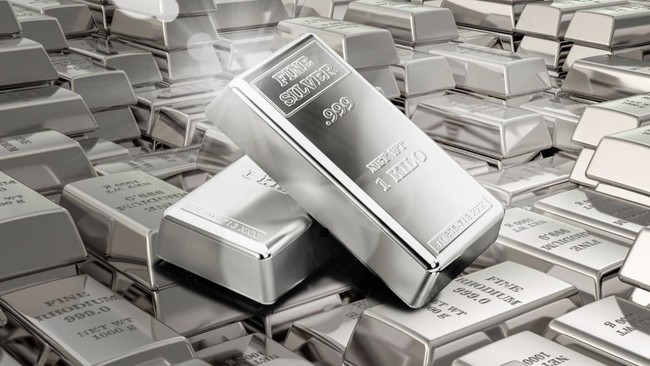
Silver prices have crashed this week. Silver prices have even moved to the lowest level throughout 2026.
According to Refinitiv, silver prices closed at US$67.76 per troy ounce, down 7.05% in Friday’s final trading (20/3/2026).
This weakening extends silver’s suffering to four consecutive days, collapsing 16.1%. Yesterday’s closing price also became the lowest since 19 December 2025.
In the past week, silver prices have tumbled 15.9%. This means silver has been weakening for three consecutive weeks. Since the Iran versus Israel and United States (US) war broke out on 28 February 2026, silver has fallen 27.8%.
Silver prices are currently under pressure in the global market. Price movements reflect changes in currency strength, bond yields, and global tensions. The US dollar is strengthening while Treasury yields are rising.
At the same time, investors are responding to geopolitical developments and inflation risks. Market players are also taking profit after the previous rally.
This combination of factors shapes the direction of precious metals and raises questions about short-term and long-term trends.
Predictions for silver prices indicate that the market is likely to remain volatile in the short term due to interest rate expectations and currency strength.
Prices could remain pressured if bond yields stay high and the dollar continues to strengthen. However, in the long term, silver has potential support from inflation risks, central bank demand, and global economic uncertainty. Changes in monetary policy or interest rate easing could help gold and silver rise from current levels.
Analysts say precious metals are facing pressure due to concerns over interest rate hikes and dollar strength. Investor sentiment remains cautious.
Silver is also experiencing profit-taking after the previous rise. Technical indicators show overbought conditions, triggering selling action.
The strong US dollar reduces demand for silver because the metal becomes more expensive for buyers using other currencies, thus lowering global demand and pushing prices down.
The dollar index moved to 99.65 in Friday’s trading, from 99.23 in Thursday’s trading this week.
Geopolitical tensions can indeed support price increases, but the impact may be limited if interest rates rise and the dollar strengthens, as these factors are often more dominant than safe-haven asset demand.
Precious metal gold is also declining. However, silver is falling faster. This gap is not coincidental and gives an important signal to investors about what is actually driving the precious metals sell-off right now.
Gold is also experiencing a sharp correction of 10.6% last week. In this month, silver has collapsed 23% while gold only 14%, or not as deep as silver. The gold-to-silver ratio has widened significantly, indicating that silver is receiving additional pressure beyond the general weakening of precious metals.
Silver is not just a safe-haven asset, but also an industrial metal, and this dual identity is currently its weakness.
Around 60% of silver demand comes from the industrial sector such as solar panels, electric vehicle batteries, electronics, and medical equipment. When macroeconomic conditions tighten and growth slows, industrial demand also weakens, along with declining investment demand.
“The global market is experiencing broad selling because investors are seeking the quickest assets to sell. We may be seeing the next phase, where safe-haven assets are also sold to fund purchases of other assets considered to have fallen too deeply,” said Paul Surguy, Managing Director at Kingswood Group, to The Street.
This explains the current situation accurately. Silver is being sold not because its long-term prospects have changed, but because large speculative positions during the 2025 rally are now being unwound.
From Extreme Rally to Brutal Reversal
The story began in January 2026.
Silver surged to an all-time high of $121.60 per troy ounce on 29 January, driven by a combination of safe-haven demand, dollar weakening, and large speculative buying. Throughout 2025, silver prices even rose 135%.
However, on 30 January, everything reversed dramatically.
Silver plunged 33% in one day, the largest daily drop in history, after US President Donald Trump announced the nomination of Kevin Warsh as the next Federal Reserve Chairman. Warsh is known as an “inflation hawk”.
The market immediately changed interest rate expectations, the dollar strengthened sharply, and leveraged positions in precious metals collapsed.
Since then, silver has tried to stabilise in the US$75-US$80 range. However, the decline on 18-19 March became a new wave of weakening, triggered by the Fed’s hawkish stance and the persistently strong dollar.
Silver’s Dual Identity: Strength and Weakness
In the long term, silver is supported by its role in the industrial sector. Solar panel production, electric vehicles, 5G infrastructure, and AI data centres require large amounts of silver.
The Silver Institute even estimates a structural supply deficit for six consecutive years until 2026, where demand exceeds mine production.
However, in the short term, this factor becomes a weakness.
When the economy slows or interest rates are high, industrial demand also falls. This differs from gold, which is supported by more stable central bank purchases.
Currently, silver faces dual pressures: tight monetary policy weakening investment interest and economic uncertainty pressuring industrial demand.
Silver’s recovery depends on the same macro factors pressuring it: easing inflation, dollar weakening, and strengthening industrial demand.