
Inherited Land is Subject to Tax: Here is the Amount Involved
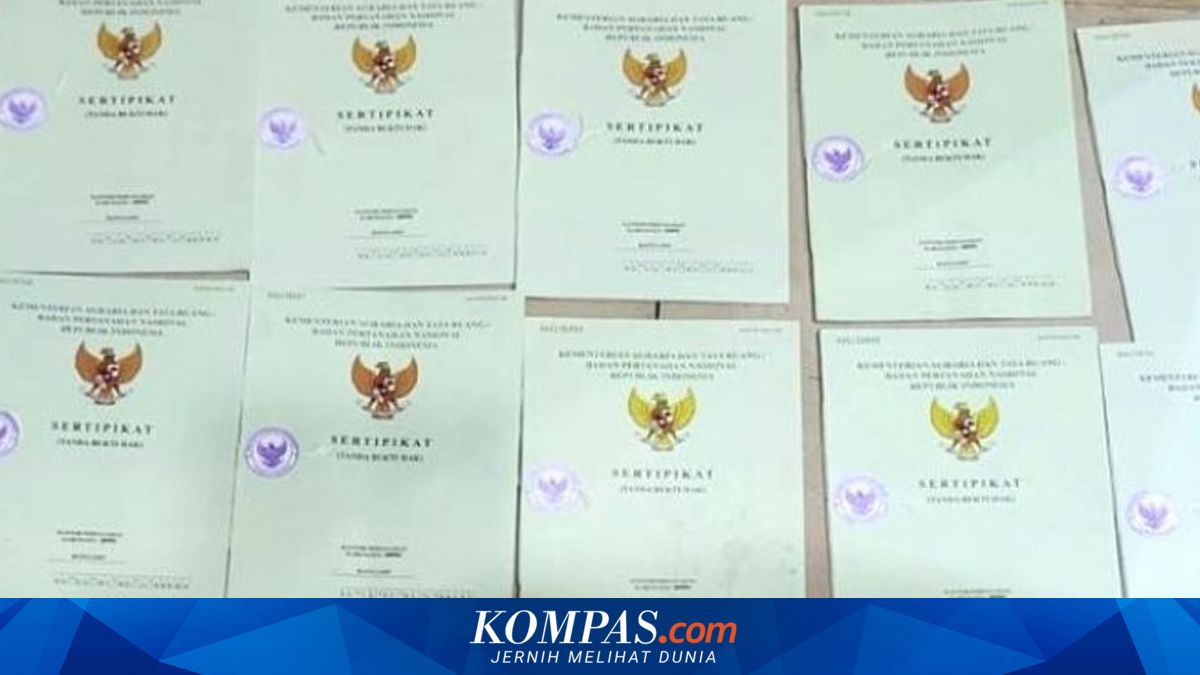
For individuals seeking to handle the costs of changing the name on inherited land certificates, it is important to note that taxes still apply. According to Law No. 7 of 1983 on Income Tax (PPh Law), as amended several times including by Law No. 7 of 2021 on the Harmonisation of Tax Regulations (HPP Law), every taxpayer who receives an addition to their economic capacity that can increase their wealth is subject to Income Tax (PPh). Furthermore, taxes on inherited houses are regulated in Government Regulation No. 34 of 2016 on Income Tax on Income from the Transfer of Rights to Land and/or Buildings, and Binding Sale and Purchase Agreements for Land and/or Buildings along with its amendments (PP 34/2016). Article 1 paragraph (2) states that income from the transfer of rights to land and/or buildings is income received or obtained by the party transferring the rights to land and/or buildings through sale, exchange, release of rights, transfer of rights, auction, grant, inheritance, or other methods agreed upon by the parties. So, what is the amount of tax on inherited land? Certainly, the width of the land, buildings, and location affect this. Here is the explanation compiled from Kompas.com. Meanwhile, the Ministry of Agrarian Affairs and Spatial Planning/National Land Agency (ATR/BPN) also regulates taxes on land sales and purchases as follows. The land seller is also subject to final PPh on the transfer of rights and buildings. Government Regulation No. 34 of 2016 states that the tax rate imposed on the seller is 2.5 percent of the transaction value. It should be remembered that PPh must be paid before signing the sale and purchase deed (AJB) directly in front of the Land Deed Official (PPAT). Subsequently, proof of payment is the primary requirement for the validity and legality of the land sale and purchase process. In addition to the seller, the buyer is required to pay Acquisition Duty on Land and Buildings (BPHTB), which is regulated in Law No. 1 of 2022 on Financial Relations between the Central Government and Regional Governments. BPHTB is generally 5 percent of the Taxable Object Acquisition Value (NPOP) after deducting the Non-Taxable Taxable Object Acquisition Value (NPOPTKP), the amount of which is determined by the regional government. Taxes must be paid before the certificate name change process is carried out; if not paid, the administrative process cannot proceed. After that, there are additional costs in the transaction such as PPAT service fees, certificate checks, and other administrative fees.