
Infrastructure Inequality: Smooth Roads, Lagging Rails
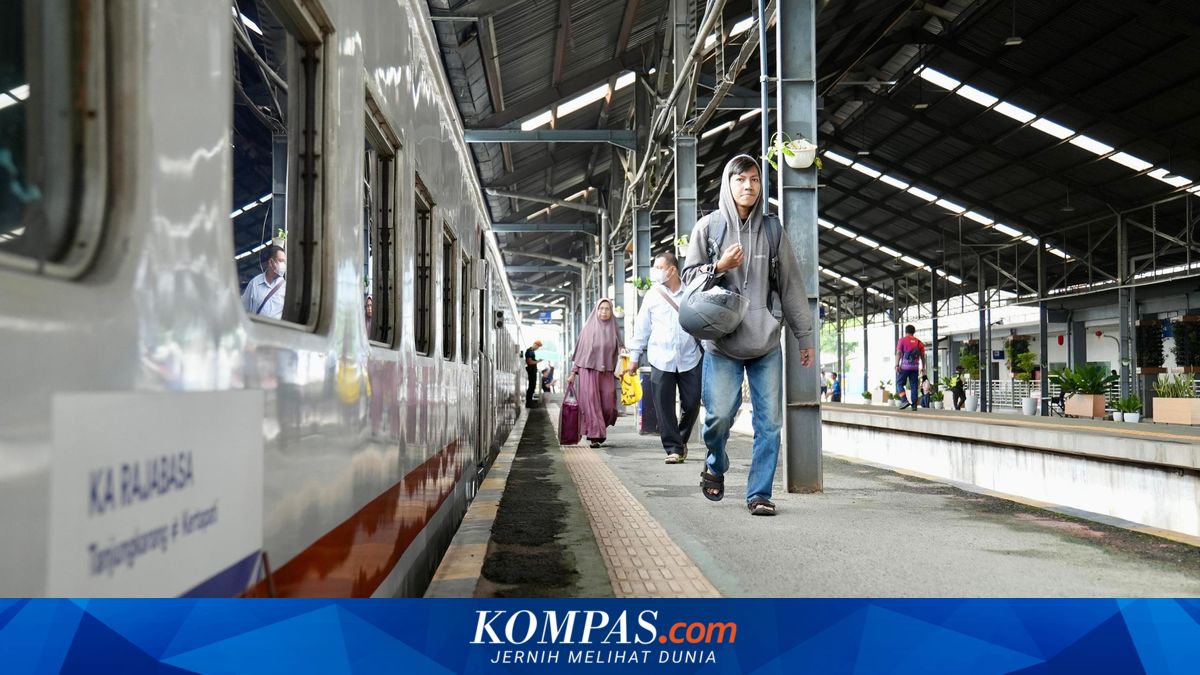
Coordinating Minister for Infrastructure and Regional Development Agus Harimurti Yudhoyono (AHY) assesses that Indonesia’s railway sector still suffers from underinvestment compared to the road sector.
AHY conveyed this after a coordination meeting on the development of the national railway network, involving several ministries, agencies, and related state-owned enterprises (BUMNs) at Tanah Abang Station, Central Jakarta, on Wednesday (22/04/2026).
He cited, for example, that in 2026, the budget allocation for the construction and improvement of national roads reaches approximately Rp 46 trillion, while for railway tracks it is only about Rp 5 trillion.
Nevertheless, according to him, railways play a strategic role, not only for human mobility but also for inter-regional logistics. Moreover, this mode of transport is considered more environmentally friendly.
AHY stated that the land transportation sector, dominated by private vehicles, contributes around 89 percent of carbon emissions, while railways contribute less than 1 percent.
Therefore, railway development is deemed important to reduce emissions while also alleviating the burden on highways.
Additionally, AHY revealed the imbalance in railway network development between Java and other regions in Indonesia.
Of the total approximately 12,000 kilometres of existing rail network, around 10,000 kilometres are located on Java. Of that amount, approximately 7,000 kilometres are still actively operational, while the rest are inactive.
“Thus, the President’s directive to develop railway networks in Sumatra, Kalimantan, and Sulawesi becomes strategic,” said AHY.
He added that such development is crucial to support logistics distribution, particularly in regions with significant natural resource potential (SDA).
The government, according to AHY, will encourage financing through various schemes, ranging from the State Revenue and Expenditure Budget (APBN), Regional Revenue and Expenditure Budget (APBD), Public-Private Partnership (KPBU), to private and foreign investments.
Furthermore, the development of the railway network is also expected to promote self-reliance in the national railway industry through strengthening the domestic industrial ecosystem.
On the same occasion, AHY mentioned that the government estimates a budget need of Rp 1,200 trillion to build and reactivate approximately 14,000 kilometres of railway tracks in the long term.
“If we want to add, say, those 14,000 kilometres in the coming years, the cost is estimated at around Rp 1,200 trillion,” said the Chairman General of the Democrat Party.
However, that figure is still preliminary and will continue to be refined according to geographical conditions and the needs of each region.
According to AHY, the development of the railway network is part of the government’s priority programme in the infrastructure and regional development pillar, including the expansion of railway networks in Sumatra, Kalimantan, and Sulawesi.