
Industry Minister Reveals Import Textile Flood Tactics Since Jokowi Era
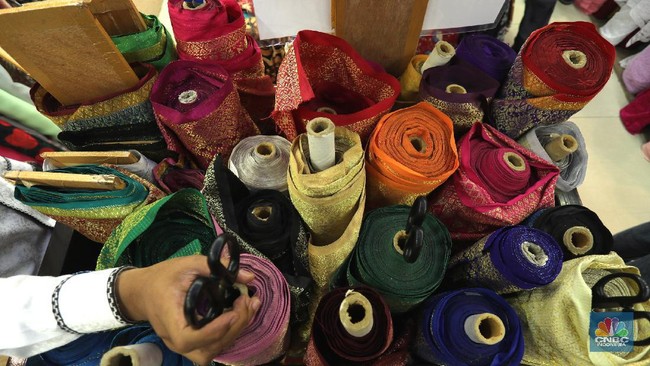
Indonesia’s national textile and textile products (TPT) industry is once again showing signs of revival amid global pressures. The government assesses that this sector is no longer worthy of being called a fading industry, but is entering a new phase of growth.
Industry Minister (Menperin) Agus Gumiwang Kartasasmita revealed that the narrative of the TPT industry as a sunset industry emerged a few years ago. However, he has doubted this view from the start.
“I was assigned by Mr Jokowi as President at that time, about 7 years ago, as Minister of Industry. I received reports that Indonesia’s TPT sector was in a sunset industry phase. I shook my head; I suspected that narrative was created to flood the domestic market from abroad,” he said at JiExpo Kemayoran, North Jakarta, on Wednesday (15/4/2026).
The government then took steps together with industry players and associations to reverse the situation. More adaptive policies are said to be efforts to maintain the competitiveness of this sector.
“With cooperation between the government, business actors, and associations, as well as prioritising smart policy, we can start to turn that narrative around. We must dare to say
Along with that, the performance of the TPT industry in recent times has been monitored as stable. Growth remains maintained despite facing external pressures, while also demonstrating the resilience of this labour-intensive manufacturing sector.
“Throughout 2025, this sector recorded annual growth of 3.55 per cent, with export value reaching USD12.08 billion and a surplus of USD3.45 billion, mainly contributed by ready-made clothing exports,” Agus explained.
“This sector is not sunset, but a sunrise sector,” he emphasised.
From the investment side, business interest in this industry remains strong. This becomes an important indicator that the prospects of the TPT sector are still promising.
“The TPT industry succeeded in attracting investments of Rp20.23 trillion, reflecting sustained confidence from business actors amid global uncertainties,” he added.
In addition, this sector remains the backbone of employment absorption in the national processing industry.
“From the employment side, this sector absorbs 3.96 million workers or about 19.48 per cent of the total workforce in the processing industry sector,” said Agus.
Nevertheless, the government is not turning a blind eye to the various challenges that still loom. From rising raw material prices to global demand dynamics, these are factors that must be anticipated together.
“We understand the challenges are not light, starting from global raw material price increases, supply chain disruptions, to international market demand dynamics. This needs to be responded to through strengthening cooperation between the government, API, and business actors so that anticipatory steps can be taken carefully and measurably,” he concluded.