
Industry Minister Diversifies Indonesia's Steel Exports, Targets Middle East Region
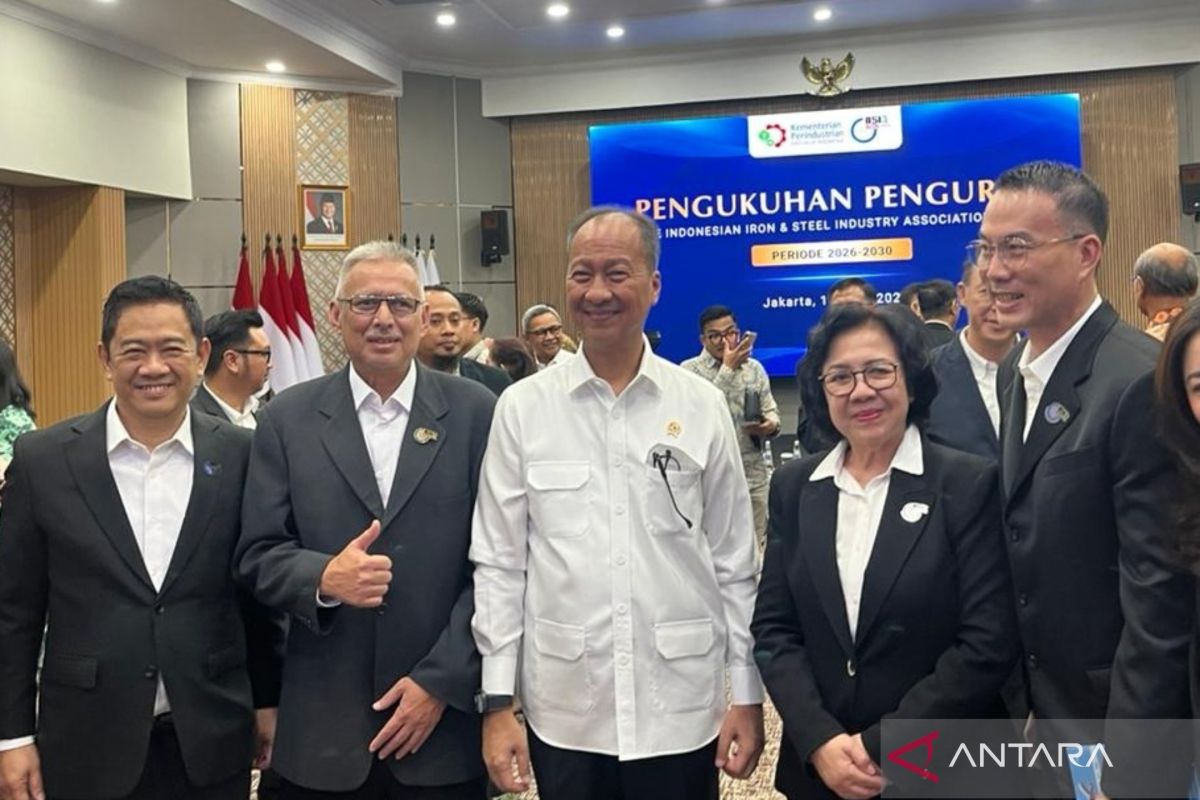
Indonesia’s Minister of Industry (Menperin) Agus Gumiwang Kartasasmita is encouraging the diversification of Indonesia’s steel export markets by targeting the Middle East region and developing industrial countries, to reduce dependence on a single primary destination and strengthen national industry resilience.
The Minister, met in Jakarta on Friday, stated that Indonesia’s steel exports are currently concentrated in China. He assessed this situation as risky if economic disruptions occur in the main destination country.
He explained that when dependence on one market is too high, potential economic turbulence in that country can directly impact the performance of the national steel industry.
“So, I am concerned about our export destination country’s dependence on one country. When that happens, if we assume that country experiences turmoil or economic problems, it will certainly affect our steel industry,” he said.
However, Indonesia must still anticipate future risks if slowdowns or economic disruptions occur in that country, which could pressure national steel exports.
As an alternative, the government sees export opportunities to the Middle East region, which is considered to have a large demand for steel products, especially for infrastructure reconstruction and industrial facilities such as refineries.
In addition, countries with underdeveloped steel industry bases are also seen as potential new markets for Indonesian exports.
In terms of performance, Indonesia’s steel product exports in 2025 are still dominated by five main markets, namely China, Taiwan, India, Vietnam, and Italy, from a total national steel export value of around US$29.7 billion.
China is the largest destination with a value of more than US$17.9 billion, followed by Taiwan at around US$1.8 billion, India US$1.6 billion, Vietnam US$864 million, and Italy US$777 million.
According to him, this achievement positions Indonesia as one of the largest steel exporters in Southeast Asia, reflecting the competitiveness of national steel products in regional and global markets.
However, if ferronickel commodities are excluded from the calculation, the trade balance actually shows a deficit. In 2025, the deficit is recorded at around 3.7 million tonnes, with imports reaching 16.07 million tonnes and exports only 12.3 million tonnes. These imports are dominated by raw materials, accounting for 86% of the total volume.
This situation underscores that the challenges of the national steel industry lie not only in increasing production capacity but also in strengthening intermediate and downstream sectors with higher technical specifications.
Furthermore, amid global pressures, the steel industry also faces excess world production capacity. OECD projections indicate that by 2027, global steel production capacity is estimated to reach 2,637 million tonnes, while demand is only around 1,916 million tonnes, resulting in excess capacity of nearly 38%.
Domestically, challenges also come from the influx of prefabricated steel, potential policy circumvention practices, and the need to strengthen industry protection instruments from upstream to downstream.
In response to these various challenges, the Ministry of Industry is preparing several strategies, including strengthening trade remedy instruments, consistent implementation of Indonesian National Standards (SNI), accelerating transformation towards green steel, increasing upstream sector investments, and deepening integrated downstream integration with strategic sectors such as shipping, automotive, and infrastructure.