
Industry Minister and Finance Minister Hold Joint Meeting on the Fate of Indonesia's Manufacturing Sector, Here Are the Results
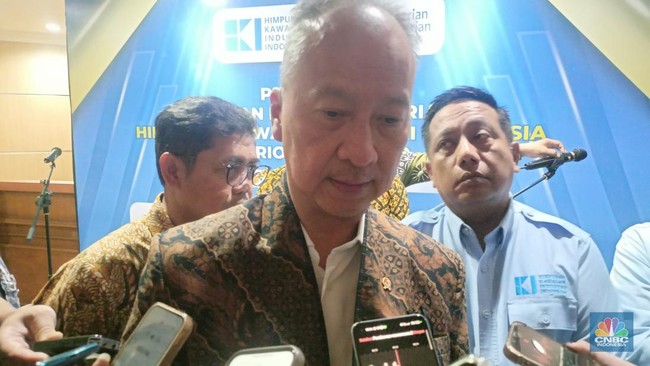
The government is striving to maximise the role of the manufacturing sector as a driver of national economic growth. Industry Minister Agus Gumiwang Kartasasmita revealed that his ministry has engaged in intensive discussions with Finance Minister Purbaya Yudhi Sadewa to unravel various obstacles faced by the industry in the field. This step is being taken amid global challenges that continue to loom over the industrial sector. Cross-ministry coordination is necessary to ensure that the policies adopted can address the needs of business actors. “How can the manufacturing sector contribute more, provide greater support to national economic growth. We all know that the manufacturing sector is the backbone of the economy,” Agus stated at the Ministry of Finance office on Tuesday (3/5/2026). He emphasised that the performance of the manufacturing sector has shown a positive trend in recent years. In fact, the growth of this sector has even surpassed national economic growth, an achievement that has not occurred in more than a decade. “Its contribution to GDP has been rising year by year, and last year’s manufacturing growth was recorded above national economic growth, which had not happened for 14 years prior,” he said. In that meeting, Agus mentioned that the two ministries dissected various fundamental issues hindering industrial performance. The main focus was directed towards finding solutions that could be implemented immediately. He also appreciated the Finance Ministry’s earlier initiative to form a special team to address bottlenecks in the business sector. “Both of us, the Ministry of Finance and the Ministry of Industry, have sat down together; we have examined various constraints that might be faced in the field by industrial business actors,” he explained. Agus assessed that this approach would accelerate the formulation of targeted policies. This is important so that the manufacturing sector remains competitive amid global dynamics. In addition, the discussion also covered policy steps that could drive faster industrial growth. The government is considering a combination of stimuli and incentives. “So, the main point we discussed was what policies and steps need to be taken by the government, either as stimuli or incentives,” he revealed. Export issues also became a primary concern in the meeting. The government aims to encourage an increase in the manufacturing export contribution without neglecting the strength of the domestic market. According to Agus, Indonesia’s current industrial structure is still dominated by the domestic market. This differs from other countries in the region that are more aggressive in export markets. “Our manufacturing output has averaged only around 20% exported, with 80% consisting of products absorbed domestically,” he said.