
Industrial LPG Diversion Policy Supported, Public Must Be Prioritised
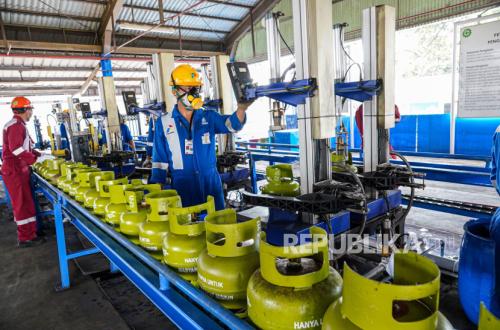
The government plans to limit LPG sales to the industrial sector. This policy aims to ensure the supply of 3kg LPG for the public remains secure amid global pressures.
Golkar Party’s Deputy Chairman for Economic Policy, Abdul Rahman Farisi, supports the Ministry of Energy and Mineral Resources (ESDM) initiative. He views the diversion of industrial LPG as an appropriate step to safeguard public needs.
“I appreciate the government’s efforts to ensure gas availability, including opening cooperation with Russia as a strategic step to address geopolitical dynamics,” Abdul Rahman stated on Tuesday (14/4/2026).
He revealed that national LPG stocks had once dropped to around 10 days, below the safe threshold of 11.4 days. Import dependency remains high, exceeding 80%.
Under these conditions, diverting LPG from the industrial sector is estimated to yield around 400,000 tonnes. This step is deemed essential to maintain the supply of 3kg LPG for the public.
“I support this policy because it concerns the government’s priority scale in fulfilling the availability of 3kg LPG needs for lower and middle-class communities,” he said.
Abdul Rahman emphasised that public interest must be the top priority. According to him, this policy targets the most vulnerable groups in society.
However, he cautioned that the impact on the industrial sector must still be considered. Although only about 5% of total national LPG consumption, this sector plays a crucial role in the production chain.
“Regarding industrial gas needs, solutions must be considered because these industrial requirements will greatly affect production lines, as every increase in production costs will also impact companies’ competitiveness,” Abdul Rahman said.
He urged the government to prepare compensation schemes for industries. Options such as incentives or cost adjustments are seen as important to maintain balance.
This step is expected to secure energy supplies for the public without disrupting the sustainability of the industrial sector.