
Industrial Estates Bill Must Resolve Regulatory Overlaps, Says HKI
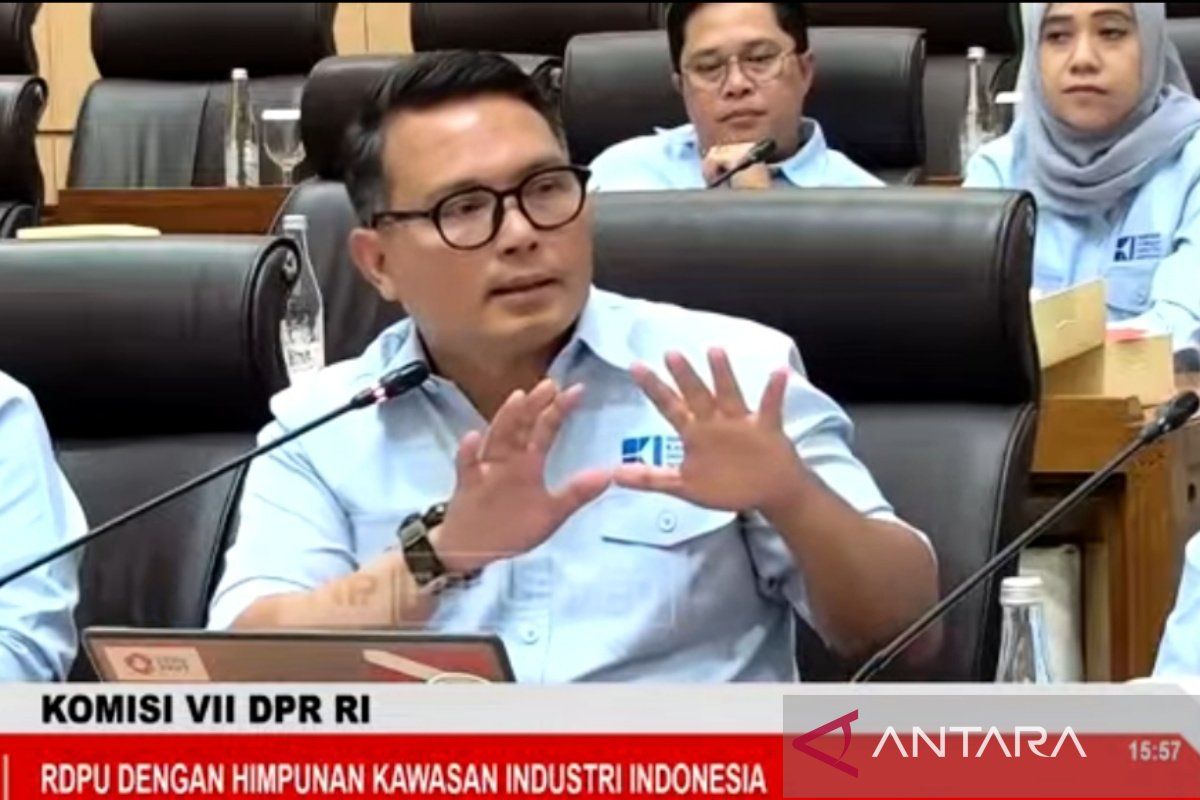
Jakarta (ANTARA) - The Indonesian Industrial Estate Association (HKI) has emphasised that the Draft Law (RUU) on Industrial Estates must harmonise 24 related regulations to overcome overlapping rules.
“The reason investment barriers occur is that there are at least 24 regulations related to industrial estates spread across various ministries and agencies,” said the Vice Chairman of HKI Indonesia, Didik Prasetiyono, in Jakarta on Monday, during a Public Hearing with the Industrial Estate Bill Working Group.
According to him, the industrial estate law requires harmonisation to accommodate the specific interests of industrial zones. He noted several issues within industrial estates that need addressing, including land and spatial planning, the environment, infrastructure and facilities, as well as security.
Didik explained that problems regarding land and spatial planning are largely caused by overlapping regulations and land status. “For example, a factory has already been built, but the land is classified as LSD (Protected Paddy Land). This creates difficulties on the ground regarding spatial planning and land status,” he said.
Furthermore, the Approval of Spatial Planning Suitability (PKKPR) does not guarantee spatial utilisation or subsequent licensing. Even with a PKKPR, managing detailed land matters can take an excessively long time, sometimes up to 1.5 years.
“Investors cannot afford long waiting periods. Land administration can take over 1.5 years. An example is the exchange of village treasury land (TKD), which, if following all normative timelines, can take more than 1.5 years. This is extremely slow and acts as a hindrance to investment,” he added.
Similarly, challenges exist regarding environmental approval mechanisms, as not all current processes accommodate the characteristics of industrial estates as integrated environmental management zones.
Regarding infrastructure and facilities within industrial estates, the challenge lies in the areas outside the estates, such as roads, bridges, and drainage systems, which are beyond the capacity of industrial estate managers to facilitate. “The issue is the lack of clear division of responsibility between the government, estate managers, and local governments,” he said.
Didik added that security standards have not been applied uniformly across all industrial estates, leading to inconsistencies. Coordination between industrial estates, local governments, and security forces remains a challenge.
Disruptions to investment in several regions are quite high. Consequently, HKI proposes the implementation of an integrated industrial security system, the creation of national standard operating procedures for industrial estate security, and strengthened coordination between agencies to protect industrial zones.
“The goal is to ensure that investment in industrial estates is secure,” he concluded.