
Indonesia's Top 10 Fertiliser Import Suppliers, with China Leading
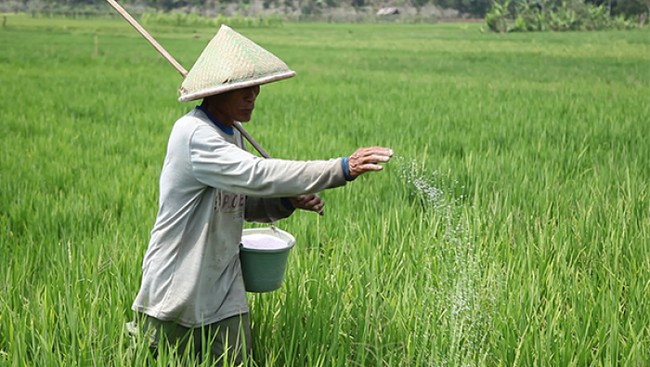
Jakarta, CNBC Indonesia - Fertiliser prices are soaring amid the Iran war. Indonesia, which still has a significant dependence on fertiliser imports, is feared to be affected.
Indonesia’s dependence on fertiliser imports remains high, even showing a fluctuating trend over the past five years. The latest data indicates that several countries such as China, Russia, and Canada continue to be the main suppliers, with dynamics heavily influenced by global geopolitical tensions.
The national fertiliser requirement in Indonesia is approximately 13 million tonnes, with total imports of 6.3 million tonnes. Indonesia also still imports fertiliser raw materials such as phosphate rock (raw material for NPK/SP-36 fertiliser) and potassium/potash (raw material for KCL fertiliser).
In 2024, Indonesia’s fertiliser imports increased again from several key countries.
China recorded a significant surge to 1,599 tonnes, followed by Russia at 1,397 tonnes, and Canada which rose back to 1,260 tonnes after a sharp decline in 2023.
Looking deeper, Indonesia’s fertiliser import patterns also show shifts in supply sources over time. In the period before 2022, imports tended to be more stable with dominance from China and Canada as the main suppliers.
However, entering 2022, there was a significant surge, particularly from Canada and Russia, indicating an adjustment in import strategy to maintain fertiliser availability amid increasing global uncertainty.
Meanwhile, in 2023, there was a sharp correction in several supplier countries, before increasing again in 2024. This fluctuating pattern reflects that Indonesia does not only rely on one country but also actively adjusts import sources to anticipate supply disruption risks.
War Disrupts Fertiliser Supply Chain
Such volatility does not occur without cause. Global geopolitical conflicts, particularly the Russia-Ukraine war since 2022, have become the main factor disrupting the world’s fertiliser supply chain.
In addition, conflicts in the Middle East have also triggered a shipping crisis in the Strait of Hormuz, which is now dubbed the most terrifying supply disruption in the history of the global energy and commodities market.
“The current shipping crisis in the Strait of Hormuz is the largest supply disruption in the history of the global oil market,” said Birol, quoting the World Economic Forum (WEF) on Sunday (05/04/2026).
The Arabian Gulf region is a major global agricultural hub that contributes at least 20% of all seaborne fertiliser exports. The world’s dependence is even more acute on urea, the most widely used nitrogen fertiliser, where 46% of global trade comes from this region.
This supply is crucial for major agricultural economies such as India, Brazil, and China. Analysts warn that prolonged disruptions will tighten availability in import-dependent regions, potentially driving up global food production costs and increasing inflationary pressures.
Impact on Food
Projection data shows the global food index rising from 93.3 in Q4-2025 to 99.2 in Q1-2026, then 103.6 in Q2-2026. This pressure persists throughout the year before tending to stabilise in 2027.
Annually, global food prices are estimated to rise 6% in 2026. This is felt directly in many countries because prices of wheat, corn, vegetable oils, to rice are heavily influenced by transport costs and agricultural input expenses.
If ships take longer routes, fertiliser arrives late, or bad weather coincides, retail market prices can move faster than global figures.