
Indonesia's Sovereignty Amid the "America First" Storm
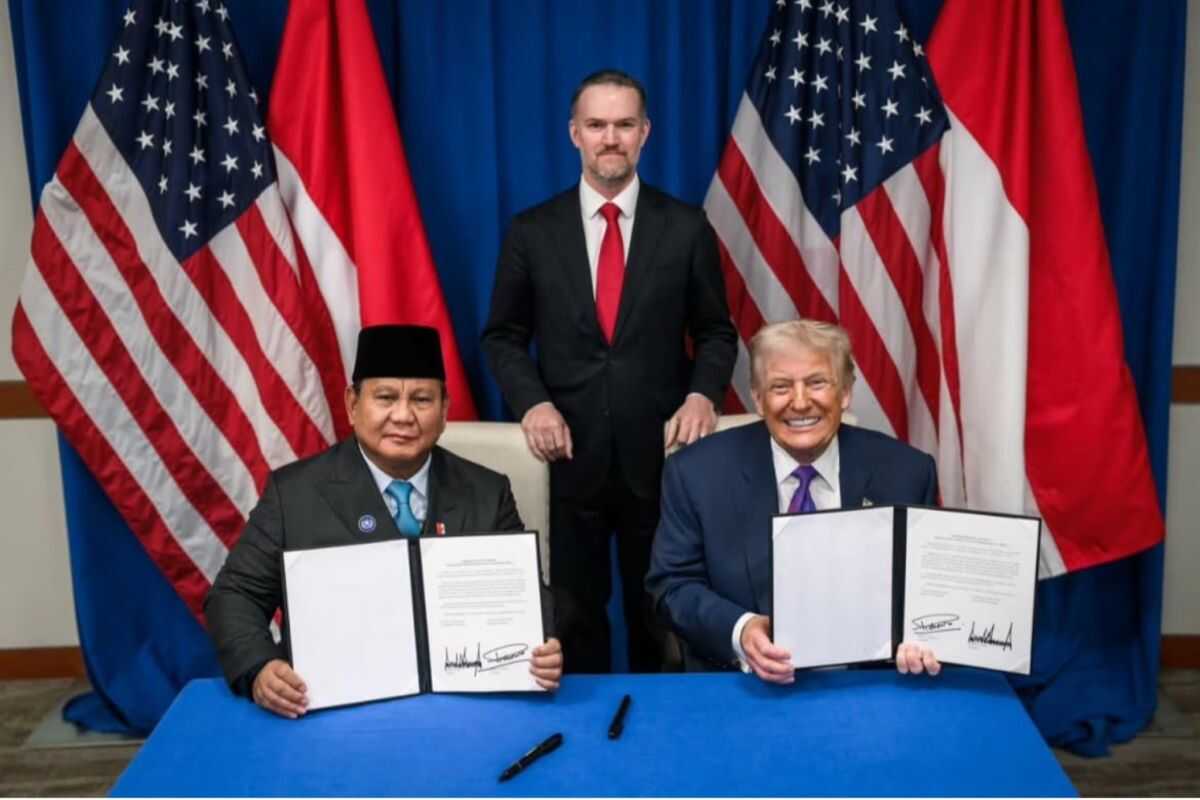
Jakarta (ANTARA) - President Prabowo Subianto’s attendance at the Board of Peace High-Level Conference on 19 February 2026 has drawn both praise and criticism from Indonesian society. Those who commend the President’s diplomatic move appear to acknowledge that, amid an increasingly uncertain global landscape, the President has successfully steered the country into a new condition described as a “Golden Age” in the alliance between the two nations.
President Prabowo and President Donald Trump signed a Joint Statement entitled “Implementation of the Agreement Toward a New Golden Age for the US-Indonesia Alliance.”
In the lexicon of international diplomacy, the term “alliance” is more commonly used for military pacts such as NATO, where members are referred to as “allies.” For economic cooperation between nations, the term more frequently employed is “partnership.” This would be more consistent with Indonesia’s position as a Non-Aligned nation with an independent and active foreign policy — a country that would not become an ally in any military bloc.
However, the two heads of state may have used the term “alliance” to underscore the increasingly close relationship between the two leaders as they move towards the envisioned golden age.
The Joint Statement serves as an umbrella for one agreement between the two governments known as the US-Indonesia Agreement on Reciprocal Trade (ART); as well as 11 sectoral memoranda of understanding worth a combined US$38.4 billion between companies from both countries, signed in the presence of the Presidents on 18 February.
The ART has attracted sharp scrutiny from various segments of society, as it is considered potentially entrapping for the country across multiple sectors. Nevertheless, the agreement needs to be viewed with clarity, as it will only come into force 60 days after signing, requiring approval and ratification by both the United States Congress and the Indonesian Parliament. Once ratified, the ART would take effect on 20 April 2026.
In broad terms, the reduction of US import tariffs on Indonesian commodities and products to 19 per cent from a threatened 32 per cent — with 1,829 products receiving zero per cent tariffs including palm oil, coffee, spices, rubber, cocoa, textiles (using American cotton as base material), and garments, with an additional 1,700 product categories to be added — is welcome news for Indonesia, as it would enable the country to compete with rivals from other nations in the American domestic market.
This reduction avoids the heavier sanctions that Trump has imposed on countries deemed non-compliant. The lower tariffs would also enhance the attractiveness of Indonesia’s investment climate, drawing more industrial relocation from other countries and potentially creating new employment opportunities.
In return, among other concessions, Indonesia would eliminate 99 per cent of tariffs on American exports in agriculture, technology, automotive, pharmaceuticals and other sectors, in addition to purchasing soybeans, beef and energy products, adopting American quality standards, and buying Boeing aircraft.
The ART also provides space for American investors to invest in rare minerals, critical minerals and the energy sector, which would benefit the Indonesian economy. The government maintains that 90 per cent of Indonesia’s proposed reciprocal tariff measures have been well received by the United States and are already covered within the agreement.
The President needs to provide a comprehensive explanation to parliament and announce it to the public.