
Indonesia's Regulations Proven Correct, Americans Agree
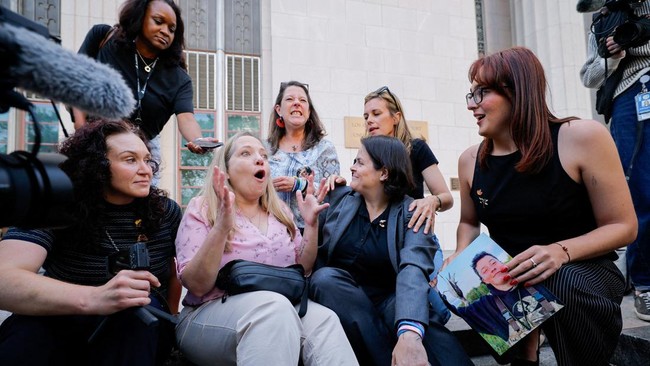
Jakarta, CNBC Indonesia - A court in the United States has declared Google and Meta guilty of creating social media platforms that damage the younger generation. The two companies have been found to have intentionally designed applications that cause addiction.
A jury in a Los Angeles court fined Meta US$4.2 million and Google US$1.8 million. This ruling is seen as opening the door to thousands of other lawsuits.
The Los Angeles trial began with a lawsuit from a 20-year-old woman named Kaley. Kaley stated that she became addicted to YouTube and Instagram from a young age because both platforms implemented designs that capture user attention, such as unlimited scroll features.
The court found Google, the owner of YouTube, and Meta, the owner of Instagram, negligent for applying addictive design elements and failing to warn users about the dangers posed by their platforms.
During the trial, the plaintiff’s lawyers sought to demonstrate how Meta and Google targeted child users and made decisions prioritising profits over safety.
Internal company documents were presented showing efforts by Meta and Google to attract young users. One key piece of evidence was Meta CEO Mark Zuckerberg’s decision to remove a policy banning beauty filters, despite those features being proven harmful to children and teenagers.
“Today’s ruling is a referendum from the jury to the entire industry; accountability is finally here,” said the plaintiff’s lawyer Kelsey, as quoted by Reuters.
Meta and Google rejected the ruling and plan to appeal.
Reuters explained that the Los Angeles ruling opens the way for lawsuits against social media companies. Previously, social media companies were protected by law from being sued over content circulating on their platforms. However, the plaintiffs in Los Angeles showed that they could be brought to court based on platform design.
Snap and TikTok have also been sued. However, both companies chose to settle before the trial process began.
The trial marks a new stage amid pressure faced by US tech giants regarding child and adolescent safety.
Around 20 US states have issued regulations on restricting social media access for children and teenagers. These rules include mandatory age verification for user accounts up to smartphone bans in schools.
However, US Congress representatives have so far refused to create national rules on social media restrictions.
In Indonesia, the government has established regulations delaying social media access for children and teenagers. Starting from 28 March 2026, the government will prohibit children under 16 from having social media accounts without parental consent.
Social media platforms such as TikTok, Instagram, YouTube, and even Roblox must implement user age verification systems and apply restrictions based on each platform’s risk factors.