
Indonesia's Q1 2025 Investment Reaches Rp 465.2 Trillion, Downstreaming Sector Surges 80 Per Cent
JAKARTA — The government recorded Indonesia’s investment realisation in the first quarter of 2025 at Rp 465.2 trillion. Of this total, investment in the downstreaming sector reached Rp 136.3 trillion, contributing 29.3 per cent of total realised investment. The figure indicates that the national downstreaming policy is increasingly becoming a primary attraction for investors, both domestic and foreign.
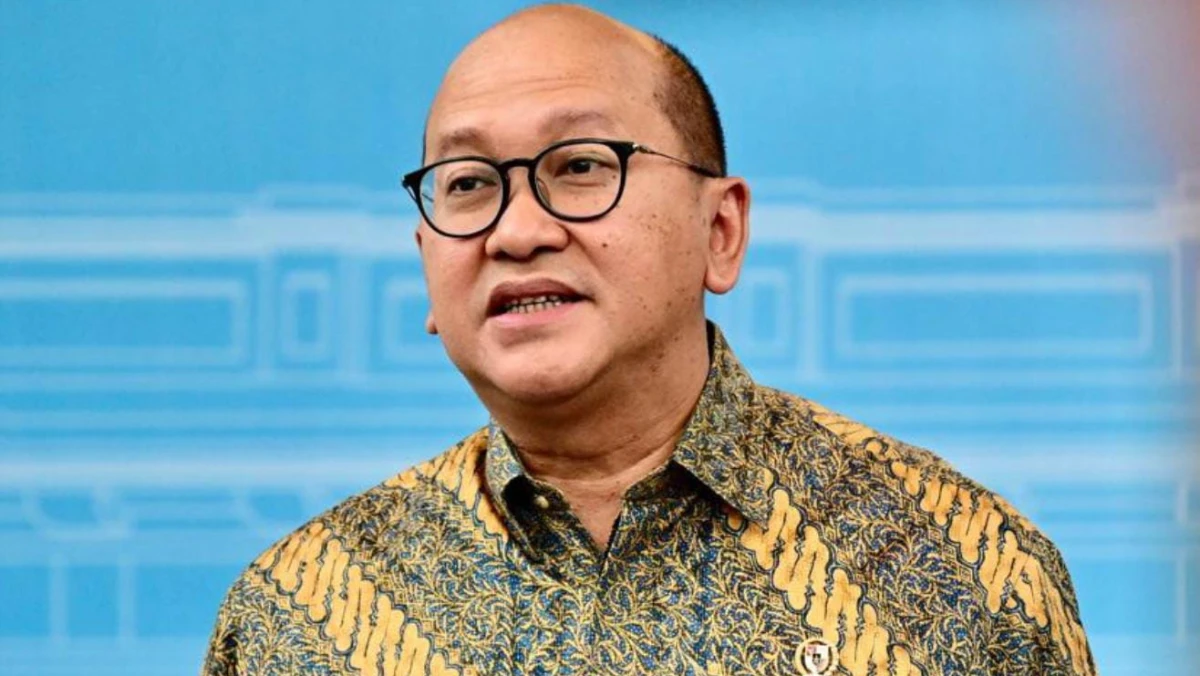
Minister of Investment and Downstreaming/Head of the Investment Coordinating Board (BKPM) Rosan Perkasa Roeslani stated that this achievement is equivalent to 24.4 per cent of the 2025 national investment target of Rp 1,905.6 trillion. On a year-on-year basis, investment realisation rose 15.9 per cent compared to Rp 401.5 trillion in Q1 2024. On a quarter-to-quarter basis, investment realisation increased 2.7 per cent from Rp 452.8 trillion.
“This investment realisation is very much in line with our expectations. The 15.9 per cent year-on-year increase demonstrates a positive trend,” said Rosan at the Q1 2025 Investment Realisation Achievement Press Conference in Jakarta on Tuesday (29/4/2025).
Of the total realisation, domestic investment (PMDN) contributed Rp 234.8 trillion (50.5 per cent), whilst foreign direct investment (PMA) accounted for Rp 230.4 trillion (49.5 per cent). According to Rosan, the dominance of domestic investment was not due to a decline in foreign investment, but rather a significant surge in domestic investment. PMDN increased 19.1 per cent compared to the previous year, whilst PMA also grew 12.7 per cent.
“This shows that the confidence of both domestic and foreign investors in Indonesia remains strong,” Rosan explained.
Factors driving the increase include the acceleration of infrastructure development, such as toll roads in North Sumatra and Riau, as well as new investment reporting in the real estate sector.
By country of origin, the largest sources of foreign investment were Singapore at US$4.6 billion, Hong Kong at US$2.2 billion, China at US$1.8 billion, Malaysia at US$1 billion, and Japan at US$1 billion.
The sectors absorbing the most foreign investment include basic metals and metal goods (excluding machinery and equipment), mining, transportation, warehousing and telecommunications, other services, and the chemical and pharmaceutical industries.
By region, investment outside Java reached Rp 235.9 trillion, slightly higher than investment on Java at Rp 229.3 trillion. This indicates a positive shift towards more equitable distribution of national investment.
Investment realised during Q1 2025 also created 594,104 new jobs, an increase of 8.5 per cent compared to the same period last year.
“This is a very positive indicator amidst geopolitical and global economic uncertainty. Investor interest, both domestic and foreign, in Indonesia continues to strengthen,” said Rosan.
Regarding the downstreaming sector, investment realisation reached Rp 136.3 trillion, a significant increase of 79.82 per cent compared to Rp 75.8 trillion in Q1 2024. In detail, downstreaming investment was dominated by minerals at Rp 97 trillion, plantations and forestry at Rp 31.13 trillion, oil and gas at Rp 6.55 trillion, and fisheries and maritime at Rp 1.03 trillion.
Previously, Minister of Energy and Mineral Resources (ESDM) Bahlil Lahadalia stated that to support the downstreaming programme through to 2040, Indonesia requires approximately US$550 billion or Rp 9,249 trillion in investment, covering 28 commodities across the mining, oil and gas, fisheries, forestry, and agricultural sectors.
Of this requirement, first-phase investment in 2025 has already reached commitments worth US$40 billion or Rp 672.82 trillion. Bahlil emphasised that downstreaming can significantly increase added value, as seen with nickel, where added value rose from US$3.3 billion to US$35 billion.