
Indonesia's Population Reaches 288.3 Million, Over 50% Living on Java Island
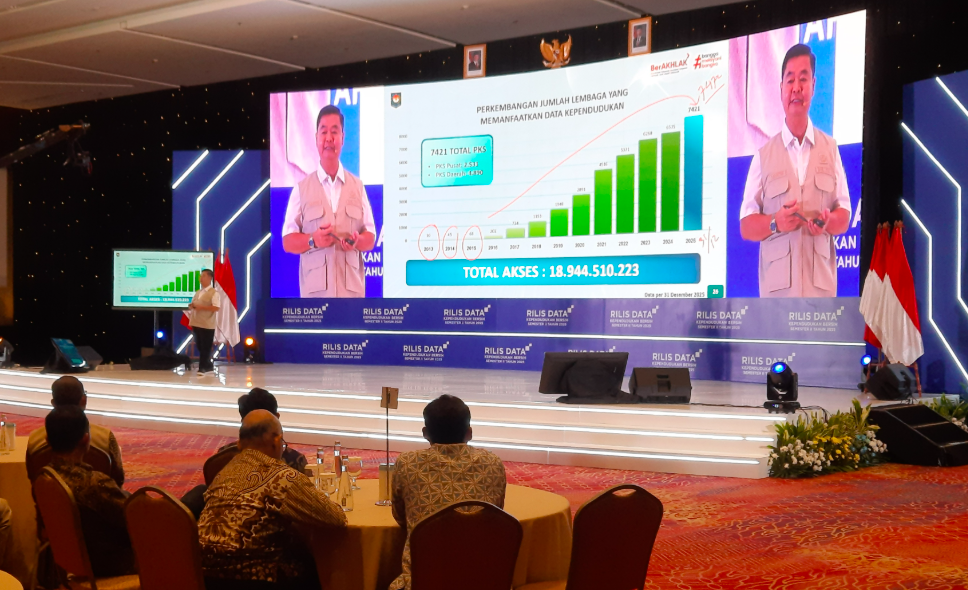
The Ministry of Home Affairs, through the Directorate General of Population and Civil Registration (Dukcapil), has recorded Indonesia’s population reaching 288.3 million people. This was announced by Dukcapil Director General Teguh Setyabudi during the release of the Clean Population Data (DKB) for the Second Semester of 2025 at the Bidakara Hotel Assembly Hall in Jakarta on Thursday, 12 March.
Teguh explained that Indonesia’s population according to the DKB for the second semester of 2025 reached 288,315,089 people, an increase of 1,621,396 compared to the first semester of 2025. The breakdown comprised 145,498,092 men and 142,816,997 women.
“This ratio shows a slight surplus of men, but it remains within normal demographic limits. The government typically monitors this ratio for long-term planning, for instance in the fields of reproductive health, education, and social welfare,” said Teguh.
Teguh explained that Indonesia’s population distribution remains concentrated on Java Island at 55.55 per cent, followed by Sumatra at 21.88 per cent, whilst other regions such as Kalimantan, Sulawesi, Bali-Nusa Tenggara, Maluku, and Papua have smaller proportions.
Additionally, the percentage of electronic ID card (KTP-el) registration has reached 97.47 per cent, covering 206,467,957 people out of a total of 211,826,747 eligible. According to Teguh, the high registration percentage means demographic data increasingly reflects actual conditions, enabling more accurate planning for development, statistics, and public policy.
“The difference of approximately 2.53 per cent, or roughly 5.3 million people, represents groups not yet reached, which could be due to geographic, social, or administrative factors. Dukcapil continues to pursue mobile registration services to accelerate the registration rate and ensure the majority of citizens can access public services based on the national identity number (NIK), thereby strengthening the principle of ‘no one left behind’,” he explained.
According to Teguh, the population data was compiled from various civil registration services including electronic ID card biometric recording, birth registration, death registration, population movement, marriage and divorce registration, and the issuance of other civil documents.
“This Clean Population Data represents a factual portrait of Indonesia’s demographic conditions obtained from civil registration services throughout the country. This data serves as an important reference for the government, institutions, and the business world,” said Teguh.