
Indonesia's Population Reaches 288.3 Million in 2025, with More Males Than Females
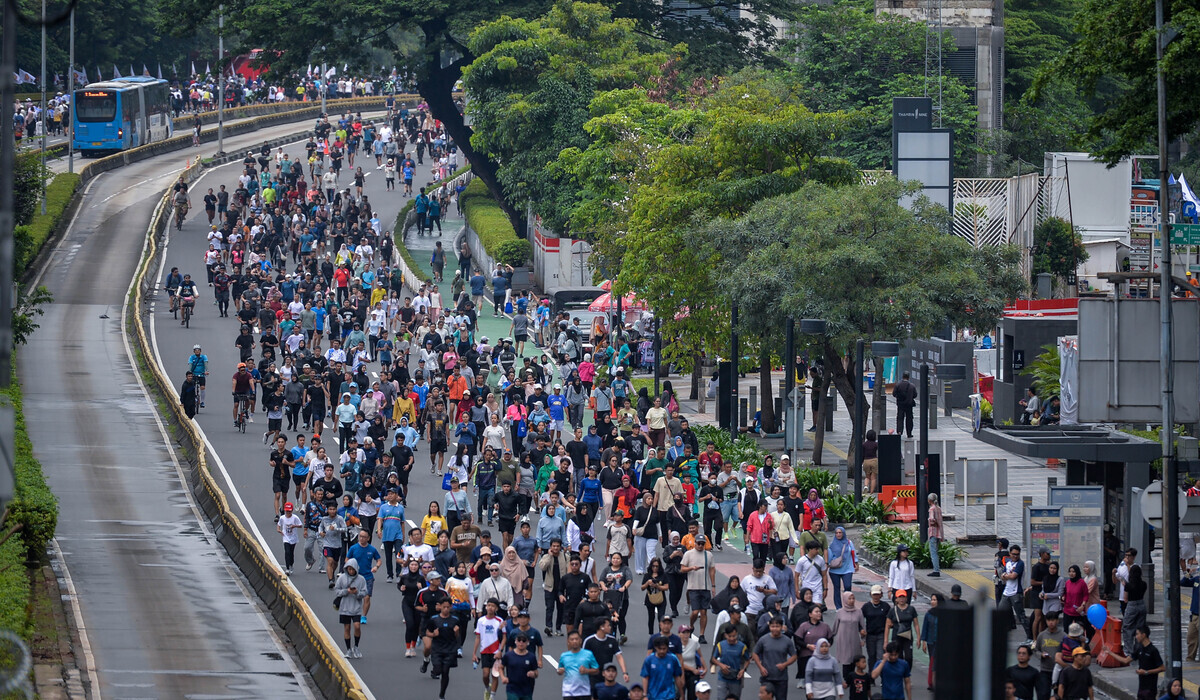
The Director General of Population and Civil Registration at the Ministry of Home Affairs, Teguh Setyabudi, announced that based on the Net Population Data (DKB) for the second semester of 2025, Indonesia’s population has reached 288,315,089 people. The male population stands at 145,498,092, whilst the female population is 142,816,997.
Overall, Indonesia’s population in the second semester of 2025 increased by 1,621,396 people compared to the first semester of 2025.
“This ratio shows a slight surplus of males, but remains within normal demographic limits. The government typically monitors this ratio for long-term planning, for instance in reproductive health, education, and social welfare,” Teguh said in Jakarta on Thursday, 12 March.
Regarding population distribution, the majority remains concentrated in Java at 55.55 per cent, followed by Sumatra at 21.88 per cent, whilst other regions such as Kalimantan, Sulawesi, Bali-Nusa Tenggara, Maluku, and Papua account for smaller proportions.
The three provinces with the largest populations are West Java (52.2 million people), East Java (42.2 million people), and Central Java (38.6 million people). Conversely, the regions with the smallest populations are in the east, namely West Papua (588,000 people), South Papua (588,000 people), and Southwest Papua (632,000 people).
At the district and city level, Bogor Regency reaffirms its position as the most densely populated area with a population approaching 6 million people. This figure far exceeds Bandung Regency (3.9 million people) and Tangerang Regency (3.5 million people). Meanwhile, Supiori Regency in Papua is recorded as the region with the smallest population, with only 29,000 people.
The Directorate General of Population and Civil Registration has also recorded that 5.5 million Indonesians were divorced in 2025. The majority of Indonesia’s population currently falls within the productive age group, with 199,026,595 people aged between 15 and 64 years as of the second semester of 2025.
The Net Population Data is the result of a rigorous cleansing and synchronisation process to eliminate duplicate or anomalous data. The percentage of electronic ID (KTP-el) registration has reached 97.47 per cent, accounting for 206,467,957 out of the 211,826,747 people required to hold one.