
Indonesia's Population Reaches 288.3 Million by End of 2025
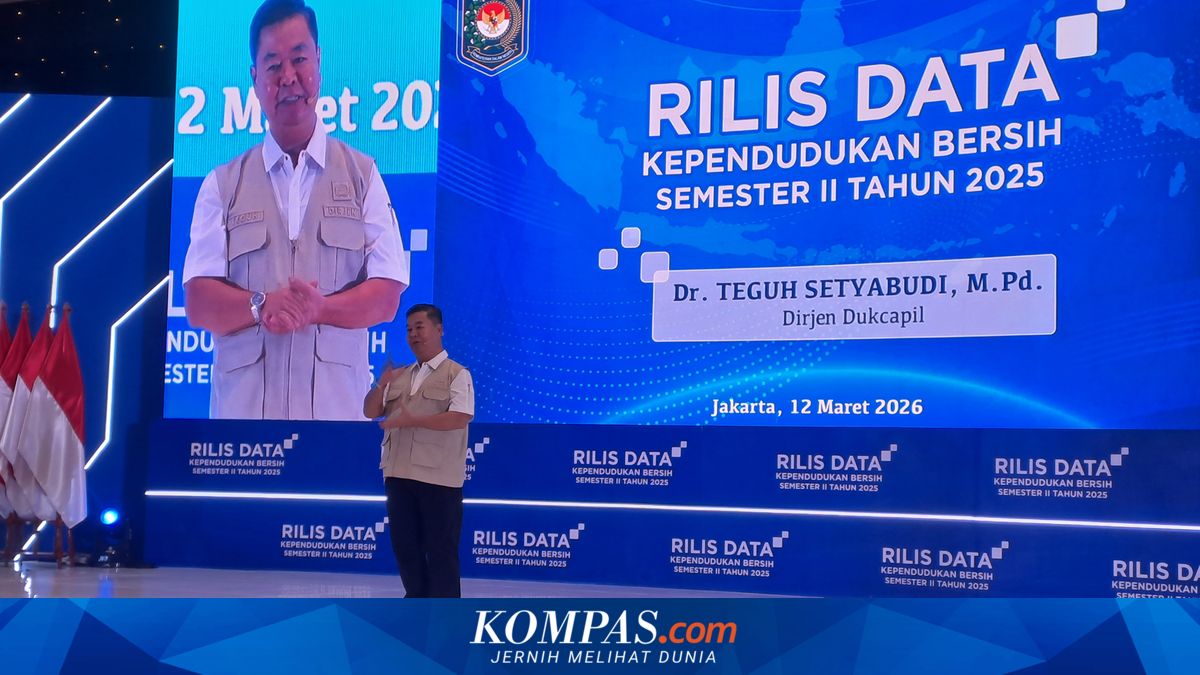
Jakarta — The Directorate General of Population and Civil Registration (Dukcapil) of the Ministry of Home Affairs, Teguh Setyabudi, revealed that Indonesia’s population as of 31 December 2025 reached 288,315,899 people.
This figure represents an increase of approximately 1.6 million people in the first half of the year compared to data from 30 June 2025.
“From the total population, approximately 211 million people have obtained electronic identity cards (e-KTP). Of that number, 97.47 percent, or approximately 206.4 million people, have completed e-KTP registration,” Teguh said during the release of second-semester 2025 population data on Thursday (12 March 2026).
By gender, the male population was recorded at 145,498,092 people, whilst the female population was 142,816,997 people.
In terms of geographical distribution, the island of Java remains the region with the largest population, accounting for 55.80 percent of Indonesia’s total population. This also explains why national economic activities remain largely concentrated in this region.
Meanwhile, population distribution in other regions comprises Sumatra at 21.8 percent, Sulawesi at 7.35 percent, Kalimantan at 6.1 percent, Bali and Nusa Tenggara at 5.55 percent, Papua at 2.01 percent, and Maluku at 1.1 percent.
By province, several regions have relatively large populations, including North Sumatra with approximately 15.7 million people and Aceh with approximately 5.7 million people. Meanwhile, a number of other provinces still have populations below 5 million people.
In terms of religious composition, the majority of Indonesia’s population adheres to Islam at 87.5 percent, followed by Christianity at 7.3 percent, Catholicism at 3 percent, Hinduism at 1.66 percent, Buddhism at 0.69 percent, Confucianism at 0.03 percent, and followers of traditional beliefs at 0.04 percent.
“This situation shows that Indonesia is still in a demographic dividend phase, which is estimated to continue until around the 2030s,” Teguh said.
According to him, this condition presents a major opportunity if the potential of the working-age population can be optimised through improved education, human resource quality, and job creation.