
Indonesia's planned ban on social media for under-16s: Effective protection or excessive restriction?
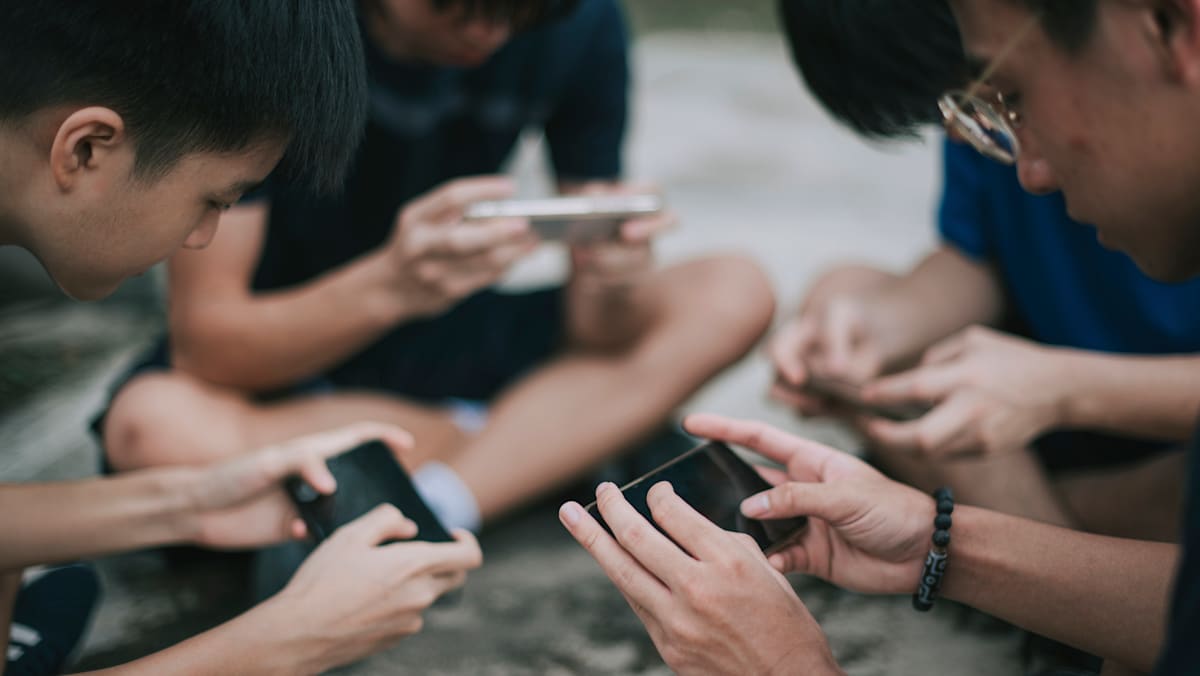
Indonesia’s planned ban on social media for under-16s: Effective protection or excessive restriction?
Some parents and experts question how realistic enforcement will be, whether children will find ways to bypass the restrictions, and how digital literacy can go in ensuring young people’s online safety.
JAKARTA: Like many of her peers, Rufaida Khansa As Salamiyah uses her mobile phone to capture memories, including that of family vacations. She then uploads these videos onto her YouTube account.
But the 10-year-old - who prefers to go by Aida - may soon lose access to that account by the end of the month. The Indonesian government had announced that it plans to ban access to social media for those under the age of 16 from Mar 28.
Communications and Digital Affairs Minister Meutya Hafid said that move would make Indonesia the “first non-Western country” to introduce age-appropriate access restrictions in the digital space.
In announcing the regulation last week, Meutya said that parents ”no longer have to fight alone against the giants of the algorithm” as the accounts belonging to children under 16 on “high-risk” platforms will start to be deactivated, beginning with YouTube, TikTok, Facebook, Instagram, Threads, X, Bigo Live, and Roblox.
In doubling down on the government’s efforts, Meutya on Wednesday (Mar 11) said that her ministry will work with others closely to provide “more comprehensive protection for children”.
“Collaboratively, we have all agreed to carry out acceleration measures leading up to Mar 28, so that efforts to protect children in the digital sphere … can be implemented more effectively,” she was quoted as saying by Antara.
And while Indonesia’s planned move appears to have received broad support from parents, IT experts and child psychologists whom CNA spoke to, some question whether the move will genuinely protect children from harmful online content.
They also caution if the social media ban may be too overly restrictive on a generation that has grown up as digital natives.
“DIGITAL EMERGENCY”
Aida’s mother, 40-year-old Vilna Rosana, told CNA that she supports the policy and agrees that Indonesia is facing what the communications minister had described as a “digital emergency”.
“This is an emergency … children are frequently exposed to dangerous content (online),” Vilna said, calling on her past experience as an elementary school teacher when she discovered that some of her students had been exposed to pornographic materials online.
The homemaker said that she had hoped that Indonesia would tighten its rules on social media usage for children after learning of a similar policy in Australia that took effect in December requiring TikTok, YouTube, Snapchat and other sites to remove accounts held by under-16s.
A “major task” to safeguard our children: Indonesian minister
Communications and Digital Affairs Minister Meutya Hafid on Wednesday (Mar 11) reiterated that the move to ban social media for under-16s reflects the Indonesian government’s effort to provide broad protection for children in the digital space.
Indonesia has a far larger child population than countries that have implemented similar policies, meaning that the number of Indonesian children who must be protected is “significantly higher”, she said, as reported by Antara.
Meutya noted that Australia, for example, targets around 5.7 million children under similar regulations while Indonesia has roughly 70 million children.
Beyond the scale of implementation, she added that public understanding of how to use the digital space responsibly must also be addressed to ensure the effectiveness of the policy.
“This is certainly a major task, but we must take steps to safeguard our children. It is not easy, but it is something we must go through. With confidence, from the results of today’s meeting we are optimistic that despite the challenges, God willing, we can implement it effectively and efficiently,” Meutya said.
The minister was referring to a coordination meeting attended by Cabinet Secretary Teddy Indra Wijaya, Home Affairs Minister Tito Karnavian, Primary and Secondary Education Minister Abdul Mu’ti, Religious Affairs Minister Nasaruddin Umar, Minister of Population and Family Development Wihaji, and Minister of Women’s Empowerment and Child Protection Arifatul Choiri Fauzi.
In December, Australia became the first country to ban social media use for children under 16, blocking access to platforms including TikTok, Alphabet’s YouTube and Meta’s Instagram and Facebook.
The move by Australia drew criticism from major technology companies and free speech advocates, but was welcomed by parents and child advocates. Firms are required to enforce stringent age verification measures such as identity checks or facial scanning to comply with the new rules.
Platforms are using a mix of methods to determine users’ ages, including age inference based on online activity, age estimation through selfies, and official documents such as identification cards or bank account details.
When asked about the possibility that Aida’s YouTube account - which CNA observed has 78 subscribers and 97 uploaded videos - could be removed, Vilna said it would “not be a major issue” as she plans to explain the situation to her daughter.
“It is not something very important. We can ask ‘what the purpose of making the videos is: for memories or to be seen by other people?’
“We can explain that if they are deleted from YouTube, the videos can still be saved. If the goal is simply to share them with family, we can do so through my Instagram account or WhatsApp,” she said.
For Nurcahyanti, 40, the upcoming ban could not come at a better time after observing behavioural changes in her son, Alvin. She alleged that the boy has been cyberbullied on Roblox - a massive online platform and game creation system where users can play, create, and share millions of user-generated 3D experiences.
Alvin, who turns 10 in April, has had a Roblox account for the p