
Indonesia's Nickel Reserves Depleting: Only 19 Years Remaining at Current Production Levels
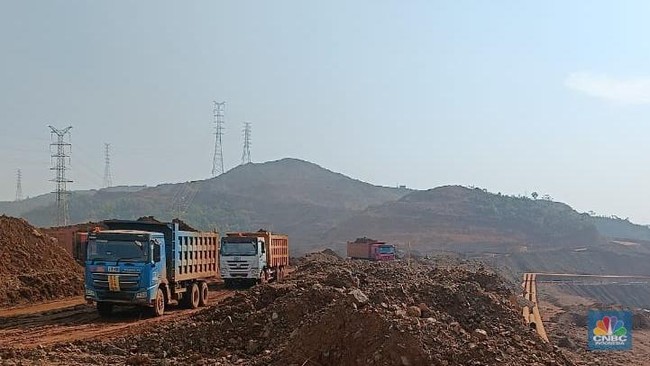
Jakarta — Indonesia’s Ministry of Energy and Mineral Resources (ESDM) has implemented a policy to adjust mineral production, particularly nickel, from 2026 onwards, in a bid to preserve the nation’s depleting mineral reserves.
Siti Sumilah Rita Susilawati, Secretary of the Directorate General of Minerals and Coal (Sesditjen Minerba), outlined the rationale behind the production adjustment policy for coal and nickel through the approval of the Work Plan and Budget (RKAB) for 2026.
One primary concern is extending the lifespan of Indonesia’s domestic nickel reserves. At current production levels of approximately 300 million tonnes annually, the country’s nickel reserves are estimated to last only 19 to 20 years.
“Nickel reserves are even shorter-lived. At last year’s production rate of 300 million tonnes, nickel reserves would last only around 19 to 20 years. This is why the government has decided to adjust production,” Rita stated at the CNBC Indonesia Mining Forum titled “How is Indonesia’s Mining Industry Faring?”
Coal production has also been reduced for 2026. Indonesia’s coal reserves are currently estimated to last approximately 39 years at the present production rate of around 800 million tonnes annually.
Another factor cited by Rita is the imbalance between global supply and demand for both coal and nickel last year, resulting in oversupply that has driven prices downward. The second objective is to maintain market equilibrium. Although Indonesia supplies approximately 60 per cent of global coal demand, the country remains unable to control prices independently.
“When balancing production and demand as a significant global supplier, we can influence prices,” she said.
“This policy has been adopted with considerable risks. The government is ensuring business certainty. Concerns are not dismissed; they are being kept on record. This is still an adjustment; we will evaluate and can submit a revised RKAB in June or July,” she added.
Earlier, Tri Winarno, Director General of Minerals and Coal at the ESDM Ministry, emphasised that controlling nickel and coal production is critical. According to his figures, Indonesia’s total nickel reserves currently stand at approximately 5 billion tonnes.
He warned that if mining continues at an intensive pace, Indonesia’s nickel reserves are predicted to be exhausted in less than two decades.
“If we keep extracting at this rate, continuously draining reserves, we will deplete them in less than 20 years. Whilst we search for new reserves, we must also apply the brakes,” Tri explained at the ESDM Ministry office in Jakarta.
Indonesia currently holds a vital position as a supplier of 65 per cent of global nickel. However, this massive production has previously caused an oversupply of up to 250,000 tonnes of nickel, resulting in depressed prices at around US$14,000-15,000 per tonne over the past several years.
“We have the resource, but what can we do? It turned out we had an oversupply of around 250,000 tonnes of nickel last year. So we have been trying to address that,” he added.
The supply control strategy through production cuts has begun to show positive effects on market price movements.
Tri noted that following the production limit signal issued by Energy and Mineral Resources Minister Bahlil Lahadalia, nickel prices began recovering to US$17,000 per tonne levels, occasionally touching US$18,000 per tonne.
“It is not just about reserve sustainability. China, for instance, is not expanding its nickel mining. Meanwhile, if we continue mining at current rates and deplete our reserves, what happens when prices rise? We would have nothing left. What alternative natural resources could we rely on for revenue or employment?” Tri concluded.