
Indonesia's Nickel Investment Remains Strong, Policy Stability Key - Kompas.id
mining
Mining companies plan their business for the long term. For investors, stability is key.
By Emanuel Edi Saputra, Aditya Putra Perdana
21 Mei 2026 15:26 WIB · Mining
The demand for nickel for batteries is predicted to remain very promising in the future. This presents a significant opportunity for Indonesia as one of the major nickel producers in the world. However, amidst these opportunities, investors emphasize the importance of policy stability and open dialogue to address the dynamics of domestic regulations and geopolitical turbulence.
In an exclusive media briefing titled “Eramet Outlook 2026: Navigating Changes in the Global Nickel Industry” in Jakarta on Wednesday (May 20, 2026), French mining company PT Eramet presented data on nickel demand developments. The main focus was the growth in nickel consumption for batteries.
Throughout the period of 2025-2035, the demand for nickel for batteries is expected to surge by approximately 200 percent, reaching 1.7 million tons. This figure will contribute around 30 percent of the total global demand. Specifically, the demand for nickel for batteries is projected to reach 557,000 tons in 2025, increase to 1.02 million tons in 2030, and touch 1.7 million tons by 2035.
The growth of nickel-based batteries is actually quite high. However, the emergence of lithium-iron phosphate (LFP) batteries, which do not use nickel, has slightly reduced this potential demand.
“Although there are challenges from LFP, we expect the growth in nickel demand to remain significant,” said Eramet Indonesia Chief Executive Officer, Jerome Baudelet.
Meanwhile, the stainless steel industry is predicted to continue growing at 5 percent per year, contributing 65-70 percent of global nickel consumption. Its share will decline due to faster growth in demand from the battery sector. However, stainless steel is certain to remain a key element of global nickel consumption.
Indonesia’s nickel industry has also experienced rapid growth over the past decade. In 2014, Indonesia contributed only about 8 percent of the world’s nickel production, whereas last year the figure surged to approximately 65 percent. Currently, Indonesia has become a major force in global nickel production. As capacity continues to be developed, Indonesia’s contribution is expected to reach 75-80 percent in the coming years.
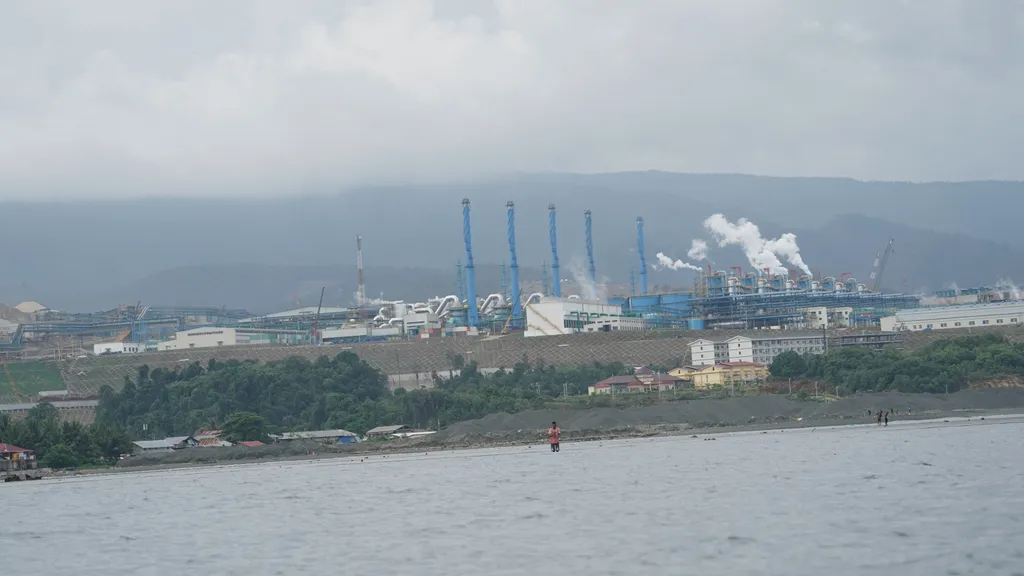
In terms of processing, technology continues to evolve. One of the newest is high-pressure acid leaching (HPAL) technology, which is used to produce battery components.
“Investors still view Indonesia as the most efficient and best place to invest in nickel production. If a smelter is built outside of Indonesia, the costs will be significantly higher,” Jerome stated.
At the same time, the mining industry is facing challenges in the form of geopolitical turmoil and domestic policy dynamics. Global conflicts have led to an increase in energy prices as well as sulfur, which is a key component in nickel production at HPAL smelters.
Mining companies fundamentally require predictability and prioritize dialogue, especially since mining business planning is designed for the long term. For investors, regulatory stability is key to business sustainability.
Currently, various new policies are emerging domestically, ranging from production cuts through work plans and budget costs (RKAB) to discussions on increasing royalties and export taxes. In principle, if market conditions are favorable and companies are making profits, it is reasonable to contribute more to the state. However, the most important thing is to establish a dialogue between the government and business actors so that these policies can be implemented effectively.
A good approach has already been taken regarding the plan to increase royalty rates. When the plan was discussed, industry players expressed that the timing was not right as they were facing various pressures. Ultimately, the government decided to postpone the policy while continuing further discussions.
Contacted separately on Wednesday (20/5/2026) evening, the Executive Director of the Center for Energy and Mining Law Studies (Pushep), Bisman Bhaktiar, assessed that this dynamic is a signal that nickel still has very large long-term prospects. This prospect is primarily driven by the rapid growth of the battery and electric vehicle industries.
Nevertheless, he noted that policy stability and business certainty are absolutely necessary, especially amid the current geopolitical dynamics and production cost pressures. Essentially, business actors support the national agenda, but they also require legal certainty and guarantees for investment sustainability.
“Dialogue between the government and business actors is indeed very important so that the policies adopted can be more accurate, realistic, and implementable. Therefore, there needs to be good communication to align the interests of the state with the sustainability of the business world,” said Bisman.
The call regarding the importance of communication and dialogue has also resonated at the global level. In the international context, this call aims to maintain the stability of critical mineral supply chains.
Citing a Reuters report on February 4, 2026, the Chinese Foreign Ministry also called for the importance of communication and dialogue to maintain the stability of global critical mineral supplies. The statement was made in response to media reports regarding the European Union’s plans to offer a partnership with the United States to reduce its dependence on China.
During the press conference at that time, the Spokesperson for the Chinese Ministry of Foreign Affairs, Lin Jian, emphasized that all parties are responsible for playing a constructive role in maintaining the stability and security of global supply chains and production chains. This issue continues to emerge amid the heightened global attention to the security of critical mineral supplies in the midst of geopolitical tensions.
Writer:
Emanuel Edi S