
Indonesia's Nickel Downstreaming at Risk as Sulphur Supply Affected by Middle East Conflict
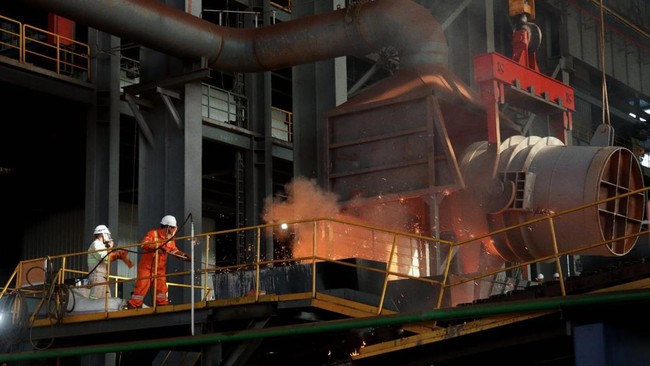
Indonesia’s nickel downstreaming industry is under threat due to its dependence on sulphur imports, which are vulnerable to disruptions in the global supply chain, particularly from the Middle East. This could severely impact the operations of nickel processing plants using hydrometallurgical methods.
Chairman of the Indonesian Nickel Industry Forum (FINI), Arif Perdana Kusumah, revealed that approximately 75-80% of Indonesia’s sulphur import needs for 2025 will come from the Middle East. Out of a total import of around 5.3 million tonnes, the largest share is supplied by countries in that region.
“This highly concentrated supply, following the closure of the Strait of Hormuz, will result in disruptions or even complete cut-offs of the main raw material source for HPAL refineries in Indonesia,” he told CNBC Indonesia, quoted on Friday (24/4/2026).
Arif noted that sulphur is a crucial component in the nickel downstreaming industry, particularly for producing sulphuric acid used in the leaching process at High Pressure Acid Leaching (HPAL) facilities.
“Production of battery-grade nickel MHP using HPAL technology is highly dependent on sulphuric acid,” he said.
In terms of requirements, the industry needs about 10-12 tonnes of sulphur to produce 1 tonne of nickel in MHP form. This makes sulphur one of the largest cost components in the HPAL production process.
“As the world’s largest producer of nickel-cobalt material (MHP) from HPAL projects, Indonesia is heavily reliant on sulphur imports from the Middle East,” he added.
The government has begun to anticipate potential disruptions in the sulphur supply chain that could affect the nickel downstreaming programme. This became apparent after National Economic Council (DEN) Chairman Luhut Binsar Pandjaitan met with President Prabowo Subianto at the State Palace.
In the meeting, Luhut conveyed several recent developments, including risks from prolonged global conflicts that could impact the energy and strategic commodities sectors.
Through a post on his personal Instagram account @luhut.pandjaitan, he stated that over the next three months, Indonesia’s economic growth and activity would remain relatively stable.
However, the government has prepared scenarios to anticipate various possibilities in facing a worsening global situation.
“Especially if this global conflict lasts longer than we anticipated. One of the things we are monitoring is the surge in energy prices,” Luhut explained, quoted on Thursday (23/4/2026).
Additionally, the government is also monitoring potential disruptions in the supply chain of other important commodities, particularly sulphur. Luhut assessed that this commodity plays a crucial role in nickel downstreaming and the development of electric vehicle batteries in Indonesia.
“Besides energy, we are also monitoring disruptions in the supply chain of other strategic commodities; such as sulphur, which is crucial for nickel downstreaming and electric vehicle batteries,” he said.