
Indonesia's New Biodiesel Blend Cannot Be Immediately Implemented, Producers Reveal Reasons
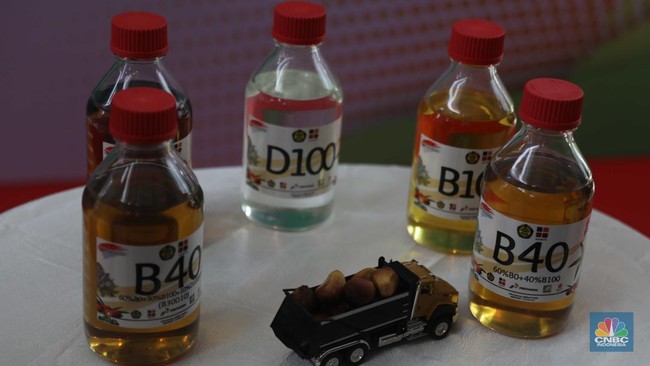
Jakarta — The Indonesian government’s plan to increase the biodiesel blend mix to B50 cannot be immediately realised, according to industry assessments. The Biofuel Producers Association (Aprobi) identified several outstanding tasks, ranging from regulatory amendments, technological readiness, to the production capacity of the national biodiesel industry.
Although the government has announced a target implementation date for B50 in the second half of 2026, Aprobi’s Secretary General Ernest Gunawan stated that the policy cannot be directly implemented without regulatory adjustments.
“Can B50 be implemented immediately? In our view at Aprobi, based on our experience, no, because the Ministry of Energy and Mineral Resources must also modify its ministerial regulation and ministerial decree for quantity allocation and so forth,” Ernest said during a press conference and iftar gathering in Jakarta on Thursday, 12 March 2026.
Beyond regulatory factors, technical readiness is also being tested by the government. The Ministry of Energy and Mineral Resources is currently conducting road testing to ensure B50 fuel use is safe for vehicles. Ernest explained that the road test distance has only reached approximately 30,000 kilometres, whilst the minimum testing required before policy implementation is 50,000 kilometres.
Aprobi cautioned that the B50 implementation decision should be made carefully with involvement from various stakeholders, including the food sector which could potentially be affected. Nevertheless, the biofuel producers’ association reaffirmed its support for the direction of biodiesel blending policy increases.
Regarding energy demand, current national diesel consumption is estimated at between 39 million and 39.5 million kilolitres per year. If the B50 programme is implemented, biodiesel requirements are estimated to reach approximately 19.5 million kilolitres.
However, from a supply perspective, the biodiesel industry is not yet fully prepared.
“To be frank, regarding B50, we within Aprobi do not involve food stocks. With our current installed capacity of 22 million kilolitres and production capacity at approximately 80%, which gives us 17.6 kilolitres, we are still short of approximately 2 million kilolitres,” Ernest explained.
Given these circumstances, Aprobi believes that additional investment is required so that biodiesel production capacity can increase by at least approximately 2 million kilolitres. This additional capacity is considered essential for B50 implementation to run stably in the long term.
Another issue highlighted is the readiness of fuel distribution infrastructure. According to Ernest, the success of the B50 programme depends not only on the biodiesel production industry but also the readiness of storage facilities owned by fuel distribution enterprises.
“From our side, Aprobi, we may be capable, but on Pertamina’s side, do they have sufficient tanks to separate B40 from B50, since only the automotive sector can use it?” he said.
Ernest noted that the limitation of storage facilities makes the separation of biodiesel distribution for automotive and industrial needs still a challenge that needs to be resolved.
On the other hand, the implementation of the B40 programme in 2025 is considered to have progressed reasonably well. From the total domestic distribution allocation of 15.6 million kilolitres, realisation reached approximately 14.9 million kilolitres.
For 2026, the biodiesel allocation is estimated to not change significantly from the previous year, at approximately 15.6 million kilolitres with an additional approximately 30,000 kilolitres. Aprobi also noted the addition of one new member in the biodiesel industry, so the country’s installed capacity now reaches approximately 22 million kilolitres.
Nevertheless, Ernest reminded that actual industry production typically reaches only approximately 80% of installed capacity. This means that the current national biodiesel production capacity is estimated to be at a maximum of around 17.6 million kilolitres.