
Indonesia's Muslim-Friendly Tourism Ranking Drops, Business Actors Highlight Ecosystem Issues
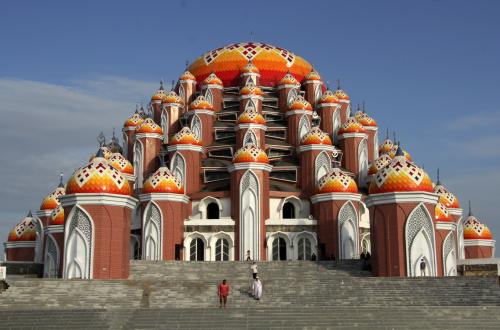
Indonesia’s competitiveness in Muslim-friendly tourism is beginning to lag behind other countries. After once holding the top global position, Indonesia’s ranking in the Global Muslim Travel Index (GMTI) 2025 has dropped from first to fifth place. This decline is seen as a signal that other nations are moving faster in building the halal tourism industry. Malaysia has reclaimed the top spot, while Saudi Arabia, Turkey, and the United Arab Emirates continue to strengthen their Muslim tourism services. The General Chairman of the Indonesian Halal Tourism Association (PPHI), Riyanto Sofyan, stated that Indonesia actually possesses significant potential to become a major player in global halal tourism. This potential stems from its natural wealth, culture, and large number of domestic Muslim tourists. However, according to him, the main issue with Indonesia’s Muslim-friendly tourism lies not in the destinations, but in the weak supporting ecosystem. “The problem is still about literacy, service standards, certification, business capacity, up to inter-sectoral integration,” said Riyanto during a webinar titled Accelerating Halal Industry Development: Sharia Economy Bill for Job Creation, on Friday (8/5/2026). He assessed that many tourism business actors still view Muslim-friendly tourism merely as an additional label. In fact, the concept has evolved into part of quality tourism that prioritises comfort, cleanliness, safety, and tourist experiences. According to Riyanto, today’s Muslim tourists are not only seeking halal labels but also services that meet their needs, from halal food, worship facilities, family-friendly hotels, to ease of digital information access. Therefore, he believes Indonesia needs to strengthen the standardisation of halal tourism services to compete globally. Besides facilities, digital promotion and international branding are also considered weak. “Indonesia must have icons that are easily recognised by the global market,” he said. Riyanto stated that the development of Muslim-friendly tourism also requires inter-sectoral integration, from the halal food industry, transportation, hotels, SMEs, to the creative economy. So far, coordination between institutions is seen as still running independently. On the other hand, the Director of Sharia Economy and SOEs at the Ministry of National Development Planning/Bappenas, Rosy Wediawaty, views the drop in Indonesia’s halal tourism ranking as indicative of the substantial homework in developing the national Sharia economy. According to her, halal tourism development cannot rely solely on the large domestic market. The government needs to strengthen regulations, certification, human resource quality, and halal sector investments so that Indonesia does not only become a Muslim tourism market but also a primary global halal tourism destination. Therefore, industry players and the government are jointly advocating for the strengthening of the Sharia economy legal framework so that halal industry and Muslim-friendly tourism development can proceed more integrally between central and regional levels.