
Indonesia's Modern Maritime Geopolitical Transformation
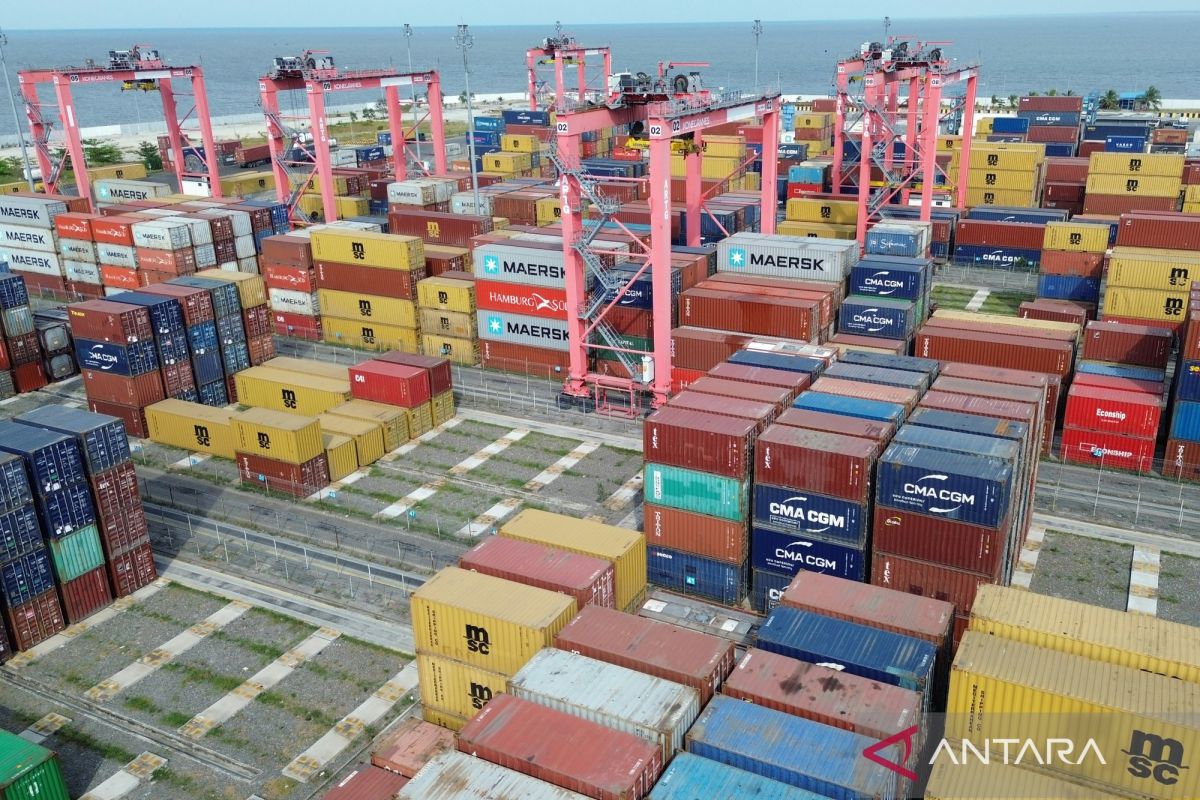
Modern maritime security is no longer solely about military fleets or territorial disputes, but also concerns the stability of digital port systems, logistics, and trade. Jakarta (ANTARA) - Nowadays, a major port is not just filled with ships, cranes, and containers. It is also filled with servers, sensors, satellites, digital dashboards, and logistics algorithms. Therefore, when a ship enters a port, it is not only the engines that move, but also the flow of information that determines efficiency, security, and trade costs. Maritime geopolitics today has entered a new chapter. In the past, a strong sea power was synonymous with the number of fleets. Now, that measure is no longer sufficient. This is because even the largest ship can be paralysed simply because the port’s digital system is disrupted for a few hours. In fact, cyber attacks on logistics systems can cause greater economic losses than ship collisions at sea. Cyber attacks on maritime logistics systems can disrupt company operations across multiple countries. Thousands of servers are paralysed. Port activities are also stalled. The losses can reach hundreds of millions of dollars. This means that modern ports are now not only physical infrastructure, but also cyber infrastructure. And cyber infrastructure has a different logic of threats. Enemies do not need to send warships. It is enough to infiltrate the system. Quite advanced In many advanced countries, the transformation towards a digital-based maritime ecosystem has progressed quite far. The Port of Rotterdam in the Netherlands, for example, uses an integrated digital system to manage ship flows, containers, weather, and energy efficiency. Singapore is also moving in a similar direction with the concept of smart ports and logistics automation. Global maritime competition ultimately is not just about who has vast seas, but also about who can manage sea data efficiently. Therefore, the maritime single window concept that Indonesia is starting to implement is actually not an ordinary technical issue. It concerns a change in how the country understands maritime sovereignty. Shipping administration that was previously slow, layered, and manual is being forced into the era of digital integration. The problem is that digitalisation does not automatically mean efficiency. Many developing countries are instead experiencing a new paradox. Digital systems are built expensively, but inter-agency integration is still poor. Data runs independently. Sectoral egos remain strong. In the end, technology only becomes a new layer on top of the old bureaucracy. It is in this context that the potential for collaboration between Indonesia and Estonia becomes interesting and important. Estonia is not a major maritime country like Indonesia. Its territory is small. Its population is also not large. However, that country has succeeded in building a global reputation as one of the pioneers of the most advanced digital government in the world. Almost all of Estonia’s public services are integrated electronically. Their digital identity system has become a model that is often studied by many countries. In the context of international relations, Estonia shows that global influence today is not always born from the size of territory or military power, but from the ability to build system efficiency. Complementary