
Indonesia's Maritime Diplomacy Resurgence
Indonesia is entering a new phase as an increasingly significant maritime power in the Indo-Pacific region. Maritime diplomacy has moved beyond the slogan “World Maritime Axis” to take concrete form: self-reliance in naval defence industry, sea-based humanitarian missions, maritime cultural diplomacy, and strengthening modern sea power through integrated naval and air force capabilities.
First, in terms of hard power, PT PAL Indonesia’s capacity to gradually build submarines independently represents a crucial milestone in national maritime defence strategy. The transformation from merely purchasing military equipment to becoming a producer demonstrates technological mastery and increased capacity of national shipyards. The development of undersea systems, including unmanned platforms such as KSOT (Autonomous Unmanned Submarines), reflects a long-term vision towards defence self-reliance.
Success in constructing Nagapassa-class attack submarines through cooperation with South Korea represents a technological leap in warship production that will strengthen maritime power. For Indonesia, as the world’s largest archipelago, submarines are the most effective deterrence instrument. They operate silently (stealth), creating strategic deterrent effects, and serve as a balance in an increasingly competitive region.
With the Indonesian Archipelago Sea Lane (ALKI) serving as an international shipping route and the vast Exclusive Economic Zone (ZEE), undersea power forms the foundation of maritime security. Production self-reliance also means controlling life-cycle costs, ensuring spare parts availability, and enhancing negotiating position in defence diplomacy.
Second, Indonesian maritime diplomacy also manifests in humanitarian form. The deployment of KRI Dr Soeharso as a hospital ship in humanitarian missions demonstrates that the sea is not merely a space for projecting military power, but also a space for global solidarity. With complete medical teams and plans for hospital construction, Indonesia demonstrates a commitment to active and independent foreign policy that supports humanitarian causes.
Hospital ships are highly effective soft power instruments. They present empathy alongside capacity. Indonesia does not merely voice support in international forums but delivers tangible assistance through maritime channels. This strengthens Indonesia’s image as a maritime nation actively contributing to global stability and peace.
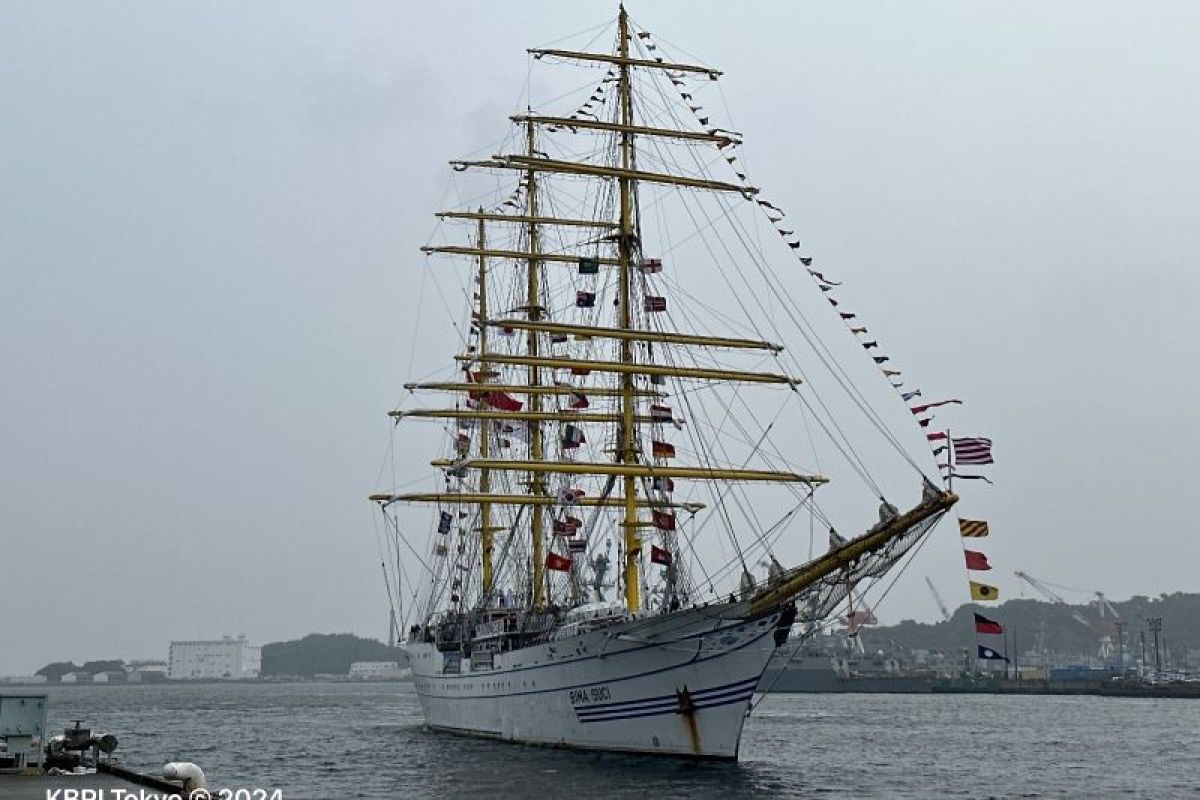
Third, maritime cultural diplomacy is strengthened through the presence of KRI Bima Suci at the commemoration of the 250th anniversary of American independence on 4 July 2026. The tall ship is not a warship but a symbol of a nation’s maritime character. It carries Naval Academy cadets from various countries around the world, embodying seafaring traditions and messages of international friendship.
With a capacity for 210 cadets, KRI Bima Suci will carry midshipmen from 26 countries across Asia, Europe, and the Middle East, demonstrating the spirit of seafarer brotherhood and the success of the Indonesian Navy in conducting diplomatic missions to forge friendships with navies worldwide. The presence of Naval Academy midshipmen in global events alongside cadets from various countries will at minimum shape global naval vision and serve as an important element in forming future senior officers of the Indonesian Navy.
The famous slogan “Join the Navy to see the world” is exemplified by the role of tall ship KRI Bima Suci in goodwill missions carrying Naval Academy cadets over time.
Fourth, Indonesia’s sea power dimension strengthens with the arrival of the aircraft carrier Garibaldi from Italy. An aircraft carrier is not merely a large warship but a command and control centre (C4ISR = Command, Control, Communications, Computers, Intelligence, Surveillance, and Reconnaissance) for naval forces. It serves as a hub integrating various systems: combat vessels, submarines, anti-submarine helicopters, maritime drones, and air interception systems.
In Alfred Thayer Mahan’s theory, mastery of the sea is determined by the ability to control strategic passages and project power. Aircraft carriers enable such projection whilst strengthening sea control capabilities. For Indonesia, such platforms can serve to protect strategic chokepoints, secure ALKI, control maritime airspace, and respond to threats quickly and in a coordinated manner.
The integration of submarines, aircraft carriers, hospital ships, and tall ships reflects the complete spectrum of Indonesian maritime power. Hard power, humanitarian capability, cultural diplomacy, and sea control strategy do not stand alone but complement each other.
If this consistency is maintained, Indonesia will be known not merely as a maritime state because of its geography, but as a maritime power because of its capacity and vision. Indonesian sea power is no longer a theoretical concept. It is growing and demonstrating real roles on the international stage.
Paradox
Amidst advances in building maritime power as part of naval defence strategy through submarine acquisition, KSOT vessels, frigates, and aircraft carriers, there remains a paradox that demands serious attention from policymakers and requires solutions.
First, the acquisition of military equipment, particularly warships of various types, requires integrated surveillance support within a system capable of detecting the presence of foreign vessels upon entering the ZEE boundary. The weakness of the current maritime defence system is its inability to detect ships and aircraft (civilian or military) entering Indonesian territory from the moment they enter the ZEE. From an economic perspective, the ZEE is an area of economic sovereignty rights where natural resources within the marine ZEE belong to Indonesia.
The persistent prevalence of illegal fishing, drug smuggling, and human trafficking by sea demonstrates tangible weaknesses in surveillance systems.