
Indonesia's Growth Downgrade Seen as Warning to Reinforce Economic Drivers
Indonesia’s Growth Downgrade Seen as Warning to Reinforce Economic Drivers
12 Apr 2026 16:58 WIB
Voice of Indonesia
Key Points
World Bank cuts Indonesia’s growth forecast to 4.7 percent, signaling economic pressures.
Weak consumption and tight monetary policy weigh on domestic activity.
Experts urge stimulus, investment, and sector reforms to reach 5 percent growth.
RRI.CO.ID, Jakarta - A slight downgrade in Indonesia’s economic growth outlook is being viewed by economists as a cautionary signal, highlighting structural weaknesses and the need for stronger domestic demand and investment.
Economist Rahma Gafmi from Airlangga University said the World Bank’s downgrade of Indonesia’s growth projection from 4.8 percent to 4.7 percent should be seen as a warning to strengthen the country’s economic growth engines.
“The World Bank’s cut to Indonesia’s growth projection to 4.7 percent is a serious ‘yellow signal’, but it must be viewed in a broader context,” Rahma said in Jakarta on Sunday, April 12, 2026, as quoted by Antara.
“It reflects several harsh realities currently facing the domestic economy, especially amid geopolitical escalation involving Iran, Israel, and the United States,” she added, explaining that slowing household consumption is a key factor behind the revised outlook.
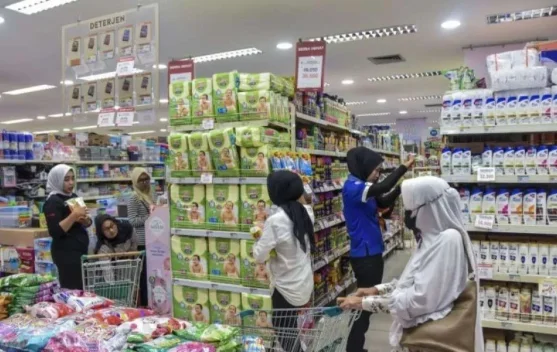
Consumption, which contributes more than 50 percent to gross domestic product (GDP), is under pressure, particularly due to weakening purchasing power among the middle class.
This is reflected in stagnant retail sales and motor vehicle sales, while rising prices of basic goods have not been fully matched by increases in real wages. At the same time, tight monetary policy is also affecting economic activity.
Relatively high interest rates aimed at maintaining currency stability have increased borrowing costs for business and housing loans, making companies and investors more cautious.
“The 4.7 percent growth figure is closer to current psychological and on-the-ground realities than the more optimistic target of above 5 percent. While inflation appears under control at the macro level, many sectors, especially manufacturing and textiles, are facing difficulties,” she said.
Rahma added that external factors also play a role, including a global economic slowdown and weaker demand from key trading partners such as China, which affects Indonesia’s commodity exports.
“This downgrade is a ‘warning’ for the government that conventional growth engines are running out of steam, and new stimulus or stronger purchasing power among lower- and middle-income groups is needed to return to a 5 percent growth path,” she continued.
“So, if you feel your wallet is thinner or your business is quieter even though the news says the economy is ‘stable’, this World Bank projection validates that feeling,” she added.
Despite the challenges, Rahma said growth above 5 percent remains achievable if multiple sectors are optimized simultaneously.
She highlighted the manufacturing sector as the largest GDP contributor, around 19-20 percent, and stressed the importance of downstream processing of commodities such as nickel, copper, and bauxite into higher value-added products, including battery and electric vehicle supply chains.
Agriculture, she said, could also serve as a new growth engine, supported by higher productivity, improved fertilizer distribution, and stronger food security programs to stabilize prices.
Household consumption, accounting for about 54 percent of GDP, remains crucial, requiring policies to maintain purchasing power through price stability, government spending, and job creation. Foreign direct investment was also identified as a key driver, with potential multiplier effects on employment and income.
Rahma further emphasized the need to accelerate government spending from the first quarter, particularly on infrastructure projects such as irrigation systems, reservoirs, and road repairs, to boost economic activity and create jobs.
Finally, she pointed to green energy and the digital economy as promising sectors for future growth, citing initiatives such as the planned B50 biodiesel program starting in July 2026, which is projected to save up to IDR 48 trillion, alongside increased investment in technology to drive long-term efficiency and sustainable growth. ***
Kata Kunci / Tags
News Recomendation
Loading latest news…..