
Indonesia's Fuel Reserves at 23 Days, Govt Plans Storage Expansion - Jakarta Globe
Indonesia’s Fuel Reserves at 23 Days, Govt Plans Storage Expansion
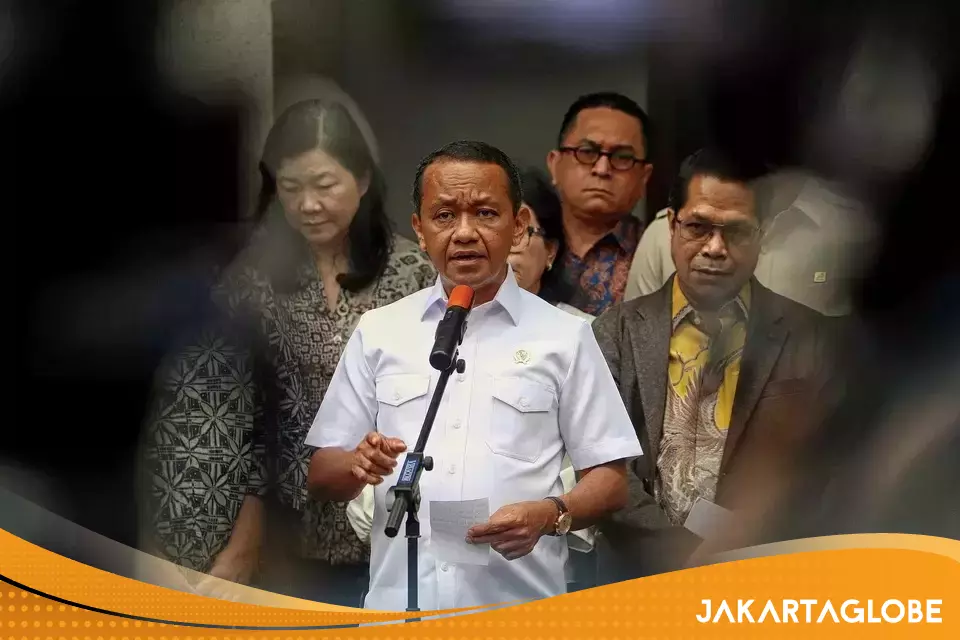
Jakarta. Indonesia’s fuel reserves currently cover about 23 days of consumption, a level determined by limited domestic storage capacity rather than a shortage of supply, Energy and Mineral Resources Minister Bahlil Lahadalia said on Wednesday.
The clarification comes as rising geopolitical tensions in the Middle East — including Iran’s closure of the Strait of Hormuz — raise concerns about potential disruptions to global oil supply. The narrow shipping lane handles roughly 20% of the world’s seaborne crude oil shipments and has become a flashpoint following a US-Israel strike on Tehran. Iran’s Revolutionary Guards have reportedly warned oil tankers that vessels would not be allowed to pass through the strait.
Amid the uncertainty, Bahlil said Indonesia’s fuel stocks remain within the national safety threshold.
Indonesia’s reserves currently stand at about 23 days, slightly above the minimum national standard of 20–23 days, which reflects the country’s storage capacity rather than its ability to secure fuel supply.
“People sometimes say we should stock fuel for 60 days. But where would we store it? We simply don’t have the storage capacity,” Bahlil said at the Presidential Palace in Jakarta.
He said Indonesia’s existing infrastructure can store fuel for a maximum of about 25 days, a constraint that has long shaped the country’s reserve policy.
“Our storage capacity has for years been limited to around 25 days at most, so the national reserve standard is set at about 20 to 23 days. Currently we are at 23 days, which is already above the minimum,” he said.
To strengthen long-term energy resilience, the government plans to expand storage infrastructure, including facilities capable of holding up to three months of fuel reserves.
One option under consideration is a strategic storage facility on an island near Singapore, a project first proposed by Bahlil in December 2024. The facility is expected to provide additional capacity equivalent to about 30 to 40 days of reserves.
The project would allow state-owned energy company Pertamina to purchase oil in bulk, reducing reliance on volatile spot markets and enabling the company to wait for more favorable prices before buying.
The planned storage hub also aims to reduce Indonesia’s heavy dependence on Singapore, which currently supplies around 60% of the country’s fuel imports despite having limited domestic oil resources.
Officials say the facility could also cut costs associated with third-party storage, transportation, and intermediary fees, allowing for more direct and efficient fuel procurement.
Bahlil acknowledged that Indonesia’s limited storage capacity remains a strategic vulnerability, stating that in the event of a major geopolitical crisis the country’s oil reserves could last only about three weeks under current infrastructure.
“This is a geopolitical issue. If a crisis or conflict occurs, our oil reserves and storage capacity would only last around 21 days,” he said previously.
To mitigate risks from Middle East tensions, the government has also begun adjusting its energy import strategy. Indonesia is shifting part of its crude oil and gasoline purchases away from the Middle East to suppliers in the United States and Southeast Asia, according to Bahlil, as part of broader efforts to diversify supply sources and strengthen energy security.
Tags: Keywords: