
Indonesia's External Debt Reaches US$434.7 Billion in January 2026
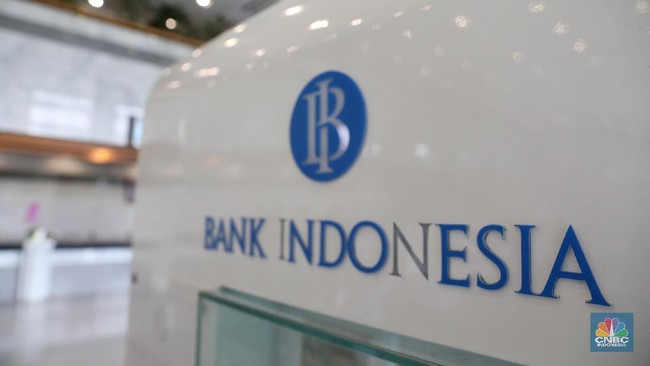
Bank Indonesia (BI) reports that Indonesia’s external debt position remained stable in January 2026. Indonesia’s external debt stood at US$434.7 billion in January 2026, registering year-on-year growth of 1.7%, lower than December 2025’s growth rate of 1.8%.
This development was primarily influenced by public sector external debt. The Executive Director and Head of Bank Indonesia’s Communications Department, Ramdan Denny Prakoso, disclosed that government external debt in January 2026 was recorded at US$216.3 billion, growing 5.6% year-on-year, slightly higher than December 2025’s growth rate of 5.5%.
“The development in external debt in January 2026 was influenced by drawdowns of foreign loans to support the implementation of government programmes and projects, as well as inflows of foreign capital into international State Securities, reflecting sustained investor confidence in Indonesia’s economic prospects amid increasing global financial market uncertainty,” he said in an official statement on Monday (16 March 2026).
As one of the instruments for financing the State Budget, government external debt is managed carefully, measurably, and accountably with continued allocation directed toward supporting priority programmes to maintain fiscal sustainability and strengthen the national economy.
Based on economic sectors, government external debt utilisation supports the Health Services and Social Activities Sector (22.0% of total government external debt); Government Administration, Defence, and Compulsory Social Security (20.3%); Education Services (16.2%); Construction (11.6%); and Transport and Storage (8.5%). Government external debt is dominated by long-term debt with a share of 99.98% of total government external debt.
Bank Indonesia recorded private sector external debt at US$193.0 billion in January 2026, down from December 2025’s position of US$194.0 billion. Year-on-year, private sector external debt contracted by 0.7% in January 2026, a sharper contraction than the previous month’s 0.2%. The decline in private sector external debt was influenced by external debt from non-financial corporations.
Based on economic sectors, the largest private sector external debt originated from the Manufacturing Industry, Financial Services and Insurance, Electricity and Gas Supply, and Mining and Quarrying sectors, with a combined share of 80.1% of total private sector external debt.
“Private sector external debt remains dominated by long-term debt with a share of 76.2% of total private sector external debt,” said Ramdan.
He assured that Indonesia’s external debt structure remained healthy, supported by the application of prudent principles in its management. “This is reflected in the ratio of Indonesia’s external debt to Gross Domestic Product declining to 29.6% in January 2026 from 29.9% in December 2025, as well as the dominance of long-term external debt with a share of 85.6% of total external debt,” said Ramdan.
To ensure external debt structure remains healthy, he confirmed that Bank Indonesia and the Government continue to strengthen coordination in monitoring external debt developments. The role of external debt will also continue to be optimised to support development financing and encourage sustainable national economic growth. “These efforts are undertaken by minimising risks that could affect economic stability,” he said.