
Indonesia's Exports Grow 3.39 Per Cent to US$22.16 Billion
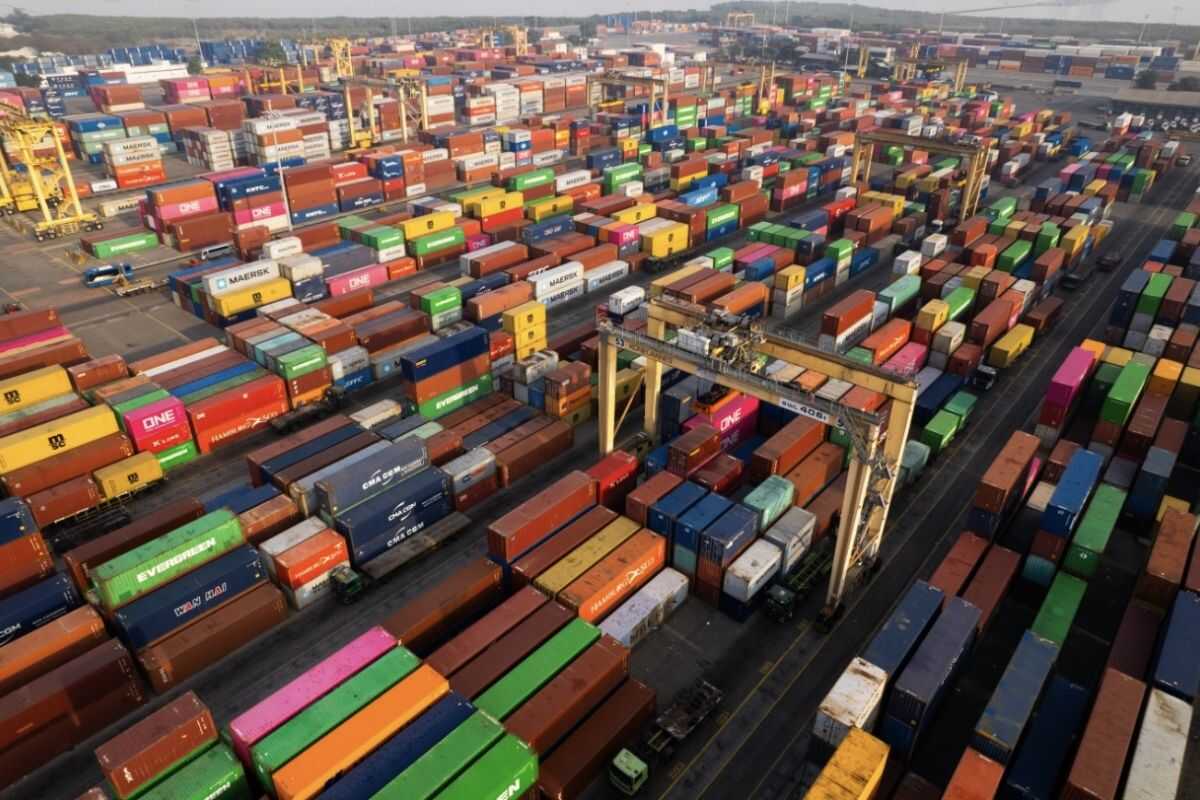
Indonesia’s export performance continued to grow at the beginning of the year, serving as the main pillar supporting the trade balance surplus in January 2026. The Central Statistics Agency (BPS) recorded export values reaching US$22.16 billion. This figure increased 3.39 per cent year-on-year and contributed significantly to a trade surplus of US$0.95 billion.
BPS Deputy for Distribution and Services Statistics, Ateng Hartono, explained that the surplus was mainly supported by the non-oil and gas sector, whilst the oil and gas sector still experienced a deficit.
“In January 2026, Indonesia’s trade balance recorded a surplus of US$0.95 billion. This figure was supported by a non-oil and gas commodity surplus of US$3.22 billion, whilst oil and gas commodities still experienced a deficit of US$2.27 billion,” said Ateng at a press conference in Jakarta on Monday (2 March).
Export growth came mainly from the manufacturing sector, which recorded growth of 8.19 per cent year-on-year, with the contribution of the increase reaching 6.54 per cent of total exports.
“The value of manufacturing industry exports increased 8.19 per cent in January 2026 (year-on-year) with a contribution to the increase of 6.54 per cent,” Ateng explained.
The three main destination countries for Indonesia’s non-oil and gas exports in January 2026 were China, the United States, and India, with a combined contribution of 43.77 per cent.
China was the largest market with export values of US$5.27 billion (24.80 per cent), followed by the United States at US$2.51 billion (11.82 per cent) and India at US$1.52 billion (7.15 per cent).
Main commodities exported to China included iron and steel, nickel and its derivatives, and mineral fuels. Meanwhile, exports to the United States were dominated by machinery and electrical equipment, footwear, and knitted clothing.
On the import side, Indonesia’s January 2026 imports were recorded at US$21.20 billion, or increasing 18.21 per cent year-on-year. The increase in imports was driven by the non-oil and gas sector reaching US$18.04 billion, up 16.71 per cent, and oil and gas imports increasing 27.52 per cent to US$3.17 billion.
BPS also recorded the three main source countries for Indonesia’s non-oil and gas imports as China, Australia, and Japan with a combined contribution of 54.92 per cent.
Overall, the January 2026 non-oil and gas trade surplus was supported by five main commodities, namely animal and vegetable fats and oils, mineral fuels, iron and steel, nickel and its derivatives, and footwear. This continued export growth has become a key factor in maintaining Indonesia’s trade balance as positive amid global economic dynamics.