
Indonesia's Economic Outlook Amid Middle East Conflict, According to Bank Indonesia
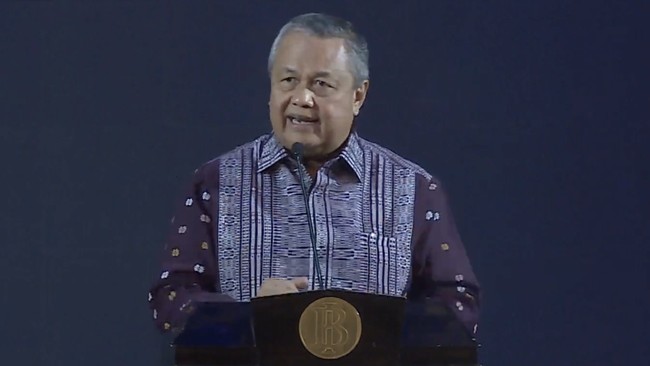
Bank Indonesia has disclosed that Indonesia’s economy continues to expand in the first quarter of 2026 despite deteriorating global economic conditions and prospects stemming from the Middle East conflict that began in late February 2026.
Economic growth in the first quarter of 2026 was buoyed by domestic demand. Household consumption increased, supported by higher household spending related to major national religious celebrations (HBKN), coupled with improved income for several income groups derived from Hari Raya allowances (THR), government social spending, and various other government incentives.
Investment is also expected to remain robust, particularly driven by acceleration in government investment, including the Village Cooperative of Red and White (KDKMP) and Danantara investment initiatives.
“Moving forward, the deteriorating global economy and financial markets resulting from the Middle East conflict require appropriate anticipation and response to maintain momentum in national economic growth,” said Bank Indonesia Governor Perry Warjiyo during the central bank’s Rate Decision Group press conference on Tuesday, 17 March 2026.
To achieve this, policy coordination between the government and Bank Indonesia, alongside other stakeholders, will be strengthened to sustain domestic demand and support economic growth within the range of 4.9-5.7 per cent.
The trade balance in January 2026 recorded a surplus of US$1.0 billion, lower than the December 2025 surplus of US$2.5 billion owing to a slowdown in global demand for non-oil exports.
Capital and financial flows recorded cumulative net inflows of US$1.6 billion in January-February 2026, supported by foreign capital inflows into Bank Indonesia Rupiah Securities (SRBI). However, portfolio investment recorded net outflows of US$1.1 billion in March 2026, triggered by heightened uncertainty in global financial markets due to the Middle East conflict.
Indonesia’s foreign exchange reserves stood at US$151.9 billion at the end of February 2026, equivalent to 6.1 months of import financing or 5.9 months of imports and government external debt servicing, remaining above the international adequacy standard of approximately three months of imports.
Weakening global economic growth prospects and rising global oil prices require attention, as they could widen the current account deficit towards the upper bound of the projected range of 0.9 per cent to 0.1 per cent of GDP.
Consumer price inflation stood at 4.76 per cent year-on-year in February 2026, primarily influenced by the temporary base effect from the 50 per cent household electricity tariff discount implemented in January and February 2025.
Core inflation remained controlled at 2.63 per cent year-on-year, primarily driven by gold price increases. Volatile food inflation stood at 4.64 per cent year-on-year, remaining contained despite increased demand during major religious celebrations and the Lunar New Year period, offset by supply disruptions from adverse weather.
Bank Indonesia projects 2026 and 2027 headline inflation to remain within 2.5±1 per cent, though higher than previous forecasts owing to rising global commodity price prospects. Core inflation is expected to remain manageable, whilst volatile food inflation is projected to increase due to rising food and fertiliser prices globally.
“Bank Indonesia will continue strengthening pre-emptive monetary policy responses whilst coordinating with the government through the Central and Regional Inflation Control Teams (TPIP/TPID) by reinforcing implementation of the Movement for Inflation and Food Price Control and Welfare (GPIPS) to ensure inflation remains within target,” said Governor Perry.