
Indonesia's Diesel Power Plants to be Phased Out in Favour of Solar Energy
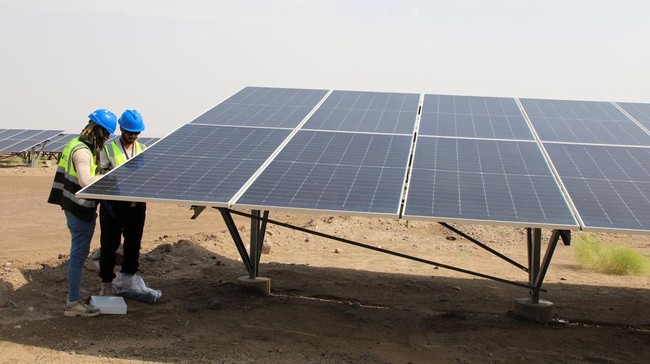
Indonesia’s Ministry of Energy and Mineral Resources (ESDM) has announced plans to replace diesel-powered electricity generation plants with renewable energy sources, particularly solar power plants (PLTS).
Deputy Energy Minister Yuliot Tanjung stated that the PLTD-to-PLTS conversion plan represents a continuation of the government’s long-standing dedieselisation initiative and forms part of a broader 100-gigawatt solar power programme across Indonesia. “We will convert regions still powered by diesel electricity to solar power,” Tanjung said during a meeting at the ESDM Ministry office in Jakarta on Friday, 13 March 2026.
The programme will prioritise remote, frontier, and underdeveloped regions (3T areas) that currently rely on PLTD for electricity and lack connection to broader electrical infrastructure. Priority locations identified for conversion include Simeulue, Nias, Mentawai, and Enggano. The ministry has already assessed eastern Indonesian regions for implementation. “Over 30 locations have been prioritised for fossil-based generator elimination and conversion to renewable energy bases,” Tanjung emphasised.
President Prabowo Subianto has instructed Energy Minister Bahlil Lahadalia to “shut down” diesel power plants and transition to domestic renewable energy sources including solar and geothermal power (PLTP). Energy Minister Bahlil explained that this transition is essential to optimise domestic energy resources, reduce fuel import dependence, and ensure energy security amid geopolitical uncertainty. “Given the current geopolitical situation, we cannot guarantee long-term energy security, so we must maximise our domestic renewable energy potential,” Bahlil stated following a limited meeting with President Prabowo at the State Palace on Thursday, 12 March 2026.
According to the 2025-2034 Electricity Business Plan (RUPTL), total new power generation capacity will increase by 69.5 gigawatts by 2034. Of this, 42.6 GW (61 percent) will come from renewable energy, and 10.3 GW (15 percent) from energy storage systems.
Solar energy (PLTS) accounts for the largest renewable energy share at 17.1 GW, followed by hydropower (PLTA) at 11.7 GW, wind power (PLTB) at 7.2 GW, geothermal (PLTP) at 5.2 GW, bioenergy at 0.9 GW, and nuclear (PLTN) at 0.5 GW. Energy storage capacity includes 4.3 GW from pumped-storage hydropower and 6.0 GW from batteries. However, fossil fuel generation will still add 16.6 GW, comprising 10.3 GW from gas and 6.3 GW from coal.