
Indonesia's Capital Market Moves Cautiously, Asia-Pacific Becomes an Investment Alternative
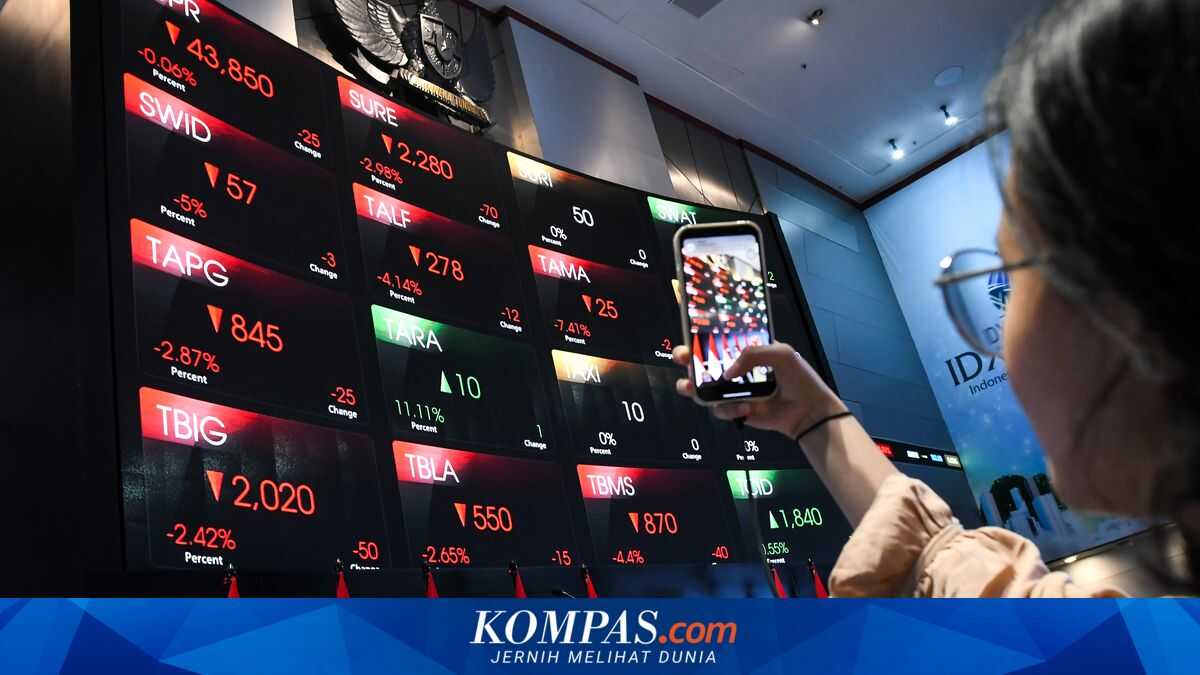
The outlook for Indonesia’s capital market in 2026 is seen as cautious amid various global and domestic dynamics. Although national economic stability remains intact, several factors such as geopolitical uncertainty and domestic structural challenges keep investor sentiment from fully recovering. As we entered the year, some Indonesian stock market investors were still awaiting the momentum of a market rebound that had been anticipated alongside the recovery of economic growth. Yet that condition has not fully materialised. On the other hand, several stock markets in the Asia-Pacific region showed stronger performance throughout 2025. This momentum is expected to continue in 2026, aided by diversification of global investors away from developed markets like the United States, as well as the drive from the tech cycle, particularly related to the artificial intelligence (AI) revolution. Samuel Kesuma, Chief Investment Officer Equity at PT Manulife Aset Manajemen Indonesia (MAMI), said that a number of macroeconomic indicators for Indonesia actually show a relatively solid foundation. He noted that economic stability does not necessarily mean the stock market will move aggressively or offer adequate investment opportunities for domestic investors. ‘A number of macro indicators do show a solid foundation, namely growth returning to around 5 percent and inflation staying controlled, but the execution of development and external uncertainty remain major hindrances to market sentiment,’ Samuel said in a written statement on Thursday, 5 March 2026. He added that global dynamics continue to shape the direction of Indonesia’s capital market. Even in a more optimistic scenario, several research institutes forecast that Indonesia’s economic growth in 2026 will remain moderate and still be highly dependent on government policy, fiscal stimulus, and the effectiveness of implementing various economic programmes. Given this condition, Samuel assessed that it is not surprising that many investors feel opportunities in the domestic market are not particularly encouraging. ‘Domestic equities are still moving in a restricted range, the bond market faces pressure from the need for increased fiscal financing, and the rupiah remains vulnerable to external pressures,’ he said.