
Indonesia's ambition to mediate the United States–Israel–Iran conflict
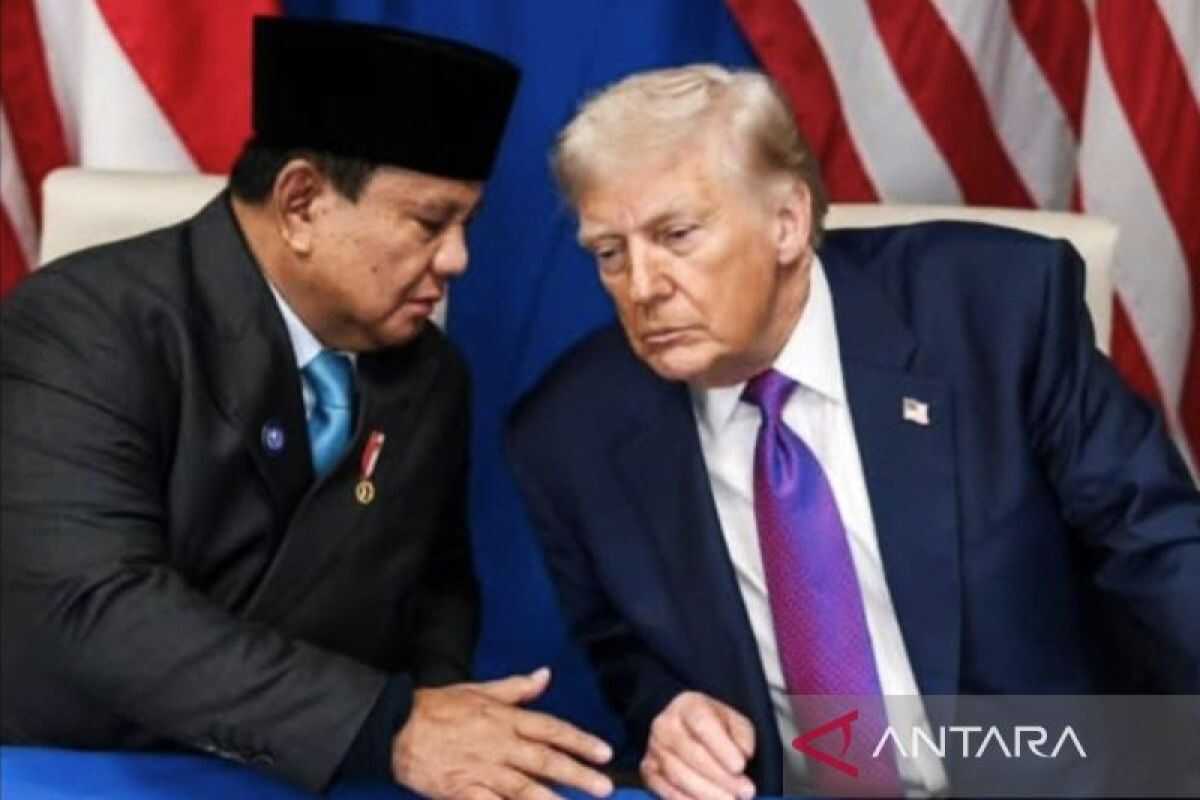
Jakarta (ANTARA) - Indonesia’s offer to mediate the tensions between the United States and Israel with Iran again underscores Jakarta’s active role on the international diplomatic stage. The offer includes the possibility of President Prabowo Subianto travelling to Tehran if the parties involved are willing to open space for dialogue. This move reflects Indonesia’s commitment to resolving conflicts through diplomacy while demonstrating the Prabowo administration’s efforts to contribute to maintaining international stability amidst rising global geopolitical rivalry. The initiative emerges as relations between the United States, backed by Israel, and Iran have again intensified, provoking concerns about potential escalation of the conflict in the Middle East. In an official statement, the Indonesian government called on all sides to show restraint and prioritise dialogue. This stance is consistent with Indonesia’s ‘bebas aktif’ foreign policy principle, i.e., pursuing active involvement in international diplomacy while remaining non-aligned. From an international relations perspective, Indonesia’s move can be understood as reflecting the role of a middle power seeking to promote multilateralism and peaceful dispute resolution. For decades, Indonesia has sought to position itself as a communications bridge on various global issues. This approach shows that Jakarta not only focuses on regional interests but also aims to contribute to broader international stability. Several observers view this mediation offer as a bold yet constructive diplomatic step. A country not tied to major military alliances and with a relatively neutral stance often has more room to build lines of communication among opposing sides. In this context, Indonesia is seen as having credibility as a country that consistently promotes dialogue and international cooperation. The initiative can also be seen as part of Indonesia’s proactive diplomacy. Although the mediation process for major conflicts is always confronted with complex challenges, efforts to open channels of communication remain important in pushing for de-escalation. Indeed, the conflict between the United States and Israel and Iran has broad dimensions, ranging from nuclear programme issues to dynamics of regional security. This complexity requires a long diplomatic process and involvement of various international actors. In such circumstances, the role of a nation that promotes dialogue remains relevant, particularly to ensure that channels of communication between the parties are not entirely closed. In this context, Indonesia could play a role as a facilitator of communication. As a country with no direct strategic interests in the conflict, Jakarta could offer a relatively neutral diplomatic space. This kind of position would allow Indonesia to help sustain dialogue while strengthening the international message about the importance of peaceful conflict resolution. International relations experts also stress that diplomacy does not always yield immediate short-term impacts. In many cases, diplomatic initiatives serve as a first step toward building trust among the warring parties. Therefore, Indonesia’s offer to facilitate dialogue can be seen as part of efforts to create broader diplomatic momentum. On the other hand, this step also reflects Indonesia’s increasingly active diplomacy under President Prabowo. In recent times, Jakarta has intensified its involvement in various international issues, including humanitarian diplomacy and contributions to UN peacekeeping missions. This diplomatic activism also demonstrates Indonesia’s aspiration to broaden its role beyond the ASEAN region. As a country with a large population and a developing economy, Indonesia has the potential to become one of the key actors in helping create a more stable and cooperative international order. Nevertheless, such diplomacy faces a range of challenges. In an increasingly competitive international system, middle powers must continue to strengthen their diplomatic capacity, networks, and foreign policy credibility. In this context, the mediation initiative can be seen as a step to demonstrate readiness to take a more active role in global issues. Indonesia’s approach, emphasising balance and dialogue, reflects the consistency of long-standing foreign policy. The ‘bebas aktif’ principle allows Jakarta to maintain relations with various world powers while continuing to promote peace and international cooperation. In an increasingly complex geopolitical environment, countries that are able to maintain communication with various sides often hold strategic roles in defusing tensions. By leveraging its reputation as a relatively neutral country, Indonesia seeks to strengthen its position as a diplomatic bridge at the global level. Ultimately, whether the Indonesian mediation offer will be accepted by Washington or Tehran will depend on the shifting strategic interests of the two states. But regardless of the response, Indonesia’s move to push for dialogue demonstrates a consistent commitment to the peaceful resolution of conflicts. For Indonesia, this initiative also represents…