
Indonesia's Agribusiness Sector Prepares to Strengthen Economic Growth and Competitiveness in ASEAN
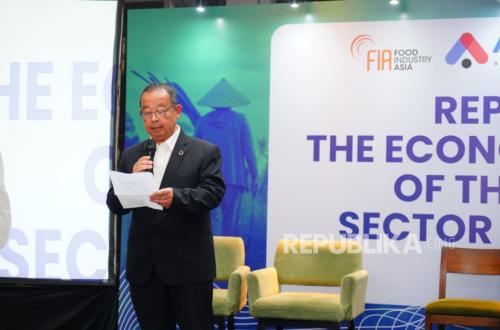
JAKARTA – The ASEAN Food & Beverage Alliance (AFBA) together with Oxford Economics launched a report titled “Economic Insights: Unlocking Indonesia’s Agri-Food Powerhouse” on Wednesday (1/4). Supported by Food Industry Asia (FIA), the report affirms the strategic role of the agribusiness sector in driving job creation, investment, and trade in Indonesia.
The launch of the report brought together policymakers, industry leaders, and regional stakeholders to discuss how the agribusiness sector can be optimised as the main driver of Indonesia’s economic growth and competitiveness in the ASEAN region.
Opening the event, Satvinder Singh, Deputy Secretary-General of ASEAN for the ASEAN Economic Community, emphasised the importance of regional collaboration in strengthening food systems and supply chains in Southeast Asia. “Agriculture is not just a sector but the true backbone of our economy, food security, and social stability. ASEAN represents a dynamic consumer market with 700 million people, and we must effectively maintain and grow this market together through frameworks,” stated Satvinder Singh.
The frameworks mentioned by Satvinder include the enhanced ASEAN Trade in Goods Agreement (ATIGA) and the Digital Economy Framework Agreement (DEFA). “We provide the legal certainty and connectivity needed for global businesses to thrive in this region,” Satvinder Singh added.
Meanwhile, in the keynote speech, Leonardo A. A. Teguh Sambodo, Deputy for Food, Natural Resources, and the Environment at the Ministry of National Development Planning/Bappenas, outlined the direction of agribusiness sector transformation in the Golden Indonesia 2045 vision. “We are currently implementing structural transformation focused on increasing agricultural productivity and linking it to our agro-industry development. This agenda, driven by sustainable practices and community progress, will help us achieve a holistic concept of national resilience, not limited to traditional defence, but ensuring food and nutritional security for our growing population,” said Leonardo A. A. Teguh Sambodo.
This transformation aligns with the 2025-2029 National Medium-Term Development Plan agenda, which emphasises increasing added value in agro-industry, strengthening food security, and reducing rural poverty and regional disparities. These efforts are driven through policy reforms, increased investment, infrastructure and logistics development, and strengthening public-private partnerships.
From a research perspective, James Lambert, Director of Economic Consulting at Oxford Economics, highlighted the scale and contribution of this sector to the national economy. “The scale of Indonesia’s agribusiness sector is substantial, serving as a pillar supporting the broader economy. In an increasingly fragmented global trade environment, building resilience through strengthening domestic foundations and regulatory certainty is crucial, as policy uncertainty can be a real burden on long-term investment and productivity,” explained James Lambert.
James Lambert also emphasised the importance of modernising logistics infrastructure and policy stability to maintain Indonesia’s competitiveness.
Meanwhile, Pham Quang Minh from the ASEAN Secretariat affirmed the region’s commitment to strengthening food sector resilience and sustainability.
“ASEAN focuses on resilience and sustainability through the Strategic Plan of Action for Food, Agriculture and Forestry (SPA-FAF). We aim to create an inclusive and resilient agribusiness sector that ensures stable supply chains, particularly through initiatives like the ASEAN Integrated Food Security (AIFS) framework and our five-year action plan,” stated Pham Quang Minh.
From an industry perspective, Adhi Lukman, General Chairman of GAPMMI, emphasised the significant contribution of the food and beverage sector to the national economy as well as the challenges faced by businesses. “The food and beverage industry plays a critical role, contributing more than 7% to Indonesia’s total GDP. Although we continue to innovate and collaborate with local farmers to meet consumer demand, we face challenges such as rising input costs and supply chain disruptions. We need ongoing government support to remove regulatory barriers and facilitate the import of essential raw materials to maintain our competitiveness and manage inflation,” explained Adhi Lukman.
A panel discussion involving government, industry, and academic representatives also highlighted several priorities for strengthening agribusiness competitiveness, including regulatory efficiency, infrastructure investment, improving human resource quality, and regional trade integration.
Closing the event, Pichet Itkor, President of AFBA, emphasised the importance of long-term cross-sector collaboration.
“Food and beverages are a long-cycle business that requires a stable, predictable, and simple regulatory environment. FIA and our partners are committed to working with the government in the long term to strengthen collaboration and advance Indonesia’s integration into regional and global supply chains,” said Pichet Itkor.