
Indonesian Vehicles Now Able to Use Petrol with Bioethanol Blends Up to 20% (E20)
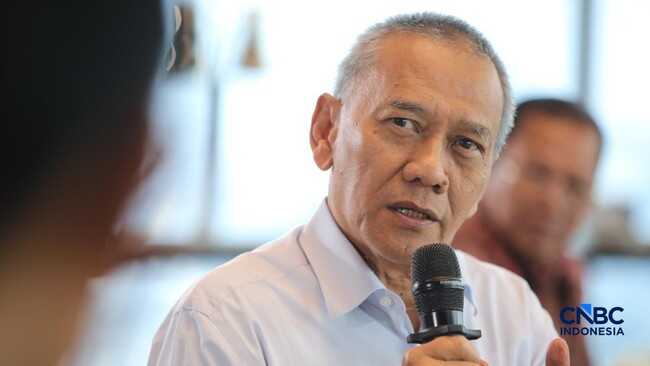
Jakarta, CNBC Indonesia – The Indonesian Automotive Industry Association (Gaikindo) has revealed that domestically produced vehicles are already capable of using petrol with ethanol blending up to 20% (E20). Secretary-General Kukuh Kumara said Indonesia’s plan to implement a national mandatory ethanol programme starting at 5% (E5) would not pose a problem, as domestic-made vehicles can already run on blends up to E20, even though not yet officially certified; while E10 certification is in place. He added that, at the Energy Forum CNBC Indonesia, Mr Eddy (Deputy Speaker of the People’s Consultative Assembly) referred to Brazil, noting that the engine is produced in Karawang and used in Brazil.
As is known, the government intends to impose a mandatory bioethanol blending in fuels at 5% from 2028, with a target of up to 20%. To meet this demand, the government will allow ethanol imports from the United States initially, until domestic supply is sufficient. This is part of a bilateral agreement signed in February 2026 by President Donald Trump and President Prabowo Subianto.
Energy Minister Bahlil Lahadalia explained that the plan to import ethanol from the US is because domestic ethanol production capacity is currently insufficient to meet national needs. Imports are positioned as a solution to bridge the gap between consumption and domestic production. “We do have a mandate; the mandate our projections put at around 5%–20% by 2028. The shortfall between domestic consumption and production can be filled by imports. So imports are to fill the deficit in domestic consumption,” Bahlil said during a press conference in the United States, streamed online, on Monday (23/2/2026).
Bahlil emphasised that the US import arrangement is effectively a switching of supply sources from other countries that have previously supplied Indonesian ethanol. He assessed that the trade partnership with the US offers advantages, particularly relating to a 0% tariff. “Moreover, when we import into our market with a 0% tariff, it should be cheaper for us. This is in our favour and makes our industry more competitive in using feedstocks than ethanol alone,” he explained.
Furthermore, Bahlil noted that this ethanol requirement is not limited to blending with petrol (bioethanol) but also supports other industries that have previously depended on imported supplies.
In the US–Indonesia trade tariff agreement, the Office of the United States Trade Representative (USTR) lists three provisions related to bioethanol between the US and Indonesia:
Indonesia will not adopt or maintain measures that prevent the import of US bioethanol.
Indonesia will implement its policy to supply transport fuels blended with up to 5% bioethanol (E5) by 2028 and up to 10% bioethanol (E10) by 2030.
Indonesia will strive to implement its policy on the use of ethanol blends in transport fuels up to 20% bioethanol (E20), taking into account supply availability and the readiness of supporting infrastructure.
Papua Land Preparation
The government is also preparing Papua as one of the main bases for developing bioethanol feedstock for petrol blends, aiming to reduce dependence on imports and strengthen domestic energy resilience. The Director‑General of New, Renewable Energy and Energy Conservation (EBTKE) at the Ministry of Energy and Mineral Resources (ESDM), Eniya Listiani Dewi, said that Papua is targeted to produce up to 300,000 kilolitres of bioethanol feedstock per year. “If Papua is the target, the plan is to produce 300,000 kilolitres per year, but the feedstock base now is still in seedlings and propagation; it is a long road,” she told the House of Representatives (DPR) on Friday (30/1/2026).
In addition to Papua, the government is pushing to strengthen feedstock sources and build bioethanol plants in regions outside Java, as logistics costs would otherwise be very high. “In this phased exercise, the phase is located in areas with available resources and those mandated in areas with resources,” she said.
She emphasised that the feedstock for bioethanol must come from within the country and imports are not permitted under applicable regulations. The main feedstocks currently come from molasses or sugarcane juice. “Localise the feedstock; it can come from anything, but at present what is available is molasses—sugarcane molasses. We will assess prices from feedstock sources as part of the exercise,” she added.