
Indonesian Ulema Council Calls on Mosques to Hold Prayers for Palestinian Independence During Ramadan
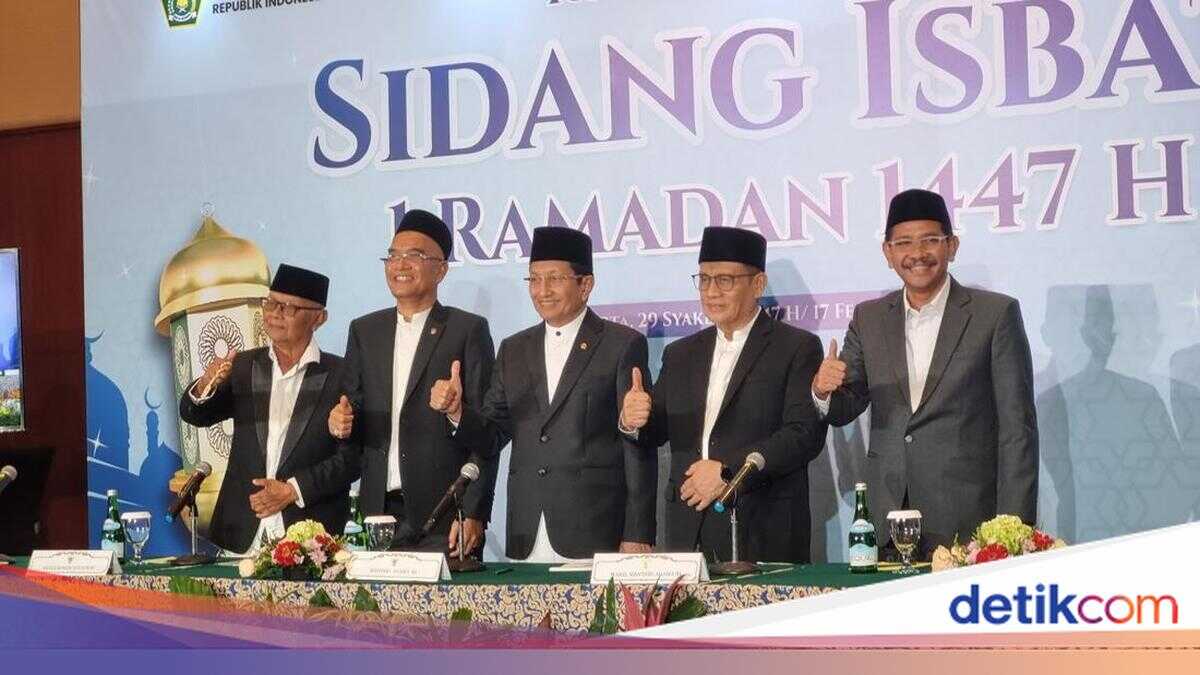
Indonesian Ulema Council (MUI) Chairman Anwar Iskandar has called on all mosque imams across the country to pray for the safety of Gaza residents and Palestinian independence, with the prayers to be offered simultaneously during Ramadan.
Anwar made the remarks after the government, through the Ministry of Religious Affairs, set 1 Ramadan 1447 Hijri as falling on Thursday, 19 February 2026. The announcement was made at Hotel Borobudur in Central Jakarta on Tuesday (17/2/2026).
“We earnestly hope that all mosque imams throughout Indonesia can, if possible, strengthen their prayers for the safety of Muslims and the Palestinian nation — particularly the Palestinian people in Gaza — through what is known as Qunut Nazilah,” Anwar said at a press conference.
He expressed hope that all community organisations, from Nahdlatul Ulama to Muhammadiyah, would participate in the collective prayers. According to him, Ramadan is a particularly auspicious time for prayers to be answered.
“Through DMI or through community organisations — NU, Muhammadiyah, Al Irsyad, Al Washliyah, Al Wahdah and others — we call upon all imams during this blessed and auspicious Ramadan to beseech Allah for independence, freedom for the Palestinian people, and assistance for our brothers and sisters in Gaza,” he explained.
Additionally, Anwar urged that differences in determining the start of 1 Ramadan should not be made into an issue. He noted that diversity in Indonesia is inevitable as a nation guided by the principle of Bhinneka Tunggal Ika (Unity in Diversity).
“In Indonesia, there are more than 80 Islamic community organisations. These organisational differences allow for varied religious practices. However, these differences only concern matters that are of an ijtihadi nature — matters that are technical. On matters that are qath’i (definitive), there is no difference; on qath’i matters, all are the same,” he said.
He called on the public to be understanding of such differences, stressing that the unity of the Muslim community is paramount.
“But most importantly, our integrity as a Muslim community must always be safeguarded. Therefore, it is important to understand and respect one another. As a democratic nation, we even need to accustom ourselves to differences — so long as they do not concern matters of principle, matters of faith, or matters that are qath’i,” he said.