
Indonesian Students in China Seek to Bridge STEM Technology Gap
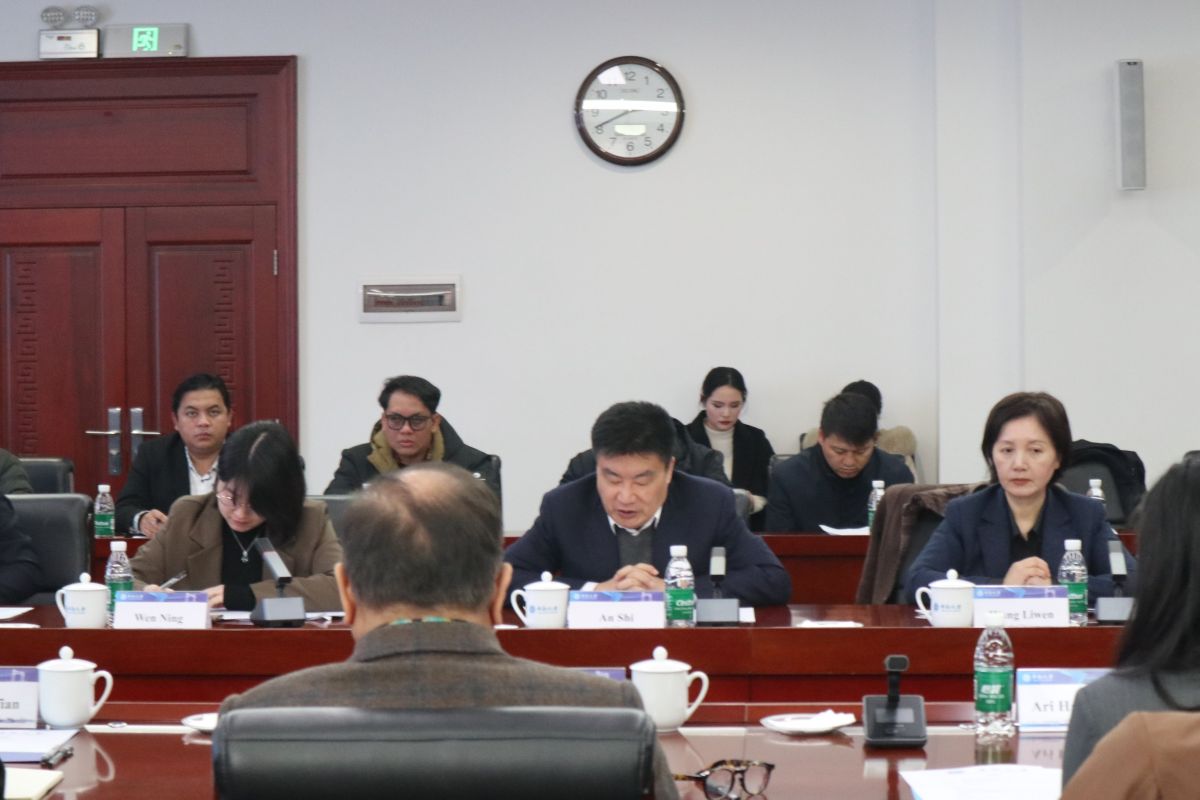
Changsha – Muhammad Apri Yansyah, an Indonesian student in China, aspires to become a bridge for applying science, technology, engineering, and mathematics (STEM) knowledge that he has acquired in China to support industrial development in Indonesia.
“During my eight years of university study in China, my greatest aspiration after completing my master’s degree is to bridge the gap. I want to bring the technical STEM expertise I have gained in China and apply it to Indonesian industry,” Apri stated in Changsha on Tuesday, 10 March.
Apri is currently pursuing a master’s degree in metallurgical engineering at Central South University (CSU) in Changsha, Hunan Province. The campus is renowned for its excellence in metallurgical technology, rail transport engineering, and medicine.
He views his learning experience in China as providing significant opportunities to build international connections that can support technological advancement in Indonesia. Many strategic projects in Indonesia currently utilise technology from China, making understanding these systems and their development essential.
Interaction with international students and researchers from various countries interested in China’s technological progress also provides a unique advantage for fostering future cooperation. Apri began his higher education in China through a diploma (D3) programme in Guangxi Province before continuing his undergraduate studies with a Chinese Government Scholarship at China University of Petroleum in Beijing.
After completing his bachelor’s degree, he pursued a master’s programme at Central South University in Changsha. The reputation of STEM studies at CSU is particularly strong, as the university is a primary reference point for engineering disciplines, particularly mining, metallurgy, and civil and railway engineering.
Apri noted that at the master’s level, he requires comprehensive laboratory facilities to conduct research. CSU possesses these facilities, optimally supporting student research activities. Additionally, the campus maintains close relationships with numerous major companies in China, ensuring that classroom materials align with global industry needs.
Apri also appreciates the highly competitive academic environment in China characterised by a fast-paced lifestyle. Students are accustomed to working hard given the demanding learning environment, yet supported by adequate facilities including libraries, integrated public transport, and a clean campus environment.
Nevertheless, he acknowledged facing considerable challenges, particularly regarding language. Understanding scientific terminology in physics and chemistry expressed in Hanzi characters presents particular difficulty. Additionally, professors in China demand precise research results, requiring students to work rigorously to produce accurate data.
He also noted that technological development in China progresses so rapidly that textbooks sometimes lag behind research being conducted in laboratories. Apri hopes that the Indonesian government and companies will establish clear placement schemes for foreign graduates so that knowledge gained can be utilised optimally.
He also believes there is a need for collaborative platforms between Indonesian students abroad and domestic researchers to strengthen technology transfer. Central South University accepts students not only through regular channels but also partners with Indonesia’s Ministry of Energy and Mineral Resources (ESDM) and Chinese nickel company CNGR.
This company has established nickel processing facilities in Morowali, Central Sulawesi. The partnership comprises an intensive training programme for technical personnel from the ESDM Ministry and Indonesian CNGR employees. Participants undergo three years of training at CSU combining metallurgical engineering and materials theory with direct practice in China’s nickel industry.
The collaboration, which began in 2024, was expanded in August 2025 through an agreement signed between CNGR, the Bandung Energy and Mining Polytechnic (PEP), and the ESDM Ministry. The programme includes internship and training activities for students and employees from PEP, the ESDM Ministry, and CNGR.
Indonesian Ambassador to China and Mongolia, Djauhari Oratmangun, stated that considerable potential exists for expanding educational cooperation between CSU and Indonesia, particularly as the number of Indonesian students choosing to study in China increases. He emphasised that educational cooperation should be accompanied by strengthened cultural exchange between the two nations.
One strategic initiative that could be undertaken is opening an Indonesian cultural centre at CSU to serve as a hub for Indonesian–Chinese cultural exchange in Changsha.