
Indonesian Students Celebrate Lunar New Year Through Folk Traditions in China
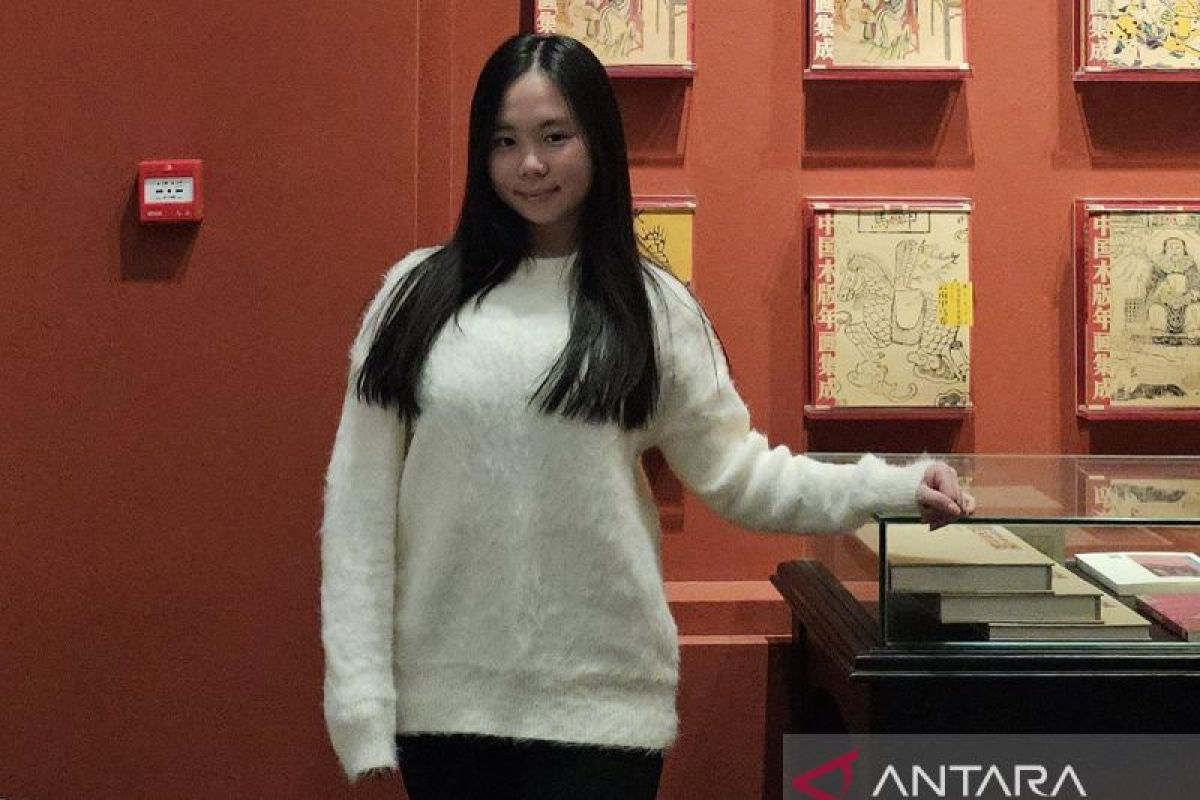
Tianjin (ANTARA) - Ahead of the Spring Festival, or Lunar New Year, the Feng Jicai Museum at Tianjin University in Tianjin, China, was filled with a festive atmosphere. Lanterns illuminated vine-covered pathways, whilst traditional folk art performances invited visitors to experience the spirit of the celebration.
A number of Indonesian students participated in various Spring Festival activities at the museum, including writing the character “Fu”, attending cultural lectures, and watching performances rooted in intangible cultural heritage. Through these first-hand experiences, they gained a deeper understanding of the festival and its accompanying traditions.
Angeline Carolina, an undergraduate student majoring in business administration at Tianjin University, was celebrating her first Spring Festival in China. The various activities allowed her to experience the festive atmosphere more tangibly.
“Previously, I knew that the Spring Festival was synonymous with a lively atmosphere and centred on family and tradition,” said Carolina. “However, today’s activities helped me truly understand the meaning of the festival.”
The calligraphy session left the deepest impression on her. Whilst practising writing the character “Fu”, she felt the rhythm and structure of the Chinese character for the first time. “Writing ‘Fu’ myself was a very special experience,” said Carolina. “It was only when I held the brush that I realised the character contains hopes for happiness and good fortune in the coming year.”
Another Indonesian student, Jesslyn Beatrice Faustina, was more drawn to the cultural and historical significance behind Spring Festival traditions. “What impressed me most was the length of China’s history,” said Faustina.
During the lecture session, she reflected on how various Spring Festival customs have been preserved and passed down from generation to generation. Through the experience, Faustina gained a clearer understanding of the tradition of pasting the “Fu” character.
“Previously, I only knew that people paste the ‘Fu’ character during the Spring Festival,” she said. “However, this time I learnt that pasting it upright at the entrance and upside down inside the house symbolises that ‘fortune has arrived’. Details like these help me understand the cultural significance behind the celebration.”
Located on the Tianjin University campus, the Feng Jicai Museum houses thousands of artefacts and artworks. Exhibitions such as “The History of Chinese New Year Paintings” underscore the museum’s role in preserving and promoting traditional Chinese culture.
During the 2026 Spring Festival, the museum also served as an important venue for international students remaining on campus to explore Chinese traditions.
Feng Jicai, a renowned Chinese writer and cultural scholar, stated that throughout China’s long agrarian history, the Spring Festival has been a moment when the Chinese people place their deepest hopes and emotions in family and social life. Traditions such as pasting couplets, hanging lanterns, enjoying reunion dinners, and setting off firecrackers remain the most meaningful emotional expressions in daily life.
“The ideals and aspirations of the people towards life, including happiness, safety, harmony, health, prosperity, and family reunion, form the core of Spring Festival traditions,” said Feng. “Therefore, this festival serves as an important window for understanding Chinese culture and remains one of the most distinctive traditions of Chinese civilisation.”
On 4 December 2024, the United Nations Educational, Scientific and Cultural Organisation (UNESCO) inscribed the Spring Festival, the social practice of the Chinese people in celebrating the traditional new year, on the Representative List of the Intangible Cultural Heritage of Humanity.
“We invited international students remaining on campus to jointly celebrate the Spring Festival, a cultural heritage that has been passed down for thousands of years and is shared by all humanity,” said Feng. “They are not merely guests, but also participants in this celebration.”
Feng added that the recognition of the Spring Festival as part of humanity’s shared heritage would help deepen international understanding of China whilst strengthening cultural confidence and continuity.
Through direct participation, the Spring Festival became a shared cultural experience for the students.