
Indonesian Stock Index Threatened with Slide to 8,000 Amid Iran-US-Israel Tensions
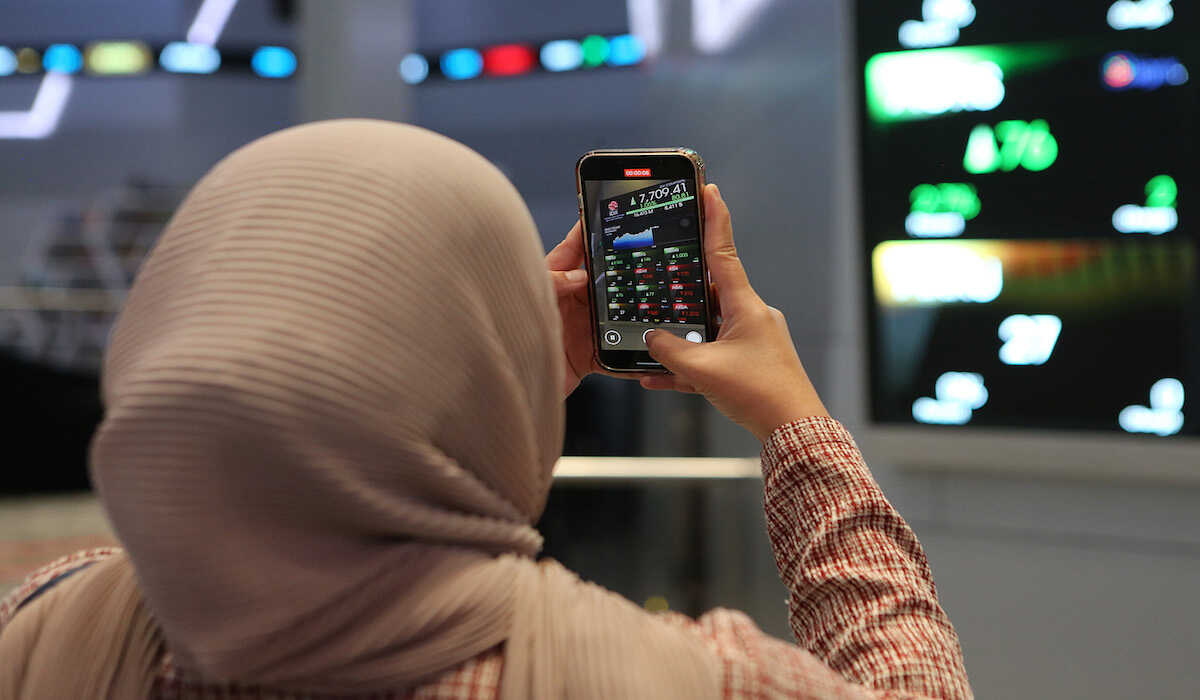
Indonesia’s capital market now finds itself in the shadow of significant risks as geopolitical conflict intensifies in the Middle East. Market analysts have warned of potential weakness in the Composite Stock Price Index (IHSG) in the first week of March 2026, following military actions involving Iran, the United States (US), and Israel.
Hendra Wardana, a capital market analyst and founder of Republik Investor, revealed that escalating tensions in the region are no longer merely a political issue, but have become a genuine global economic risk. “Markets are responding immediately with a risk-off pattern. Global investors tend to exit risky assets and seek refuge in safe-haven assets,” said Hendra.
Wardana highlighted the strategic importance of the Strait of Hormuz as the lifeline of global oil trade. If conflict escalation disrupts tanker traffic in the region, global oil prices are certain to surge higher as markets recalculate supply risks. Based on current data as of 1 March 2026, Brent crude oil prices have risen to US$72.87 per barrel, whilst West Texas Intermediate (WTI) sits at US$67.02 per barrel. “The impact could spread to global inflation, the rupiah exchange rate, and interest rate policies in various countries,” he added.
For Indonesia’s capital market, pressure is predicted to come from two main sources. First, potential capital outflows as foreign investors tend to reduce exposure in emerging markets. Second, the risk of import inflation due to rising global energy prices.
Wardana predicts the IHSG could weaken and test the classic support level at 8,133 during next week’s trading. “If that level breaks, the psychological area of 8,000 becomes the next support. Meanwhile, the nearest resistance stands at 8,300,” he explained.
Despite most sectors facing pressure, Wardana sees opportunities in the commodities sector. Rising oil and gas prices typically have a positive impact on energy and mining companies. For retail investors, he recommends several strategic steps, emphasising that “in a hot geopolitical situation, the main key is not simply entering or exiting the market, but rather the ability to read sector rotation and keep risks under control.”
Additionally, the Financial Services Authority (OJK) is currently investigating 32 cases of alleged capital market violations, including price manipulation and insider trading.