
Indonesian Steel Factories Falling One by One, Now Krakatau Osaka Steel Closes Due to Cheap Imported Steel
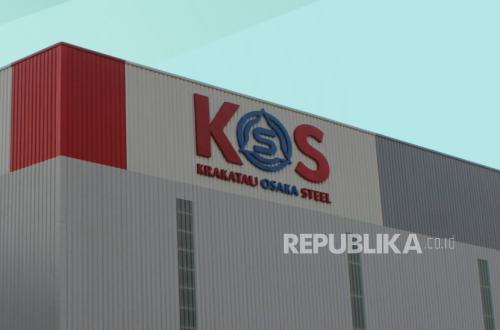
The national steel industry has lost another player after one company halted operations due to pressure from cheap imported steel. Uneven price competition has made it increasingly difficult for domestic producers to survive amid a global oversupply.
PT Krakatau Osaka Steel (KOS) has officially stopped production at the end of April 2026 and will close all business activities in June 2026 after years of declining business performance.
The industry is under pressure as the domestic construction steel market weakens, while cheaper imported products increasingly dominate the market. Global steel producers have advantages in production scale and cost efficiency, allowing them to offer far more competitive prices than domestic producers.
Bhima Yudhistira Adhinegara, Executive Director of the Center of Economic and Law Studies (CELIOS), views the closure of KOS as reflective of structural problems in the national steel industry. “Krakatau Osaka Steel (KOS) is actually the second victim. Previously, in October 2025, the Metal Steel Group factory owned by Ispat Indo, operating in Surabaya, also closed,” said Bhima on Wednesday (6/5/2026).
According to Bhima, the flood of cheap steel imports from China has created unbalanced price competition. The current capacity utilisation of the national steel industry is only around 52 percent, far from the ideal level of about 80 percent.
“China’s steel production in a year is around 1 billion tonnes. Imagine, just 2 percent exported to Indonesia already exceeds Indonesia’s production capacity. This is unfair competition given the cheaper price of Chinese steel,” said Bhima.
He urged the government to accelerate anti-dumping policies from upstream to downstream.
Findings from the Indonesian Anti-Dumping Committee regarding Chinese steel dumping practices, with price differences of 5.9 percent to 55.6 percent cheaper, are seen as a basis for strengthening protection of the domestic industry.