
Indonesian Residents to Have LPG Alternative: What Will It Cost?
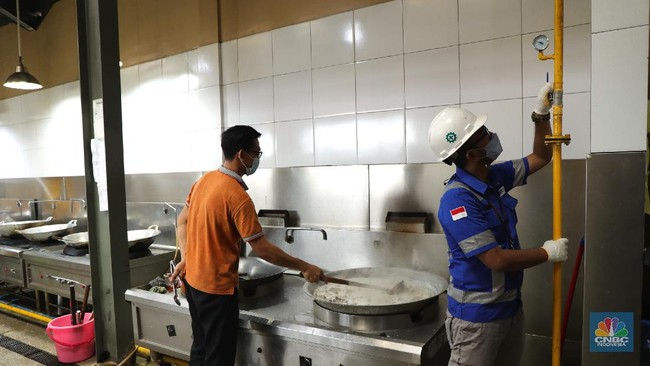
Jakarta, CNBC Indonesia - The Ministry of Energy and Mineral Resources (ESDM) is preparing an alternative energy source to replace Liquefied Petroleum Gas (LPG). That energy is Compressed Natural Gas (CNG). Currently, the government is conducting development tests for CNG in a 3 kilogram (kg) form. In the future, once it is available, the government will provide subsidies for CNG just like for 3kg LPG. Energy and Mineral Resources Minister Bahlil Lahadalia stated that the subsidy policy for CNG aligns with President Prabowo Subianto’s instructions for the national energy programme to remain supportive of the people in need. “The President’s directive is that both CNG and LPG will always prioritise helping the people we must assist. Therefore, I assure you that subsidies will still be necessary for the people,” Bahlil said after his inauguration at the Ministry of ESDM some time ago. Therefore, the government is also striving to ensure that the selling price of CNG in the future can match the price of 3kg LPG currently used by the public. “Pray for that, yes. At least the same. At least the same,” Bahlil said. Currently, the government is still in the testing and study phase before full implementation of the programme. Thus, the pricing scheme and distribution mechanism are still being refined. “Later, later. That’s why we’re testing it. This hasn’t been implemented yet, yes. I repeat, yes. This is still in the exercise phase,” he said. 30% Cheaper Price Bahlil assessed that the use of CNG has actually already been implemented for 12 kilogram to 20 kilogram cylinders used by hotels and restaurants. The use of CNG in that sector is considered quite efficient. However, the government is now developing technology for 3 kilogram CNG cylinders to make them more suitable for household use. “But for CNG, for the 12kg and 20kg ones, it’s already running, for use in hotels and restaurants. And it’s good, and more efficient. But we can’t possibly tell the people to use the heavy ones, 20kg. Now, this is what we’re working on,” Bahlil said. The gas that serves as the alternative is even considered to be cheaper than LPG usage. In fact, according to study results, Bahlil said the use of CNG could be 30% cheaper. “CNG has already been studied. The price is much cheaper, around 30% cheaper,” Bahlil explained after being met at the State Palace on Tuesday (5/5/2026). Why is it cheaper? Bahlil explained that the raw material for CNG gas is abundant in Indonesia, supported by domestic industry. “So we don’t import, the transportation costs alone can cover it,” Bahlil revealed. In addition, CNG gas, according to Bahlil, is available in almost all regions with gas sources. Thus, this can be more efficient.