
Indonesian Police Conduct Free Health Service for 3,000 Ride-Hailing Drivers and Labourers in Jakarta
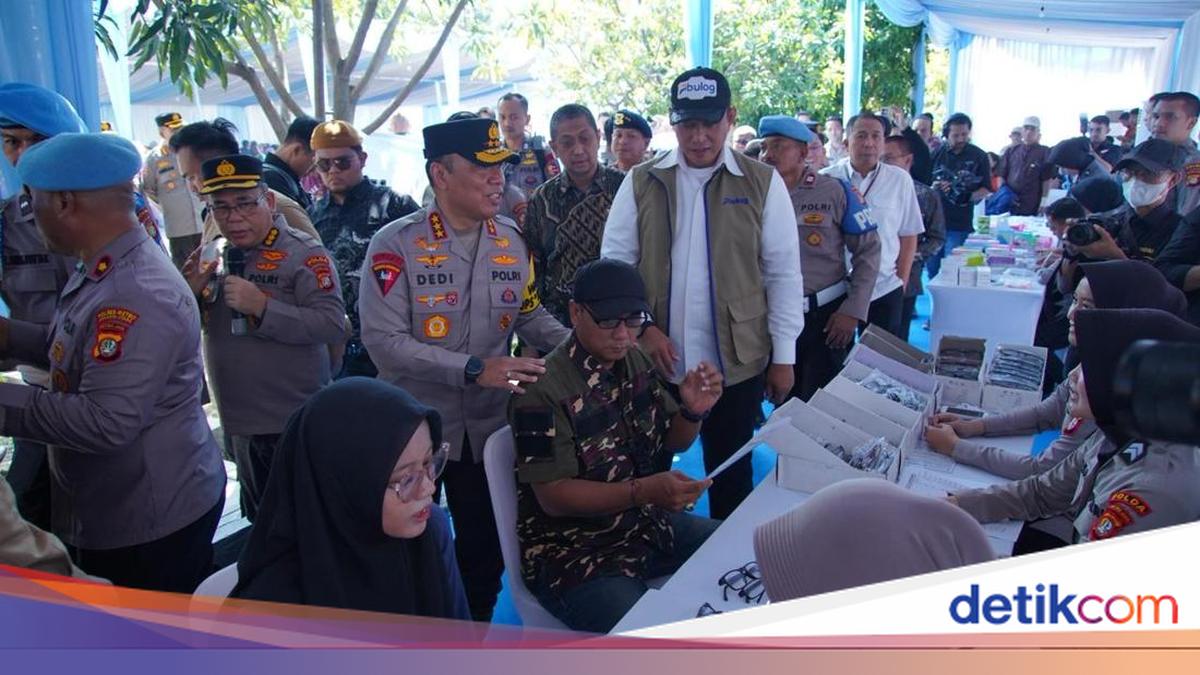
The Indonesian National Police (Polri) has organised free health services for 3,000 residents including ride-hailing drivers (ojol) and labourers in Jakarta. The activity demonstrates Polri’s presence and concern for the community.
The initiative was held in conjunction with the Cheap Food Movement (Gerakan Pangan Murah) organised with state-owned enterprise Perum Bulog at the Bulog Complex, Jakarta Utara, Kelapa Gading. The movement aims to provide affordable staple goods to the public and assist those affected by the surge in essential commodity prices ahead of Eid al-Fitr 2026.
Deputy Police Chief Komjen Dedi Prasetyo stated that the Jakarta Metro Police (Polda Metro Jaya) targeted approximately 3,000 beneficiaries today, including ride-hailing drivers, labourers, local residents, and various community elements. “For beneficiaries in Polda Metro, today there are roughly 3,000 people. From our labour colleagues, ride-hailing driver colleagues, then from the community, including Banser, Kokam, Pokdar Kamtibmas, Linmas and other community organisations and residents around Jakarta Utara,” Komjen Dedi Prasetyo said on Friday (13 March 2026).
The health service programme represents concrete evidence of Polri’s concern for public health, particularly ahead of Eid when community needs increase. Participants received various free health services whilst also having the opportunity to obtain staple goods at affordable prices. “I must inform colleagues that this activity aims to provide assurance to the community that national food stock is in safe condition,” Dedi added.
The three-star general emphasised that Polri wishes to be fully present within the community, not only in maintaining security and order, but also in addressing basic community needs, including health. “In addition to the cheap food movement, we are also conducting health service activities. We will serve all community needs, particularly in food and health sectors,” he said.
Meanwhile, Perum Bulog Chief Executive Officer Letjen TNI (Ret) Ahmad Rizal Ramdhani appreciated the synergy built between Polri and Bulog in assisting the community. “This collaboration shows that the state is present to ensure the community continues to have access to essential goods at affordable prices,” Rizal stated. “Such programmes are not merely economic activities, but also a form of social stimulus that provides a sense of security for the community amid food price fluctuations,” he added.
The beneficiaries in the Jakarta area totalled 3,000 people, comprising 450 labourers, 650 ride-hailing drivers, and 1,900 people from community elements, including Banser, Kokam, Pokdar Kamtibmas, Linmas, FBR civil society organisations, GRIB civil society organisations, and PPSU officers. The involvement of various elements demonstrates Polri’s commitment to economically vulnerable groups whilst recognising their important role in maintaining social stability in their respective areas.
As part of comprehensive services, Polri deployed medical and health personnel to provide direct services to the community. For this activity, 10 general practitioners, 1 specialist in internal medicine, and 30 health workers comprising nurses and laboratory analysts were deployed to ensure optimal health service delivery.
Community members received free health services including general check-ups, specialist doctor consultations, eye examinations with distribution of reading glasses, and laboratory tests including blood sugar, cholesterol, and uric acid. All services were also supported by pharmacy facilities with medicine availability according to medical indications to comprehensively meet community health needs.
As part of the eye examination service, 400 reading glasses were distributed to community members in need. To support health services, Polri also stationed seven ambulances to ensure medical service readiness during the activity. The activity was also conducted simultaneously down to police precinct level so that its benefits could be felt more widely by the community.