
Indonesian Peacekeepers Killed by Shooting in Gaza Strip, Others Wounded
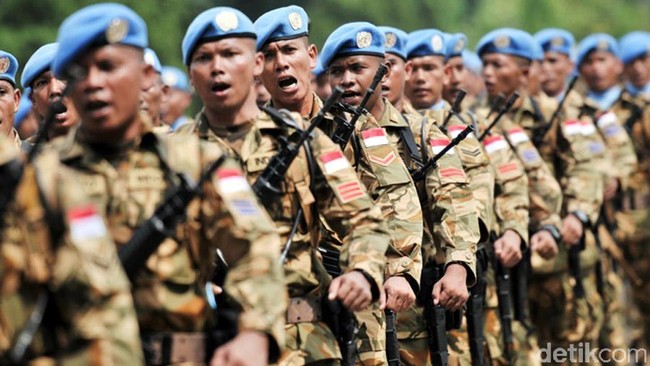
The death of Indonesian soldiers during international peacekeeping missions is not a new occurrence. Long before recent incidents, history records a similar tragedy involving Indonesian peacekeepers during their first mission, exactly 69 years ago.
Indonesia began actively deploying UN peacekeeping forces in 1957. The first assignment was to Egypt, but it gradually expanded to the Gaza Strip, Palestine. According to the daily Nasional (1 October 1957), the Indonesian contingent at the time was tasked with guarding the Egypt-Israel border while clearing mines in the conflict-prone area.
In that inaugural mission, Indonesia sent 586 personnel. However, not all returned home safely.
One soldier was reported killed: Private Misdi, a trooper from Magelang. Regarding the cause of his death, two different versions emerged from contemporary media reports. The Dutch-language newspaper Preangerbode (20 August 1957) stated that Misdi died from a close-range shooting.
“According to a medical report signed by Captain JF Haley from Canada, powder burns were found on his forehead, leading to the assumption that Misdi was shot in the head at close range with a revolver,” the newspaper reported.
It was reported that the incident occurred while Misdi was on patrol in the Gaza Strip. In the same event, several other Garuda Force members were also wounded but survived.
However, the Nasional newspaper provided a different account of the soldier’s death. “Private I Misdi was killed due to the accidental discharge of his own weapon while on duty in the Gaza area,” the Nasional newspaper stated.
Unfortunately, the newspaper did not provide a detailed chronology of Misdi’s death. Regardless of the true cause, his body was flown from the mission area using a Ceylon Airlines aircraft to Singapore, before being transported to Jakarta.
The repatriation process encountered some obstacles. When it was time to load the coffin onto a Garuda Indonesian Airways (GIA) aircraft, it turned out to be too large to fit through the plane’s door. As a result, preparations were made to transfer the remains to another aircraft to expedite the flight back to the homeland.
In Jakarta, the return of the Garuda contingent was officially welcomed at Tanjung Priok. The ceremony was grand, accompanied by the Army music corps, but also filled with a sombre atmosphere. Understandably, the soldiers had just returned after eight months away from Indonesia to carry out their international duties.
Upon arrival in the homeland, all battalion members received direct appreciation from the government for the success of their mission.
“President Soekarno expressed his highest appreciation to all members of the Garuda battalion for successfully carrying out their international duties,” the Nasional newspaper reported.