
Indonesian Neighbourhood Shops Collapsing Due to Modern Retail, How?
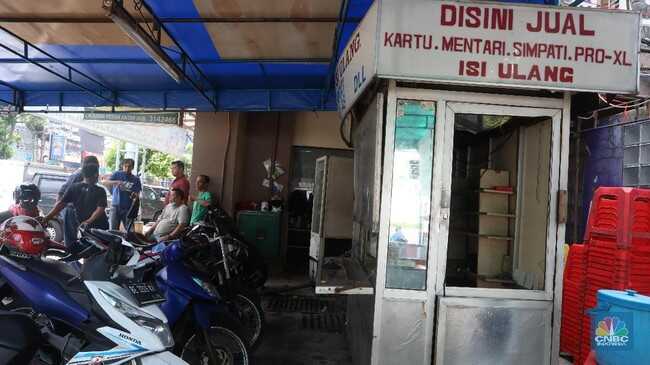
Jakarta – Leaders of street vendors and neighbourhood shop operators have spoken out about the massive expansion of modern retail outlets threatening the viability of traditional small shops. Modern retail has also been identified as a major factor contributing to the decline of traditional markets across the country.
Ali Mahsun Atmo, General Chair of the Indonesian Street Vendors Association (APKLI), stated that the widespread proliferation of modern retail outlets has threatened the very existence of neighbourhood shops. According to him, each new modern retail outlet can effectively put 20 to 50 neighbourhood shops out of business.
“The presence of modern retail is causing neighbourhood shops to shrink continuously, revenues are falling, and many are going bankrupt. One modern retail outlet kills 20 to 50 neighbourhood shops,” Ali Mahsun said in an interview with CNBC Indonesia on Saturday, 28 February 2026.
He explained that the emergence of modern retail began in 1998 following the Letter of Intent (LOI) from the International Monetary Fund (IMF). Since then, Indonesia has been flooded with modern retail chains backed by large capital and extensive global networks. From that point onwards, neighbourhood shops, traditional markets, and small-scale people’s economy have been bombarded, eroded, and destroyed by modern retail expansion.
Although Indonesia has the Law Number 5 of 1999 regarding the Prohibition of Monopolistic Practices and Unfair Business Competition, and the existence of the Business Competition Supervisory Commission (KPPU), Ali Mahsun contends that neighbourhood shop operators are powerless.
Furthermore, the government has legitimised the presence of modern retail through Presidential Regulation (Perpres) Number 112 of 2007 concerning Traditional Markets, Shopping Centres, and Modern Shops.
Since then, neighbourhood shops and traditional markets have been gradually eroded and many have collapsed. Through the Economic Policy Package of September 2015, which loosened licensing requirements and expanded modern retail into remote areas across the country, the government has worsened the impact on small-scale people’s economy in rural areas. This means that for 27 years since the 1998 IMF LOI until 2025, neighbourhood shops, traditional markets, and small-scale people’s economy have been gradually eroded and destroyed by modern retail.
“Since Presidential Regulation Number 112 of 2007 and the Economic Policy Package of September 2015, the number of neighbourhood shops has declined drastically, from previously 6.1 million, in 2015 it fell to 5.1 million. Between 2007 and 2025, the number of neighbourhood shops dropped sharply by 2.2 million to 3.9 million in 2025,” he continued.
Traditional markets have also been significantly impacted by the increasing presence of modern retail. He disclosed that approximately 3,500 markets have already closed.
“What is equally important, modern retail has rolled up traditional markets, with 3,500 markets already closed,” he stated.
Ali Mahsun identified three primary causes affecting neighbourhood shops, traditional markets, and micro, small and medium enterprises (MSMEs). The first is the massive expansion of modern retail into villages. Second, consumer purchasing power has remained stagnant and weak.
“Second, consumer purchasing power has not improved. I have witnessed this firsthand, going down to see the conditions of people’s lives at the grassroots level. The situation is very tight right now,” he said.
The third factor is the impact of digital economy development, where consumers increasingly prefer shopping on online marketplaces because it is more convenient.
“Third, which is equally important, is the impact of the digital economy. You may have witnessed complaints from friends in traditional markets – many shops have closed, partly because there are no customers coming in,” he added.
If the government does not anticipate these issues, he warned, the consequences will be more severe. One consequence is rising unemployment as many neighbourhood shops and traditional markets close.
“This is the impact of massive modern retail expansion, combined with the impact of the digital economy. If the government does not quickly address this, people’s economy will be increasingly squeezed, demographic growth will be hindered, unemployment will emerge everywhere, and poverty rates will increase,” he explained.
Therefore, the government is expected to resolve these issues so that neighbourhood shop operators and MSMEs can be saved.
“We request that this be resolved. We have already had an audience with the Minister of Cooperatives, so that Presidential Regulation Number 112 of 2007 can be re-evaluated,” he concluded.